Full Article
about Creixell
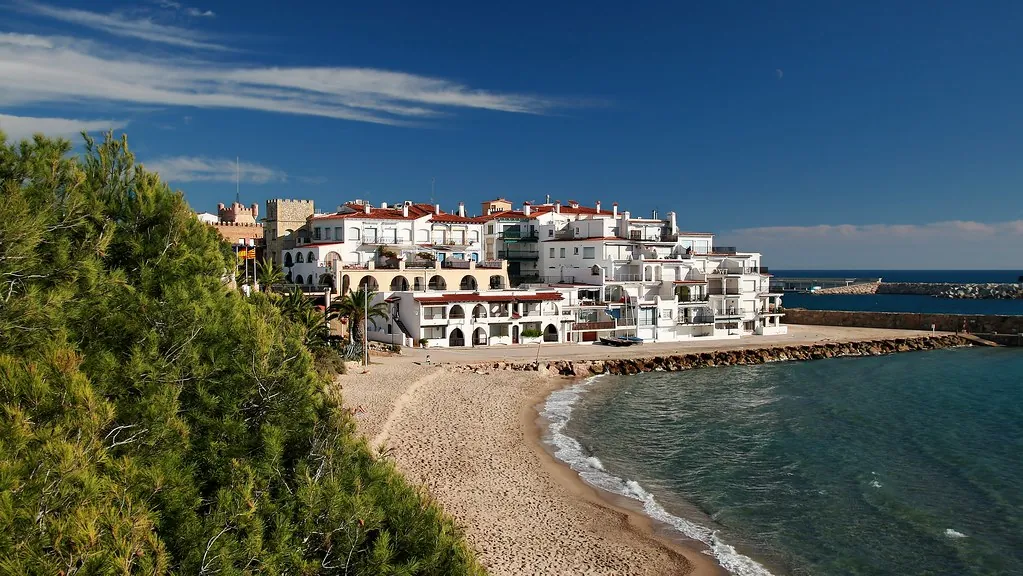
Coastal town with a historic center crowned by a castle and fine-sand beaches backed by natural dunes.
Hide article Read full article
The football is still in the air at five in the afternoon, a dark shape against the sun. On the sand of Creixell, children chase it, their shadows long and thin. The older women have moved their chairs to follow the last strip of shade by the promenade. This is the hour when the sea turns a heavier blue and the heat stored in the sand rises through bare feet.
Creixell sits on the Tarragonès coast, a short drive from Torredembarra and about twenty minutes north of Tarragona. Just over four thousand people are registered here. In summer, that number swells, but the expansion feels orderly, absorbed by the wide curve of beach and the grid of streets behind it.
A Beach of Routines
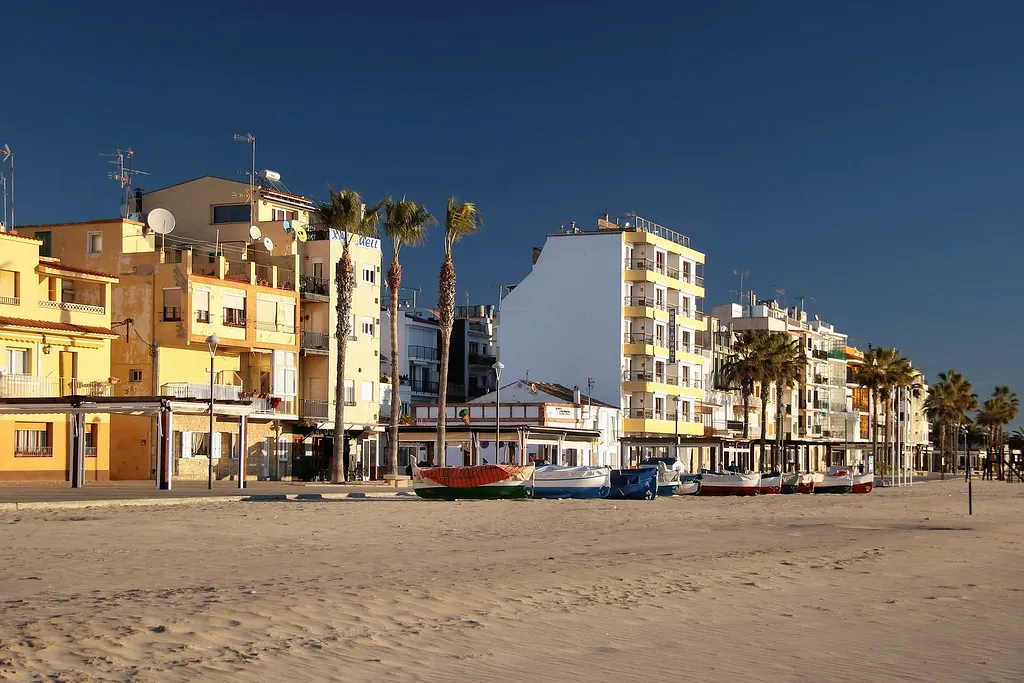
The shore is a long, straight line of fine sand, backed by a single-storey promenade and low houses. You won’t find towering apartment blocks here. The light in late afternoon falls uninterrupted, bleaching the sand and casting the shadows of parasols far inland.
By August, the beach is full, yet the mood is settled. You see the same families under the same umbrellas year after year, alongside Barcelona residents who have been coming for decades. The scene is built on plastic coolers, folding tables for cards, and towels laid out with practised efficiency.
The water is typically calm, with a gentle slope underfoot. Children spend hours dashing in and out where the foam licks the sand, without the sudden drop of steeper beaches. Come sunset, the tide often claims a strip of shore, nudging everyone closer to the promenade for that final walk along the water’s edge.
If you visit in high summer, go early. By eleven, the sand is too hot for bare feet and the sun presses down without mercy.
The Stone Tower
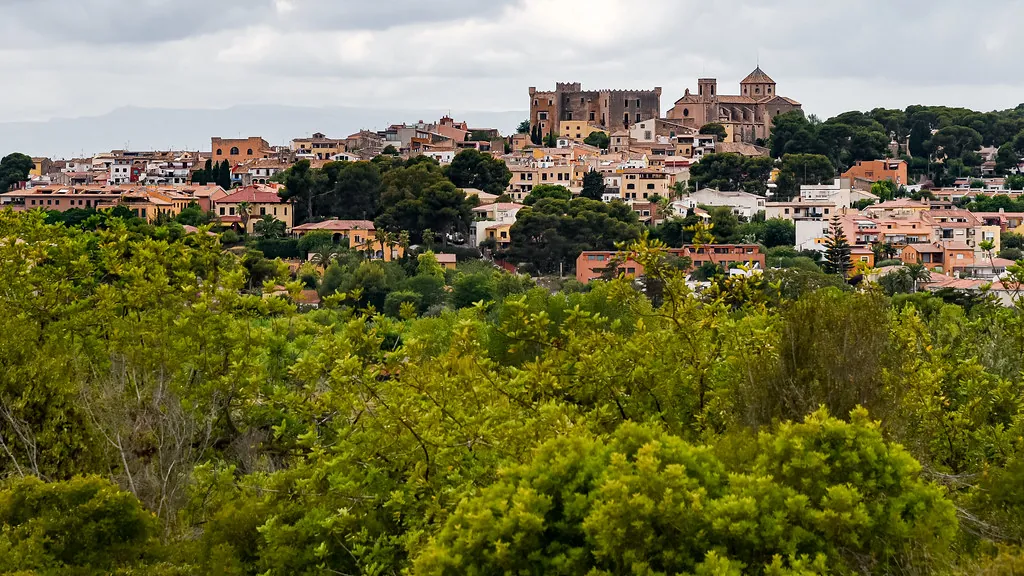
A ten-minute walk inland from the beach, past houses with potted geraniums, brings you to Creixell Castle. It emerges suddenly—a stout, polygonal tower of pale stone rising above terracotta roofs.
Its foundations are medieval, built to guard the old coastal route. What you see now is a mix of that older defensive structure and later modifications, when it became a residence. The square before it is small, often holding just a bench or two in the shade. Climb up here as the day cools and your view is over rooftops to a sliver of distant sea.
The interior isn’t regularly open to visitors. Check locally; sometimes it opens for exhibitions or cultural events.
Sant Jaume and the Old Streets
A few steps away stands the parish church of Sant Jaume. Work on it began in the 1500s, when the town had outgrown its earlier chapel.
Inside, it’s cool and dim. The smell is of old stone and spent candle wax. If you look closely at the walls, you can see faint ghosts of colour where paintings once were. The bell tower was added later; its sound rolls through the tight lanes of the old quarter in the afternoon.
These streets around the church and castle are narrow and quiet. Washing hangs from balconies. The scale here is human, a distinct shift from the open horizon of the beach.
The Pace After Summer
By September, a different rhythm sets in. Shutters close on many houses. The beach empties, leaving wide gaps between towels.
Mornings on the promenade are quiet, broken by the whir of a bicycle or the scrape of a bar owner setting out chairs. The sea often looks smoother then, a flat grey-blue before the sun gets high.
This is when you can walk without purpose between the old quarter and the shore. The town feels like itself again—a small municipality where life isn’t orchestrated around holidays. For a quieter visit, consider June or September. The light is just as strong, but you can find space to breathe.
Creixell doesn’t try to astonish you. It offers a stretch of reliable sand, a stone tower on the skyline, and the slow turn of an afternoon into evening. It’s a version of this coast that has kept its own measure.