Full Article
about El Catllar
Town with a restored medieval castle and visitor center near the Gaià River.
Ocultar artículo Leer artículo completo
At seven-thirty on a Tuesday evening, the bakery on Carrer Major is already dark. Metal shutters down, lights off, closed. Inside, the last pa de pagès – the round country loaf every local table expects – left the shelf an hour ago. Miss it and you’ll discover the first rule of El Catllar: food runs on farm time, not holiday time. Ten kilometres from Tarragona’s Roman mosaics and barely fifteen minutes’ drive from the Costa Daurada’s busiest beaches, the village has somehow dodged the tourism conveyor belt. The result is a place where menus are still printed only in Catalan, lunch starts at two, and the loudest noise at midnight is usually a dog objecting to a moped.
Morning: Bread, Oil and the Smell of Tractors
El Catllar sits 60 metres above sea level on a low ridge between the Gaià River and a patchwork of almond and olive plots. The altitude is modest, but it is enough to lift the air a degree or two above the coastal steam-bath in July and to catch the breeze that smells alternately of wet soil or seaweed, depending which way the wind turns. Dawn is the best time to wander; the stone portal of the parish church, Sant Llorenç, glows amber, and the baker – if you arrive before he sells out – will cut a xapata lengthways and rub it with tomato while you wait. Ask for pa amb tomàquet anywhere else and it appears on the bill; here it is simply what arrives when you order a beer, delivered with a quartered tomato and a tin cruet of local arbequina oil that tastes of green apples.
The old centre is only six streets wide, a grid laid out in the thirteenth century for mules, not cars. Narrow lanes open suddenly into pocket squares where elderly men in slate-grey barretina caps still play cards on marble slabs balanced over tree roots. Peek through the iron grille of Cal Compte, one of the manor houses built when wine prices boomed in the 1890s, and you will see a carriage gate wide enough for two barrels side by side. The family still owns the building; the current count is a retired agronomist who drives a Dacia Sandero and queues at the market stall every Friday for calçots.
Afternoon: Castle Walls and the Six-Table Bar
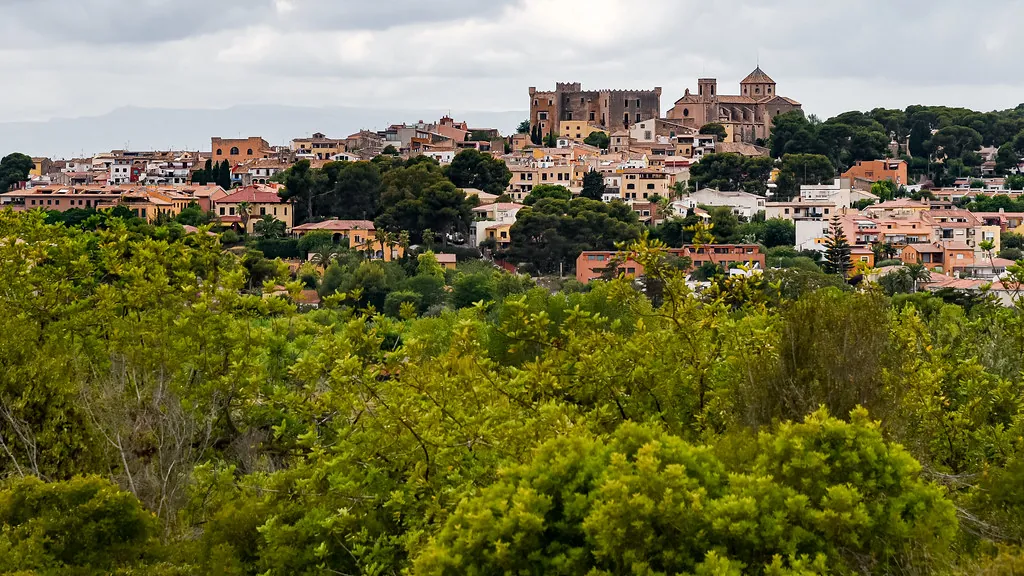
Head uphill past the football ground and the asphalt turns to gravel. Five minutes later the track ends at a cattle grid; beyond it, two walls and a fragment of tower are all that remain of the Moorish fortress that gave the village its name. There are no turnstiles, no interpretation boards, no gift shop. Climb the rubble path in trainers (flip-flops will betray you on the sandstone) and the whole Gaià valley opens below: ranks of carob trees, irrigation ponds flashing like coins, and, on the clearest days, the jagged outline of Prades mountains 40 kilometres inland. Sunset here is popular with Spanish language students from Tarragona who arrive on scooters with supermarket cava; they leave by nine, and the spot is yours for star-watching.
Back in the centre, the only place still serving food after three-thirty is Bar Cooperativa Elena, six tables wedged between a freezer of ice-cream tubs and a trophy cabinet full of petanque silverware. Order a bocadillo de jamón and you will understand why British visitors keep leaving five-star Google reviews about “proper bacon”. The ham is serrano, dry-cured for eighteen months down the road in a former co-op warehouse; the bread is yesterday’s baguette split and re-toasted so the crust shatters. Price: €3.20, napkin included.
Evening: Fiesta Fireworks and the Problem with August
If you time your visit for the Festa Major (around 10 August), expect the population to treble. Brass bands march through the streets at two in the morning, children hurl caramels from balconies, and the correfoc – locals dressed as devils chasing sparks – turns the main drag into a thunder-cloud of gunpowder. Accommodation within the village is limited to three rental flats above the pharmacy; book in May or resign yourself to a taxi back to Tarragona after the fireworks finish at 1 a.m. The upside is access to the castells competition on Sunday afternoon: human towers nine storeys high, assembled in the square outside Sant Llorenç while the church bell tolls like a heartbeat.
Outside fiesta week, evenings revert to a gentler rhythm. Pensioners stroll the passeig with fold-up chairs, claiming the same square of pavement they have occupied since 1978. Teenagers drift towards the sports pavilion where Wi-Fi is fastest – fibre arrived here before some parts of rural Kent – and the loudest argument is whether the village CF will finally escape the regional third division.
Side-Trips: Coast, Theme Parks and Wine That Isn’t Rioja
El Catllar’s inland position means you sleep without seagulls, but the Mediterranean is barely fifteen minutes by car. Torredembarra’s main beach is wide enough that even in August you can plant a towel without touching your neighbour; showers are free and parking under the pines costs €1.50 an hour. Prefer sand without crowds? Follow the signposted farm track north of the village towards La Riera de Gaià and you reach Platja de la Paella, a cove backed by reed beds where kite-surfers launch and the only facilities are a pop-up chiringuito serving estrella and squid rings on Fridays.
PortAventura theme park sits twenty minutes down the AP-7, close enough for a day of white-knuckle rides without paying resort prices for dinner. Back in El Catllar, El Caliu restaurant will grill you a entrecot the size of a shoe sole, with chips, salad and a half-bottle of local Serra de Montsant white for €14. The wine is light, almost alpine, closer to a French chardonnay than the oak-heavy Riojas most British supermarkets label “Spanish”.
Practicalities: Cars, Cash and the Vanishing Baker
Public transport exists – a tiny halt called El Catllar-Plana three kilometres down the hill – but only two trains a day trundle to Tarragona, and the return timetable is equally miserly. Hire a car at Reus airport (20 minutes) or budget €25–30 for the last taxi from Tarragona, which stops running around ten. Inside the village everything is walkable, but shops observe the classic Catalan siesta: shutters down from two until five. Bread, cash and common sense need to be acquired before the baker locks up, or you will be eating crisps for lunch.
Sunday brings a token market: one fruit stall, one fish van, one truck selling cheap bras. For serious provisions drive five minutes to La Riera where producers pile tables with tomatoes still warm from polytunnels and bottles of unfiltered olive oil that costs half the UK price. Bring your own container; the vendor subtracts 20 cents for avoiding plastic.
Leaving: The Sound That Means Goodbye
Check-out day is best planned for Saturday. At eleven the church bell strikes twelve times – Catalan timekeeping keeps the medieval habit of starting the count at one – and the baker reopens briefly for coca, a flat brioche topped with pine nuts. Buy one still hot, eat it on the bench outside, and you will hear the sound that sums El Catllar up: the slow clack-clack of dominoes from the bar, a tractor changing gear on the hill, and, somewhere in the distance, the sea you never quite saw. Then the shutters come down again, and the village gets on with living rather than selling itself – which, for travellers tired of being sold to, may be the most useful amenity of all.