Full Article
about La Riera de Gaià
Municipality near the coast, centered on the Gaià River, with a landmark watchtower.
Ocultar artículo Leer artículo completo
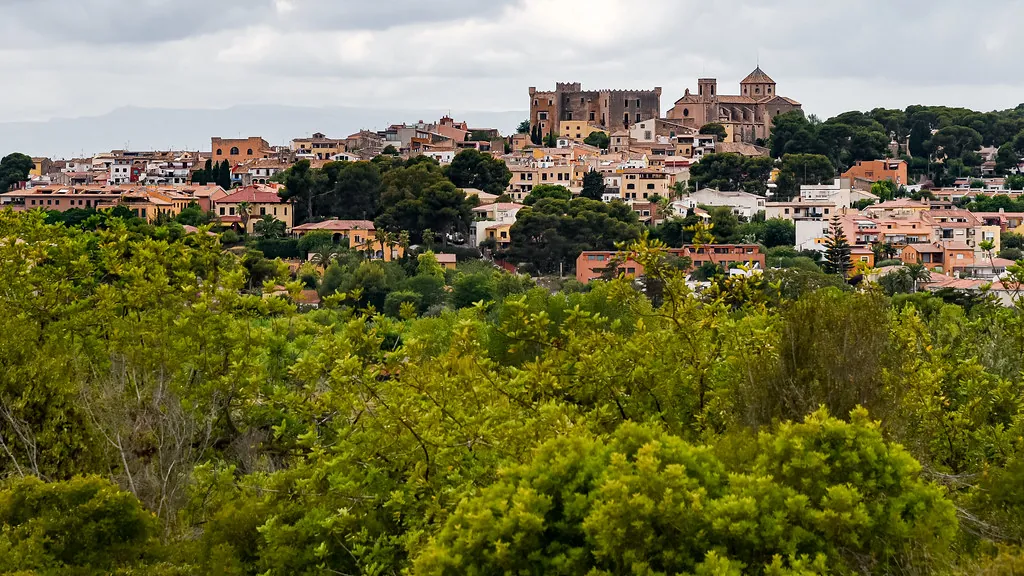
The evening train from Barcelona-Sants drops you at El Vendrell with a metallic sigh. Ten minutes later a taxi swings inland, past polytunnels and vineyard rows, until the road narrows and streetlights shrink to village scale. La Riera de Gaià appears: one main street, two bakeries, a church whose bell tolls the quarter-hour, and the smell of wood smoke drifting from unseen chimneys. At 28 m above sea level it is hardly mountain territory, yet the air feels cooler, cleaner, as though the Mediterranean has been pushed back to a distant rumour.
Stone, River and Silence
The name translates simply as “the stream of Gaià”, and the watercourse still dictates the village geometry. After heavy rain it fills the stone channel behind Carrer Major; in August it shrinks to a ribbon of moss and memory. Houses back straight onto the banks, their ground-floor doors once used for winching barrels onto small boats when the riera was navigable enough for trade. Today the riverbed serves as an informal linear park: dog-walkers, teenage footballers, elderly couples pacing out the day’s final cigarettes.
Architecturally the place is honest rather than grand. Medieval portals survive here and there—look for the Romanesque arch on Carrer de la Creu, now half-buried by later render—but most façades date from the late 19th century, when phylloxera forced vineyard replanting and local farmers invested profits in taller ceilings and iron balconies. Granite cornerstones still carry the original owners’ initials, a discreet form of Victorian Catalan branding. Nothing is labelled; nothing needs to be. The whole village is readable if you slow down.
A Table Without Fanfare
British visitors tend to arrive self-catering, which is sensible because restaurant hours are short and tables fill with little notice. The single jamón shop, La Estrella del Jamón, doubles as a tapas counter: four stools, a ham leg on an antique clamp, and a proprietor who will slice paper-thin jamón ibérico de bellota while explaining the difference between pata negra and cebo in serviceable English. A plate costs €5–7, a glass of local Xarel-lo €2.50—prices that make you check the bill twice. Across the square, Can Pistraques opens at 13:00 sharp and serves a three-course menú del día for €14. Expect grilled squid, proper alioli (egg-rich, not shop-bought), and a pudding of crema catalana whose sugar crust is torched to order. Vegetarians survive on escalivada and pa amb tomàquet; vegans should probably cook.
Shopping is limited to the morning. The mini-mart on Plaça de l’Església stocks UHT milk, tinned tuna and surprisingly good local wine at supermarket prices—but it bolts the door from 14:00 to 17:00. If you need cash, remember there is no ATM; the nearest is a 15-minute drive to El Vendrell, so fill your wallet before you arrive.
Coast Close, Crowds Far
Six kilometres of flat agricultural lane separate the village from Coma-ruga’s beach. Cycling takes twenty minutes at holiday pace; the ride passes peach orchards and a roadside honesty stall selling avocados for €1 a bag. The sand is clean, the sea gentle, and in May or October you can claim a 100-metre radius to yourself. August is different: the same beach becomes a wall of umbrellas, pumped-up reggaeton and €5 cans of Estrella. The trick is to go early, swim, then retreat inland before the tour buses arrive. Back in La Riera the only soundtrack is the church bell and the occasional tractor.
Walking the Dry-Stone Labyrinth
Footpaths radiate from the top end of Carrer de Sant Antoni. One follows the riera upstream for 4 km to the ruins of a paper mill, destroyed during the Civil War; another loops through vineyards to the hamlet of Santa Perpètua, where a 12th-century chapel stands locked but photogenic. Neither route is way-marked beyond the occasional faded stripe of yellow paint, so download the free Mapas de España app before setting out. Summer walkers should carry water—shade is scarce and temperatures nudge 35 °C by noon. Spring is kinder: almond blossom in March, wild asparagus to forage in April, and the smell of rosemary crushed underfoot year-round.
Getting In, Getting Out
Public transport works if you plan ahead. From Barcelona airport take the RENFE R2-Sud train towards Tortosa and alight at El Vendrell (hourly, €9, 55 min). A pre-booked taxi meets you outside the station; WhatsApp Taxi El Vendrell on +34 693 22 95 95 the day before and they’ll wait with a card machine. The 10-minute hop costs €12–15. Driving is simpler: AP-7 south, exit 33, follow signs to La Riera. Parking is free and unrestricted except during the August fiesta when the main street becomes a foam party and every kerb is commandeered by folding chairs.
Leaving requires equal foresight. The first train south departs El Vendrell at 06:02; the last northbound leaves at 22:07. Miss it and you’re looking at a €90 taxi to Tarragona or a very long night in the station waiting room.
When the Village Throws a Party
Festivities kick off on the last weekend of August with a correfoc—devils running with fireworks—followed by three nights of live music ending well after 03:00. Accommodation windows rattle; earplugs are advised. Smaller events dot the calendar: a calçotada in February, a wine fair in June, sardana dancing most Sunday evenings outside the church. Visitors are welcome but not fussed over; turn up, buy a beer token, stand where the locals stand.
The Honest Verdict
La Riera de Gaià will never feature on a glossy “Top Ten Catalan Villages” list, and that is precisely its appeal. It offers a quiet bed, decent bread, and a ringside seat at ordinary Mediterranean country life. Come if you want to cycle to the sea in the morning, read on a balcony in the afternoon, and eat dinner for the price of a London sandwich. Do not come expecting nightlife, boutique shopping, or someone to guide you in flawless English. Bring euros, download offline maps, and pack an appetite for ham. The village will handle the rest.