Full Article
about Perafort
Municipality made up of Perafort and Puigdelfí, with an 18th-century church and Roman remains.
Hide article Read full article
A Quiet Corner Near Tarragona
Tourism in Perafort does not draw crowds. You arrive by car, park without much thought and walk for a while through the centre. On a normal day there is plenty of space in the streets around the old core. If you are coming from Tarragona or Reus, the drive takes around fifteen minutes. There is public transport, though services tend to be limited and can shape how long you stay.
Perafort sits in the comarca of Tarragonès and behaves like the small village it is. It is not a place built around visitor infrastructure or long lists of sights. The appeal lies in its scale and its everyday rhythm. A brief walk is enough to understand it.
The Compact Heart of Perafort
The most recognisable building in the village is the church of Sant Miquel. It opens mainly for mass or specific celebrations. At other times it is usually closed. Architecturally it is simple, without elaborate decorative features or grand flourishes.
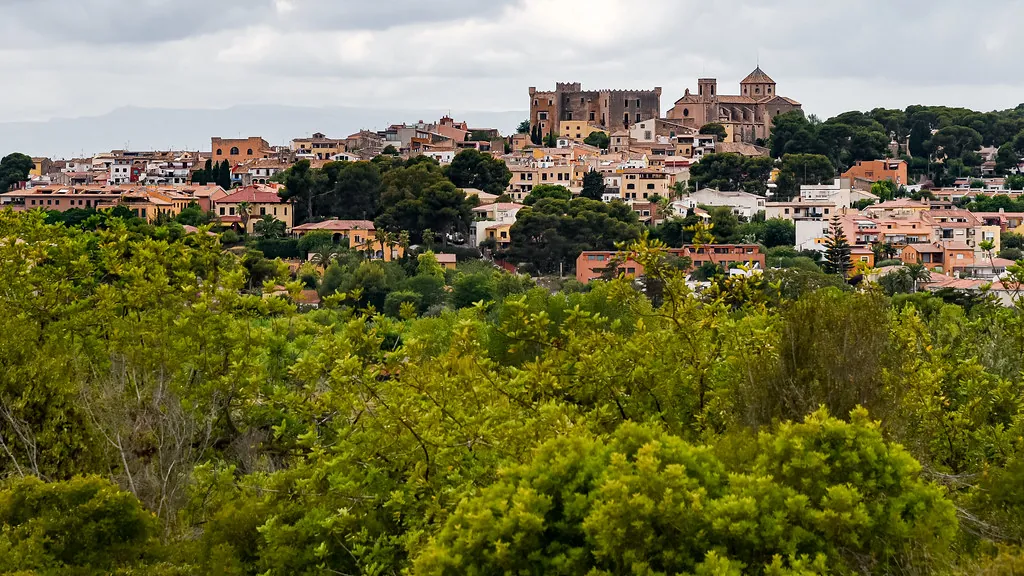
The old quarter consists of just a handful of streets. Stone houses line the way, with wide doorways and the occasional interior courtyard glimpsed from the street. Within half an hour you can have covered the entire historic core. There is no maze of alleys or sequence of monuments to work through.
Beyond this small centre, the rest of the municipality is made up of newer residential areas designed for daily life. Modern housing has expanded around the original nucleus, but there are no additional landmarks to seek out. Perafort does not try to present itself as a heritage showcase. It functions first as a place to live.
Fields, Farm Tracks and Open Land
Step outside the village and the landscape changes quickly. Vineyards, market gardens and agricultural plots occupy much of the surrounding land. Farming remains a visible and active presence here, shaping both the scenery and the pace of life.
Scattered across the countryside are masías, traditional Catalan farmhouses. Many are still in private use. They can be seen from the tracks that cross the area, though they are not set up for visits. Their presence adds to the rural character without turning it into an organised attraction.
For those with a bicycle, there are plenty of rural tracks linking Perafort to neighbouring villages. The terrain is easy, with very little gradient and almost no traffic. It is straightforward riding rather than a technical challenge. Signage is limited and some junctions are unclear, so it makes sense to have your route downloaded in advance.
The same paths can be explored on foot. These are wide agricultural tracks rather than marked hiking trails. There are no viewpoints, interpretative panels or specially prepared sections for walkers. What you get instead is open countryside, working fields and long straight stretches of track under the sky.
Sant Miquel, Sant Antoni and Calçotadas
Local life in Perafort follows the calendar of village traditions. The main festivities are usually held towards the end of September in honour of Sant Miquel, the village’s patron saint. The programme combines religious events with community activities. It is primarily organised for residents rather than as a draw for visitors.
During winter and spring, calçotadas are common. A calçotada is a social gathering centred on calçots, a type of sweet spring onion typical of Catalonia, grilled over open flames and eaten with romesco sauce. These occasions are more about shared custom than tourism. Groups come together around the embers, talk, eat and continue the tradition as it has been done for years.
Celebrations linked to Sant Antoni also appear in the calendar when the date comes round. These may include bonfires or the blessing of animals, depending on the year and local arrangements. They maintain practices that are familiar in many Catalan villages, adapted to the scale of Perafort.
None of these events are staged with large audiences in mind. They unfold at the tempo of a small community. Anyone passing through at the right moment may come across them, though they are not packaged as spectacles.
Passing Through Perafort
Perafort is a small village in the Tarragonès and it keeps to that measure. A short walk around the centre, perhaps followed by a loop along the agricultural tracks, is enough to see what there is to see.
Those looking for major monuments or an extensive historic quarter will not find them here. The church of Sant Miquel is modest, the old streets are few and the surrounding countryside is functional rather than curated. That is part of its character.
If you are already in the area and feel like stopping briefly, Perafort fits easily into a day. You park, walk for a while and then continue on your way. There are no complex logistics to manage and no pressure to tick off a list of highlights.
In the end, Perafort offers a straightforward glimpse of rural life close to Tarragona and Reus. It does not try to be more than it is. A compact centre, active farmland and local traditions that revolve around Sant Miquel, Sant Antoni and the seasonal calçotadas define the experience. For some travellers, that simplicity is reason enough to pause before moving on.