Full Article
about Renau
Tiny, charming village with a much-loved Baroque hermitage by Jujol.
Hide article Read full article
A Five-Minute Detour That Changes the Pace
Tourism in Renau feels a bit like taking a quick turn off the main road just to see what is there. Expectations are low, then the rhythm shifts. Fewer cars, open fields on either side, and a small village that seems to carry on in its own time.
Renau sits in the comarca of Tarragonès, in Catalonia, with a population of just over a hundred people. It shows. Life moves slowly here, in the way it tends to when the landscape has more say than the clock.
It is only a short drive from the city of Tarragona. Leave behind the coastal traffic, head inland for a few minutes through farmland, and the atmosphere changes completely. Market gardens, rural tracks and cultivated fields replace the urban buzz. The sense is clear: this is a place that still depends largely on the land around it.
A Village to Explore Without Watching the Time
Renau does not come with a long list of monuments or headline sights. The plan is simpler than that: park the car, wander for a while, and look around.
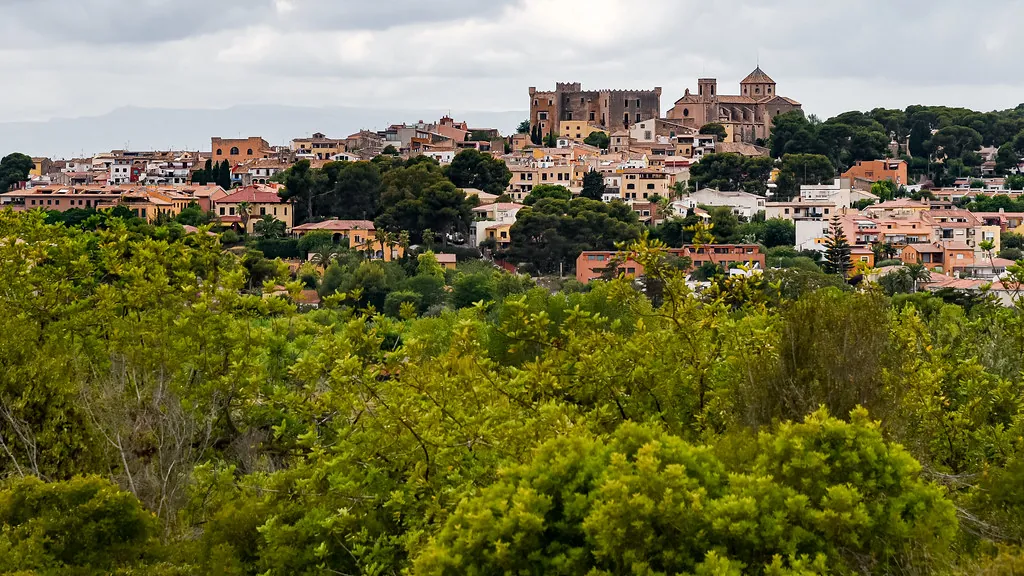
The historic centre is very small. In around twenty minutes, you can walk through it at an easy pace. The parish church of Sant Miquel is the village’s most recognisable landmark. Its bell tower rises above the rooftops and works as a natural point of reference as you move through the streets.
Around it are stone and brick houses, old doorways and the occasional corner where it is easy to imagine neighbours sitting out in the evening. There is no staged setting for visitors, no streets prepared for photographs. Renau is still a working village, with mid-morning silences and the distant sound of tractors drifting in now and then.
For travellers used to more structured sightseeing, that simplicity may feel unusual. There are no interpretative panels explaining what you are seeing. The appeal lies in observing everyday life and the way the built environment blends into the surrounding fields.
Beyond the Houses: Fields and Open Horizons
Renau becomes more interesting once you step beyond the compact urban area.
The tracks that circle the municipality cut through olive groves, almond trees and cereal fields. The landscape shifts with the seasons. In spring, the countryside turns greener and more vibrant. By summer, dry tones dominate, the land already worked and sun-bleached.
There are no signposted viewpoints or carefully marked scenic stops. Instead, the experience is about slow walking along dirt paths, passing the occasional isolated masía, the traditional rural farmhouse typical of this part of Catalonia. The horizons open out towards the interior of the Tarragonès.
On clear days, from some of the slightly higher ground, it is sometimes possible to make out a faint strip of the Mediterranean in the distance. It depends heavily on the light and the haze, so there are no guarantees. Even without that glimpse, the sense of space is noticeable.
This is agricultural land first and foremost. The fields are not decorative, they are productive. That shapes the atmosphere and explains why the area feels lived-in rather than curated.
Walking the Rural Tracks, With a Bit of Orientation
For those who enjoy walking without too much planning, the network of rural tracks around Renau offers plenty of options. Many of these paths once connected different masías and plots of land.
Most routes are straightforward, with no major climbs. The terrain is generally gentle, which makes for relaxed walks rather than demanding hikes. That said, it is wise to carry a mobile phone with a map application. There are junctions without signposts, and some paths end at private properties. It is easy to take a small detour without meaning to.
Spring and autumn are usually the most pleasant times for walking. The fields are active, birdlife is more noticeable, and the air feels very different from the dry heat that can settle over the inland areas in summer.
One practical point: bring water. There are not many public fountains in the village, and once you head out along the tracks there may be nowhere to refill a bottle. It is a small detail, but it matters on a warm day.
These walks are not about reaching a famous summit or ticking off landmarks. They are about spending time in an agricultural landscape that still functions much as it has for decades.
A Calm Counterpoint to Tarragona
Many people reach Renau as a short excursion from Tarragona. The contrast makes sense. Tarragona is known for its Roman amphitheatre, its city walls and its lively atmosphere. Within a few minutes’ drive, that urban energy gives way to quiet farmland.
For visitors spending several days in the area, Renau offers a pause from the city. It works well as a brief change of scene, a place to stretch your legs and see a different side of the Tarragonès.
Local life centres largely on Sant Miquel, the village’s patron saint. Celebrations traditionally take place towards the end of September, with simple activities that involve almost the entire neighbourhood. In summer, there is usually an open-air gathering or dance. These are not large-scale events, more the kind of evenings where people know each other and the village square fills up for a while after sunset.
So, is it worth the detour?
Renau is not a destination for travellers looking to pack their day with sights. It would be misleading to suggest otherwise. Its appeal lies elsewhere.
It works as a small diversion that lowers the pace: a short walk through the village, a ramble among the fields, and the feeling of being in a part of the Tarragonès where the landscape still sets the tempo.
Approached with that mindset, without searching for major attractions, it often leaves a positive impression. Sometimes what is needed is simply a quiet place where very little happens. Renau fits that description exactly.