Full Article
about Roda de Berà
Tourist destination known for its Roman arch, a World Heritage Site, and the Roc de Sant Gaietà.
Hide article Read full article
A Roman arch in the afternoon light
By mid-afternoon, when the sun begins to tilt westwards, the light hits the Arc de Berà from the side and the stone turns a shifting shade between honey and sand. The colour changes every few minutes. The sea is only a short distance away. It cannot be seen from here, yet it is present in the dampness of the air. Even so, the scent is more warm pine than salt.
Cars move slowly along the N‑340 nearby, as if this stretch of road were aware it is passing something far older. Tourism in Roda de Berà often begins here, in front of a Roman gateway that has remained standing for more than two thousand years.
The arch is not especially large, but it has presence. It stands beside the ancient Vía Augusta, the Roman road that once linked Tarraco, today’s Tarragona, with the south of the Iberian Peninsula. Now it sits between modern roads, with a small area where visitors can leave the car and a stone bench from which to take it in quietly.
There is no ticket office and no striking information panels. Just the monument, weathered stone and the wind moving through its opening. Close up, the marks left by the metal clamps that once held the blocks together are still visible. Small details, yet enough to suggest the labour behind its construction so many centuries ago.
From this point, a footpath follows the line of the Vía Augusta inland. It runs for about eight kilometres to El Vendrell and is fairly flat. The route passes vineyards, cultivated fields and the occasional masía, a traditional Catalan farmhouse, set back from the path. In spring the air often carries the scent of rosemary and almond blossom. Water is worth bringing, as there are not always fountains along the way.
The old centre beyond the road
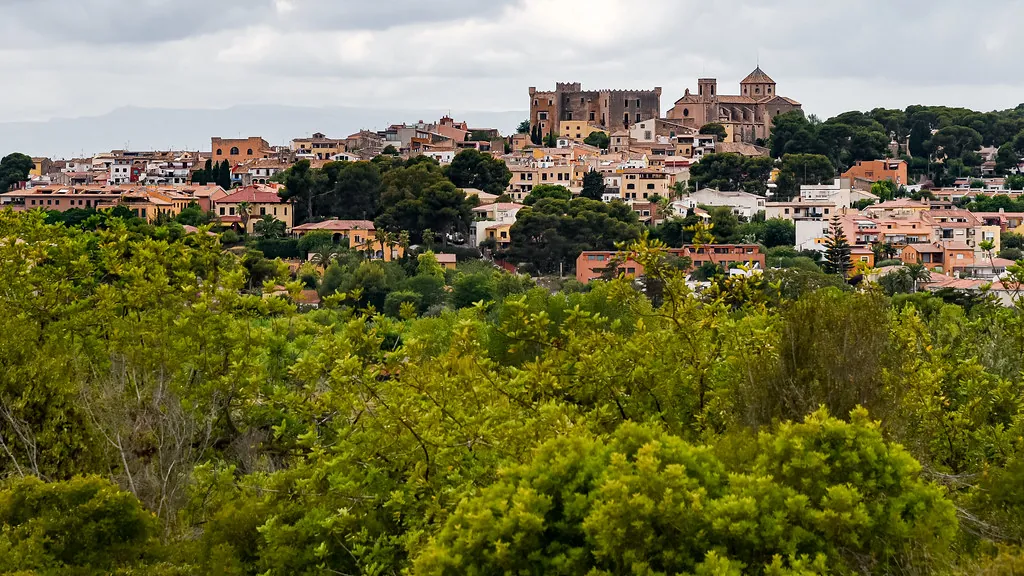
Many travellers pass through Roda de Berà without turning off. The main road lies close to the coast, while the historic centre sits slightly higher up, behind residential developments and quiet streets.
Arriving there, the atmosphere shifts. Narrow streets, half-lowered shutters at lunchtime, conversations that echo softly between pale façades. On Thursday mornings the plaça Nova usually hosts a market. Stalls appear selling fruit, locally grown vegetables and produce from the Penedès and the south of Tarragona. Voices rise and fall in the quick rhythm typical of the Catalan spoken along this stretch of coast.
The church of Sant Bartomeu, built in the 18th century, stands on a small rise. Its bell tower is made of pale stone, almost white when the sun is high. Inside, the air smells faintly of wax and old wood. If the bells begin to ring while you are nearby, the sound fills the entire space and seems to vibrate through the nave floor.
Roda de Berà does not reveal itself fully from a passing glance on the road. It asks for a short walk uphill and a pause in one of its squares, long enough to watch the afternoon settle.
Cocas, xató and late August evenings
Local cooking is similar to that found across the Tarragonès and Penedès regions. In some of the village bakeries, it is possible to order coca de recapte to take away, though it is best to arrange this in advance. This savoury flatbread has a thin base topped with escalivada, a mix of roasted vegetables, sometimes finished with anchovies or sardines. It is straightforward food, shaped by oven and grill rather than elaborate technique.
During winter, xató appears on many tables. The dish is typical of this part of Catalonia and each household prepares it slightly differently. The core elements remain a thick sauce, curly endive, desalted cod and nuts. In Roda de Berà the sauce often includes plenty of walnuts and slightly less ñora, a small dried red pepper common in Catalan cooking, than in neighbouring areas.
At the end of August, the feast of Sant Bartomeu brings a change in pace. Long tables fill the streets of the centre and improvised grills are set up outdoors. The air smells of sardines cooking over open flames and red wine poured into simple glasses that pass from hand to hand. It is one of those nights when the village remains outside until late, with neighbours and visitors sharing the same space.
Along the coast to Creixell
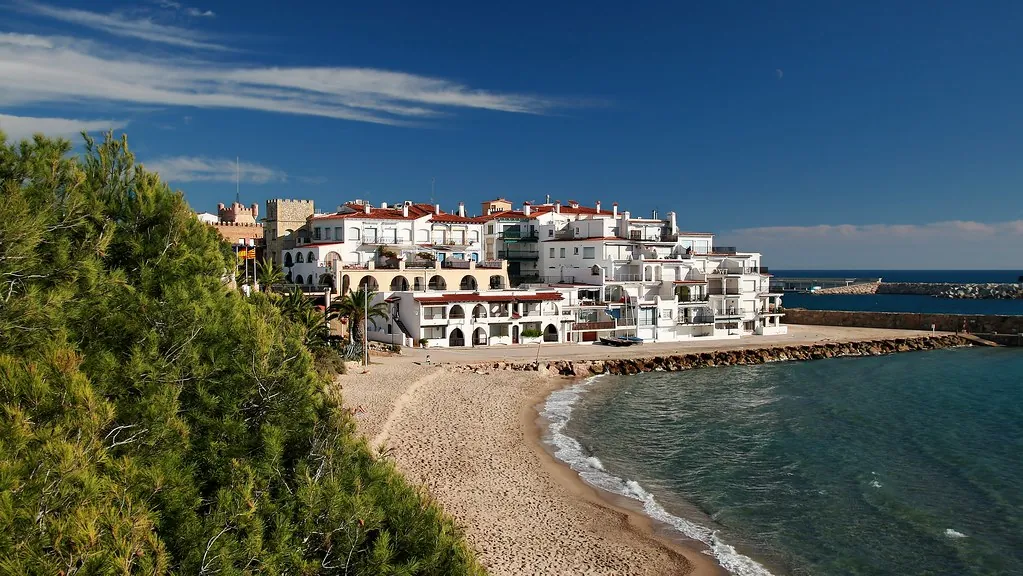
From Roda’s beach, a camí de ronda heads towards Creixell, following the line of the coast. Camins de ronda are coastal paths once used for surveillance and access between coves. This stretch runs for just over three kilometres through pine woods, patches of reddish sand and small rocky areas.
In summer the pine forest releases a strong scent of resin mixed with salt from the sea. About halfway along, a small cove appears, with flat rock platforms where local residents often sit to watch the water as evening approaches. Out of season the path is noticeably quieter. Dog prints mark the sand, a dry fishing net may lie forgotten, and the sound of the water remains constant.
Sturdy footwear is advisable. Some sections cross uneven rock, and pine roots break through the surface of the path. Near Creixell the route climbs slightly and the ground can shift underfoot.
The walk is not long, yet it changes character with the light and the time of year. In high summer it carries the energy of the beach. In autumn or winter it feels more solitary, shaped mainly by wind and tide.
When to go
Spring is often a good time to visit. Almond blossom lightens the fields and the coast sees less movement than in peak season. Autumn can also be calm, with the sea still mild at midday and the scent of the grape harvest drifting from areas near the Penedès wine region.
August brings a different rhythm. Traffic on the nearby roads increases significantly and the beaches fill early in the day. Visiting at that time means starting out early or choosing weekdays if possible.
One simple piece of advice applies in any season: do not stop at the arch alone. Climb up to the old centre, sit for a while in a square and listen as the afternoon passes. Roda de Berà cannot be understood through a quick photograph taken from the roadside. It needs to be walked, even if without a particular destination in mind.