Full Article
about Salou
Tourist capital of the Costa Daurada with PortAventura and golden-sand beaches
Hide article Read full article
On 5 September 1229, James I set sail from the beach of Salou bound for Mallorca with a large fleet. It was not a leisure trip but a military campaign. From this stretch of coast began the expedition that opened the expansion of the Crown of Aragon towards the Balearic Islands. The choice of location was deliberate. The bay forms a natural shelter where ships could anchor with a degree of protection.
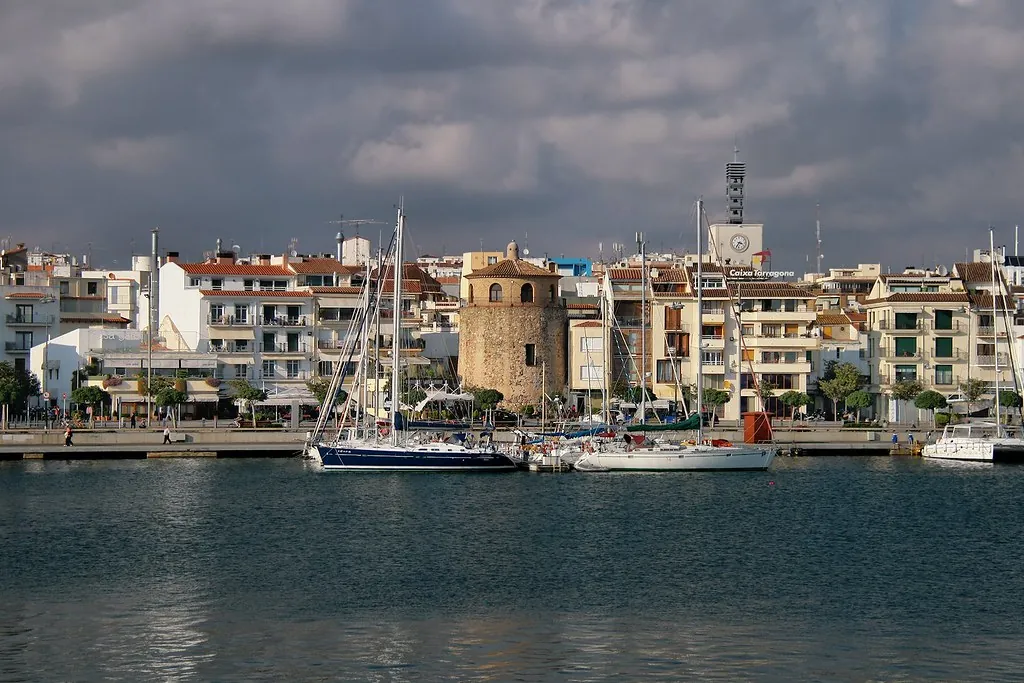
Eight centuries later, that same coastline has become one of the best-known tourist centres in the Tarragonès region of Catalonia. The setting that once served strategic and commercial purposes now draws visitors for very different reasons, yet the link with the sea remains central.
From Roman settlement to modern municipality
The area now occupied by Salou did not begin with seafront hotels and apartment blocks. Archaeological remains from the Roman period have been found at various points in the municipality, including the so-called villa of Barenys. Excavations revealed structures connected to agricultural production, such as ceramic kilns and elements associated with wine pressing. These findings point to an active rural estate between the final years of the Roman Republic and the early centuries of the Empire.
For many centuries, the site functioned mainly as a maritime outlet for inland Tarragona. Its natural harbour allowed goods to be loaded and troops to embark, as happened with the fleet of James I. The coastline was valued less as a destination and more as a point of departure.
The decisive transformation came in the 20th century. Tourism began to reshape the coastal strip and, with it, the local economy. Salou became an independent municipality separate from Vila-seca in the late 1980s, after a lengthy administrative and judicial process. Since then, urban growth and visitor numbers have defined much of its present character.
Coastline on foot: beaches, coves and changing rock
Much of Salou’s shoreline can be explored on foot along sections of the old camí de ronda, the historic coastal path once used to patrol the coast. Several kilometres of walkway link beaches and small coves, passing along stairways, wooden footbridges and stretches shaded by pine trees.
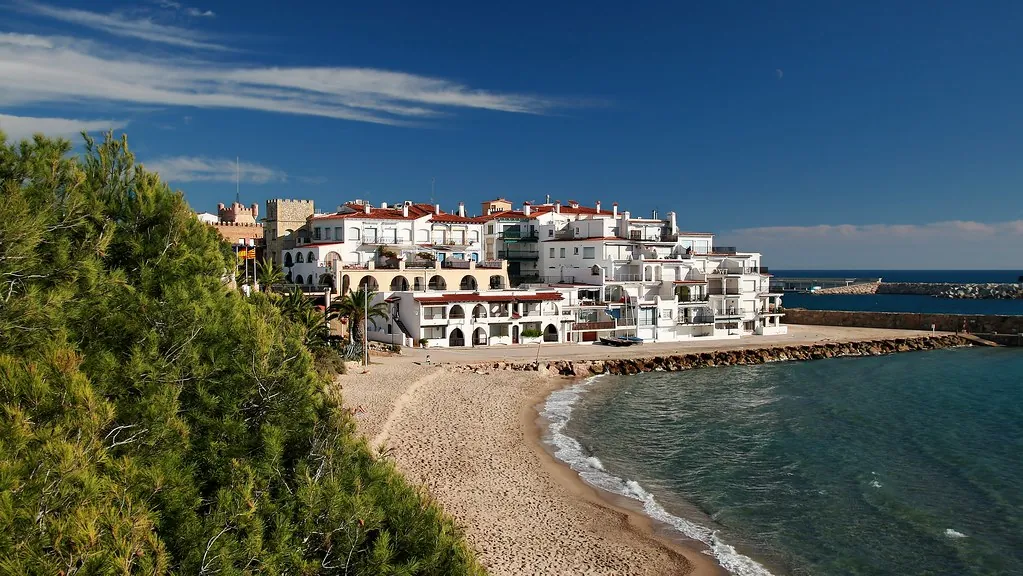
Platja de Llevant is the largest and most urban beach. From there, the route connects with smaller coves, some set between limestone rock and Mediterranean vegetation. The contrast between wide sandy beaches and these narrow inlets is closely tied to the area’s geology. Where the rock resists erosion, the coastline breaks into coves. Where sand accumulates, long beaches form.
At the eastern end stands the Far de Salou, built in the 19th century to signal this stretch of coast to passing ships. Around this point, the orientation of the shoreline shifts and the landscape opens out towards Cap de Salou. The terrain there is less even than in the central area, with more pronounced changes in level.
Walking remains one of the simplest ways to understand how the coastline changes over short distances. Pine-fringed paths give way to open sand, then to rocky edges where the Mediterranean meets the shore in small, enclosed bays.
A coastal cuisine with deep roots
Although tourism now outweighs fishing in economic terms, the maritime tradition of the area has not disappeared. In nearby ports, especially Cambrils, fish and seafood from the Mediterranean are still brought ashore.
Local tables often feature arroz caldoso with seafood, rice dishes served with a rich broth. There are also combinations of fish and meat, a style typical of Catalan cooking, alongside straightforward preparations of grilled fish. In season, xató appears as well. This salad, linked to the wine culture of the Camp de Tarragona and the Penedès, forms part of a wider regional culinary tradition.
These dishes originated along a coastline shaped by fishermen and farmers. Even though the surroundings have changed considerably over the decades, the flavours remain recognisable in many menus. The connection between land and sea continues to define what is eaten, just as it once defined how people worked.
Festivals shaped by the sea
Salou’s calendar includes several celebrations connected to maritime life. In mid-July, the festival of Sant Elm takes place. Traditionally associated with seafaring communities, it usually includes religious events and a maritime procession in the port area, along with communal meals organised by local associations.
The night of Sant Joan, on 23 June, marks the symbolic start of summer. Beaches fill with bonfires and groups who spend the night by the sea, following a custom observed along much of the Mediterranean coast. Fire and water come together in a celebration that blends the seasonal shift with longstanding popular tradition.
Winter brings a quieter atmosphere, yet Carnival maintains a degree of activity when visitor numbers are lower. Parades take to the streets and the customary burial of the sardine, a humorous closing ritual common in Spanish Carnival celebrations, signals the end of the festivities.
Getting your bearings in Salou
The municipality is generally easy to navigate on foot or by bicycle, particularly along the seafront promenade and the coastal front. The central area is mostly flat, which makes moving between the main beach and nearby streets straightforward. Cap de Salou, by contrast, has more uneven ground.
Tarragona lies a few kilometres away and can be reached easily by road or public transport. The nearest airport is in Reus.
Anyone planning to explore the coves around Cap de Salou should wear footwear with good grip. In several places the paths are narrow and sections of exposed rock require care. Outside the peak summer months, the atmosphere changes noticeably. With fewer visitors, it becomes easier to appreciate the coastline at a slower pace and to see how this former point of departure has evolved into a destination in its own right.