Full Article
about Gandesa
Capital of Terra Alta, known for its modernist winery and its key role in the Battle of the Ebro.
Ocultar artículo Leer artículo completo
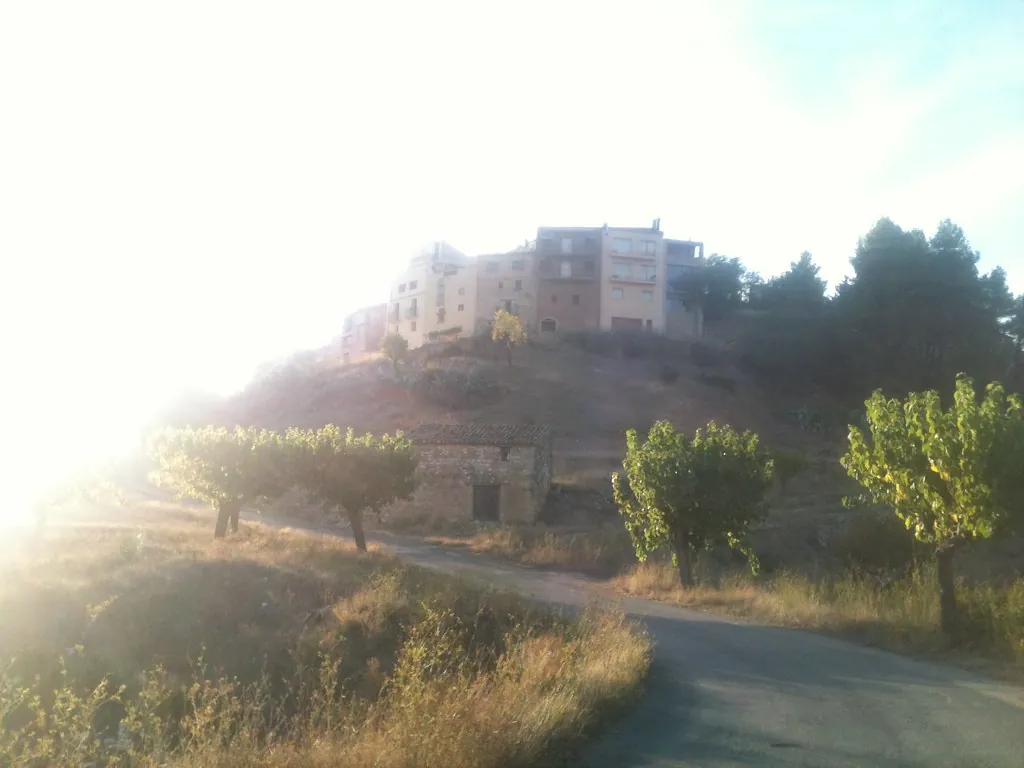
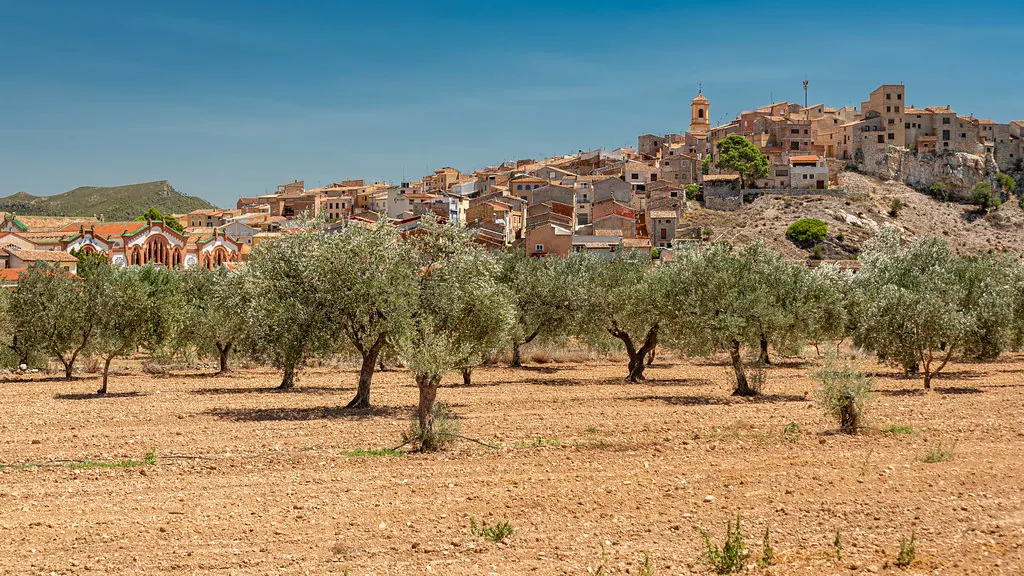
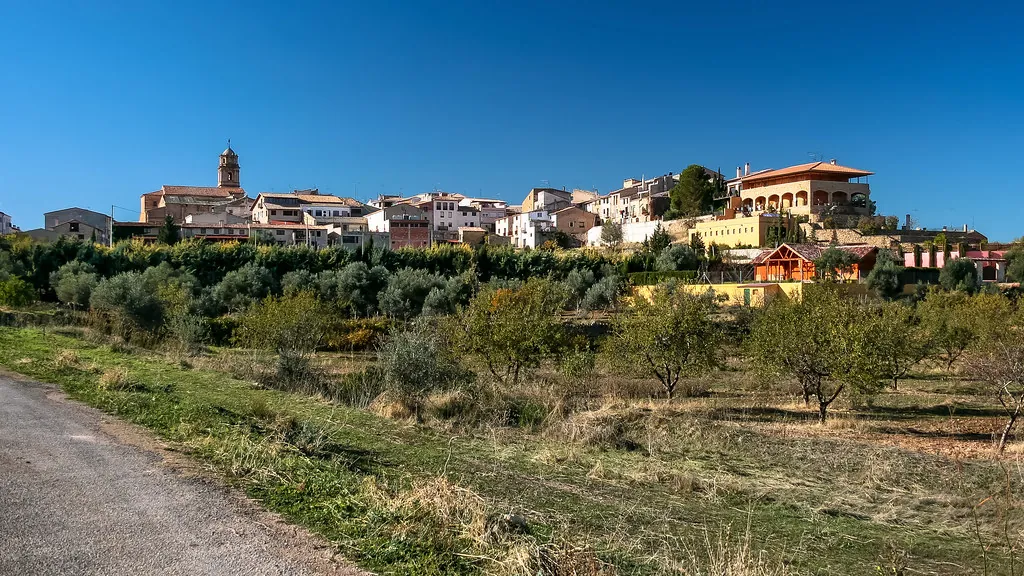
The cathedral isn't what you'd expect. No spires, no bells—just soaring brick arches built for wine, not worship. Gandesa's Cooperativa Agrícola rises like a Gaudí daydream in terracotta, its parabolic vaults catching the light that bounces off 363 metres of limestone ridge. Up here the Ebro basin spreads out in corrugated rows of garnacha vines, the air thinner and cleaner than the coast 80 kilometres east. Winter mornings scrape below freezing; July thermometers nudge 38°C. Either season, the village feels suspended above the hurry of modern Catalonia, a place where tractors still outnumber taxis and the weekly market blocks the main road without apology.
The Wine Cathedral and What Lies Beneath
Cèsar Martinell, a disciple of Antoni Gaudí, designed the cooperative in 1919 when phylloxera devastation was memory and co-ops were the future. Inside, the nave is a working production hall: stainless-steel tanks now occupy the space where locals once delivered grapes in wicker baskets. Tours run most mornings, but never on a whim—phone first. Entry is €7 and includes a glass each of white and red; the white garnacha, kept cool in underground cement vats, shocks visitors who thought Spanish whites began and ended with albariño. A bottle to take away costs €6 from the adjoining shop, cheaper than water in Barcelona.
The same building hides a smaller, darker story. During the Civil War the cellars doubled as a field hospital. Bloodstains allegedly remain on one corner of brick, though guides tactfully avoid macabre over-emphasis. Still, the contrast is unsetling: a temple to pleasure built on foundations of conflict. Most British visitors leave discussing wine; a few return the next day asking where the trenches are.
Walking the Battle Lines
Gandesa sat on the front line of the 1938 Battle of the Ebro, the Republic's last major offensive. The Centre d'Estudis de la Batalla de l'Ebre (CEBE), five minutes' walk uphill from the cooperative, occupies a modest townhouse behind a rusty artillery piece. Inside, a 25-minute film in English explains why the ridge you're standing on changed hands three times in three months. Artefacts lean towards the mundane—tin plates, boot leather, a child's shoe—making the loss feel sharper than any statistics panel.
Opening hours are maddeningly Catalan: Wednesday afternoons only, Thursday–Saturday 10:00-13:30 and 16:00-18:30, Sunday till 14:00, locked solid Monday and Tuesday from October to March. Miss the slot and the town offers little consolation except coffee. When it is open, €5 buys admission and a map of signposted trench routes. The closest, Coll del Moro, is a ten-minute drive along the TV-3423; stone bunkers survive in sheep fields, though brambles now guard the parapets. Wear proper shoes—flip-flops disappear into thistle.
Flat Streets, Steep Valleys
Gandesa's historic core is mercifully level, a rarity in Terra Alta. From Plaça Catalunya, Carrer Major meanders past sandstone doorways whose iron balconies support geraniums and the occasional sleeping cat. The 16th-century church of the Assumption squats at the top, its Gothic bones baroquely clothed after an 18th-century facelift. Nothing demands more than a glance, yet the ensemble rewards slow strolling. Elderly residents still carry bread in string bags; they will point out the former cinema, now a Chinese bazaar, without being asked.
Beyond the ring road the terrain folds into ravines and almond terraces. Two footpaths start opposite the agricultural depot. The shorter, green-waymarked, loops three kilometres to a derelict lime kiln and back—ideal before lunch. The longer PR-C 100 links Gandesa with Vilalba dels Arcs across eight kilometres of rolling vineyards; the route is way-marked but shadeless. Carry water even in April—British spring skin sizzles fast at this altitude.
Eating and Drinking Without Fuss
Set lunches revolve around the same ingredients the Romans found here: rabbit, olive oil, almonds, snails. Restaurant Terra Alta on Ctra. de Vilalba serves three courses, bread and a bottle of house white for €14. Expect conejo con caracoles—rabbit stew thick with garden snails—followed by coca de recapte, a sort of Catalan pizza topped with roast aubergine and red pepper. Vegetarians get escalivada, though choices shrink as the week wears out.
Evenings wind down early. By 21:30 tables empty and shutters clatter; the last bus to Tortosa left at 19:00. Nightlife is a plastic chair outside the Bar Central, where locals argue over Barça's defence and the price of diesel. Order a copa of garnacha tinta; it costs €2.20 and tastes like warm blackberries. Conversation stops when you pronounce it properly, then resumes in slow, curious English.
Getting There, Getting Out
Public transport exists to frustrate. There are two weekday buses from Tortosa, none on Sunday. A hire car is essential; Reus airport is 75 minutes by motorway, Barcelona two hours. Roads are good but mountain bends tighten west of town—allow extra time after dark when tractors leave no reflective trace. Parking is free almost everywhere; the largest bay beside CEBE doubles as Saturday market space, so move before 08:00 or stay until stalls pack up at 14:00.
Spring and autumn deliver 22°C days and crisp nights; vines glow emerald or rust depending on the month. August is fierce—shops close 13:30–17:00 and even the swifts seek shade. Winter brings empty terraces and the faint smell of wood smoke, but driving can be treacherous after the occasional snowstorm.
Last Orders
Gandesa offers no postcard beaches, no flamenco troupe, no souvenir fridge magnets—just a high-plateau honesty that either compels or sends you hurrying back to the coast. History buffs can spend two solid days between trenches and wine cathedrals; foodies leave satisfied if not astonished; hikers get vistas without the Pyrenean crowds. The village neither courts nor rejects outsiders. Instead it carries on fermenting grapes and memory in equal measure, confident that the next vintage—like the next generation—will arrive on its own Catalan time.