Full Article
about La Fatarella
A village of narrow, steep streets with a strong legacy from the Battle of the Ebro and dry-stone buildings.
Ocultar artículo Leer artículo completo
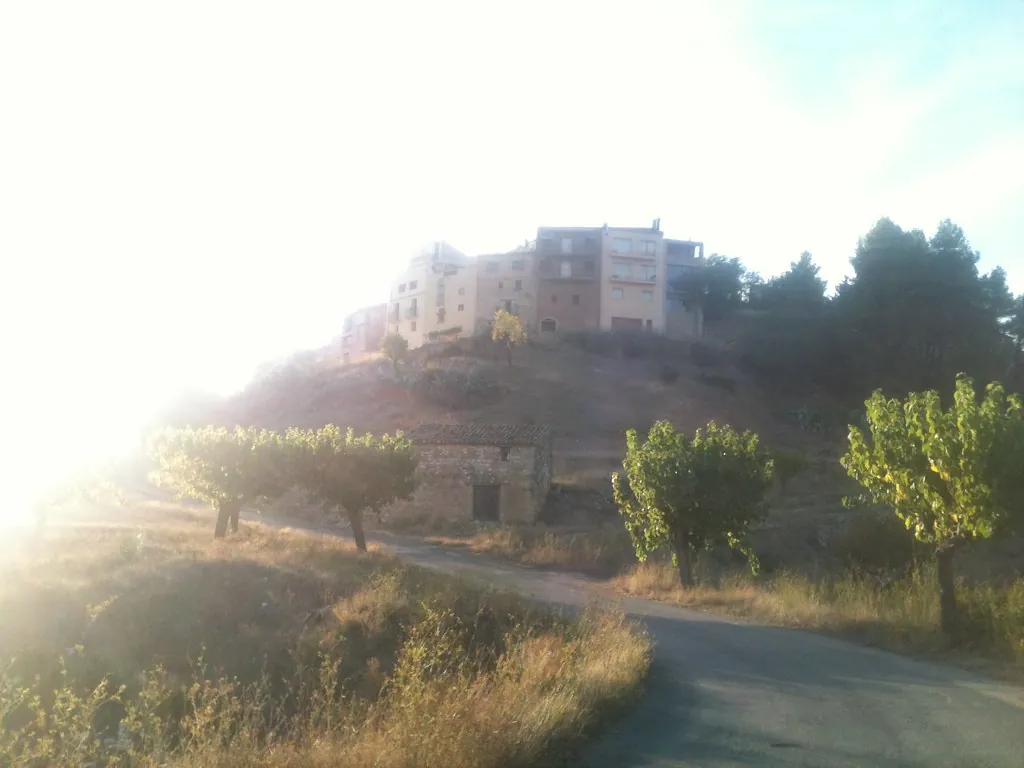
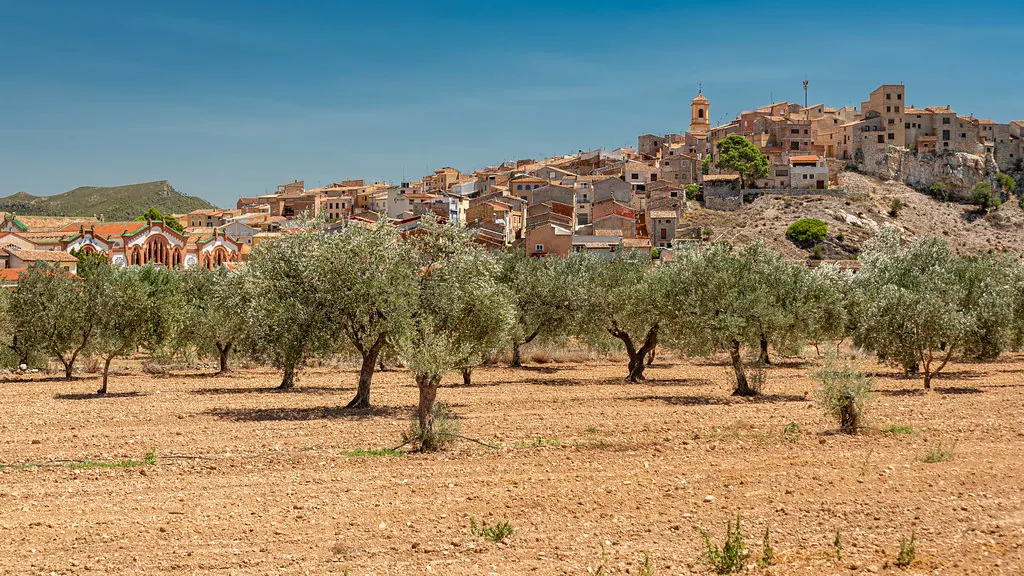
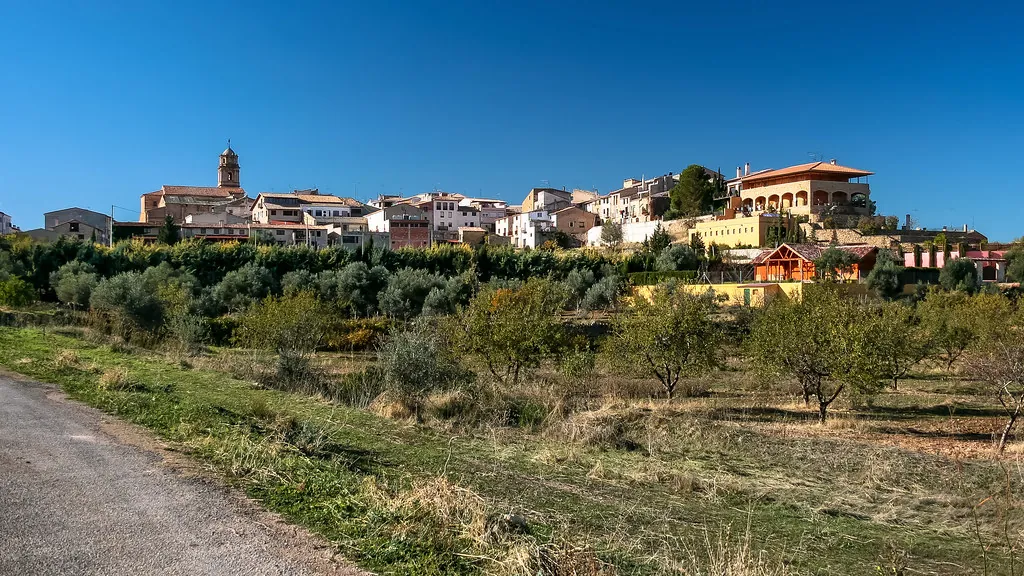
The bakery shuts at two. By half past, the village has folded into itself for siesta, shutters rattling down like eyelids. Four hundred and eighty-seven metres above the Ebro plain, La Fatarella’s only traffic is the wind scraping across the battlements of somebody’s great-grandfather’s house. From the mirador outside the church, the land falls away in olive-green terraces until the river glints, thirty kilometres distant, and even the motorway hum is swallowed by sky.
This is Terra Alta at its most matter-of-fact: stone, sun and silence. The 872 inhabitants have no need to advertise tranquillity; they simply live it. Come August they still parade San Juan Bautista through lanes barely two metres wide, the band marching in circles because anywhere straighter would send them over a cliff. Fireworks ricochet off medieval walls—brief, loud reminders that the place is alive, not moth-balled for visitors.
The Hill That Remembered a War
Every track out of the village ends in a bunker. Scraped into limestone during the summer of 1938, the Republican trenches sit only twenty minutes’ walk from the upper houses; you can pick out Gandesa and the razor-backed ridge of Puig de l’Àliga exactly where nationalist guns once zeroed-in. Information panels are scarce, so download the town-hall PDF before you set off or you’ll simply wander among thigh-high walls wondering whose initials are scratched inside. Guided walks leave from the ajuntament on the first Sunday of each month (€8, Catalan only, cash only). They finish with a glass of terra-alta white—earthy, metallic, an acquired taste that improves with altitude.
Winter hikers should know the battlefield loops turn slippery after rain; clay sticks to boots like fresh concrete. In July the problem is heatstroke: by eleven the rocks radiate 40 °C and the only shade is inside the bunkers themselves—dark, echoing ovens that smell of dust and rosemary.
Vineyards That Work Harder Than the Tourists
Below the walls the slope is stitched with garnatxa vines. Mechanisation is impossible on gradients this fierce, so everything is done by hand. Visit during the third week of September and you’ll meet tractors blocking the only crossroads, trailers heaped with blue-black grapes that stain the tarmac like squashed damsons. The cooperative on Carrer Major sells last year’s harvest for €4.50 a litre; bring your own bottle or they’ll rinse out a plastic water container swiped from the bar.
Celler Piñol, five minutes down the TV-723 towards Móra la Nova, opens for tastings at noon—advance email essential. Their “l’Avi Arrufi” garnatxa-blend scooped 94 Parker points, yet the warehouse door still sticks and the winemaker’s dog sleeps across the doorway. No gift shop, no coach park, just wine that tastes of ironstone and sun-baked thyme.
A warning for drivers: the local alcohol limit is 0.5 g/l, lower than Britain’s, and the Guardia Civil like to wait where the village speed limit drops to 30 km/h. Wines here sit at 14.5% ABV; one generous pour can tip a breathalyser.
Eating When the Bell Strikes
Food runs on medieval hours. Breakfast is coffee and a coiled pastry at Bar Bernat before ten; after that the griddle is scrubbed clean. Lunch starts at two, dinner at nine, and if you haven’t reserved by six the choice is crisps in the square. Cal Xirricló keeps a table for drop-ins—check the blackboard wedged by the door. Expect grilled lamb cutlets the size of a child’s forearm, salt-crusted and served with fried potatoes scooped from a metal bowl. Vegetarians survive on escalivada (smoky aubergine and pepper) and the obligatory goat-cheese salad drizzled with local honey. Dessert is crema catalana finished with a hot iron poker; the sugar snaps like thin ice.
Bread is rationed. Waiters bring exactly four slices per person—requests for more are met with the same puzzlement you might reserve for asking a London barman to top up a half-pint. Prices are gentle: three courses with a bottle of house red rarely tops €22.
Sunday night everything is closed. Self-caterers should stock up in Gandesa’s Condis on the way up; the village shop locks at one on Saturdays and reopens Monday, by which time the lettuce resembles origami.
Walking Off the Calendar
Seventeen signed routes fan from the upper gate. The PR-C 113 loops four kilometres through almond groves to the abandoned hamlet of Vilalba dels Arcs; stone arches still stand, but the church façade is pocked by rifle fire. Spring blossom turns the hillside snow-white for ten days around 20 March—arrive too early or too late and you’ll see only green.
Fit walkers can continue to the Ebro itself, an eight-hour there-and-back via the old ferry slipway at Pas de l’Ase. Carry two litres of water per person; the river looks close, yet the descent drops 400 m and the return climb is relentless. Mid-June add cicadas, fig sap and the smell of fennel thick enough to chew.
Mountain-bike tyres wider than 40 mm are advised—the tracks are flinty. Road cyclists face gradient warnings of 18% on the TF-723 from Móra la Nova; compact gearing essential unless you enjoy oxygen debt.
Where to Fall Asleep Before the Town Does
Accommodation totals thirty beds. Cal Perandreu offers five doubles in a 1730 house renovated with underfloor heating and Wi-Fi that flickers whenever the microwave starts. The roof terrace faces west; sunset ignites the Priorat hills the colour of burnt toffee. Room rates €85 B&B, closed January–February because, as the owner shrugs, “even the ghosts get cold”.
Budget travellers can rent the town refugi: dorm beds €15, kitchen stocked with mismatched knives and one huge paella pan. The key hangs on a nail inside the tourist office—leave the money in the honesty envelope or they’ll hunt you down at the bakery.
Camping is technically forbidden beside the old trenches, but the Guardia rarely patrol after dark. A discreet bivvy among the olive terraces gives dawn views that hotel brochures would mortgage a kidney for—just pack out every olive stone; farmers notice new litter faster than fresh paint.
Getting Here, Getting Out
Reus airport is 75 minutes by car; Barcelona 2 h 15 m if the AP-7 behaves. No onward bus enters the village: the daily service from Gandesa stops at the football pitch below and climbs no further. A taxi costs €20—book at the station bar or the driver simply won’t appear. Trains on the Barcelona-Zaragoza line halt at Móra la Nova, 18 km away; bikes can be pre-booked on board if you reserve the space when you buy the ticket, not after boarding.
Leaving always feels earlier than it is. The morning sun lifts the valley mist like a theatre curtain, and for a moment you see the whole stage—river, ridges, villages—laid out exactly as every shepherd since the Moors has seen it. Then the bakery shutters clatter up, someone starts a chainsaw, and La Fatarella returns to the business of being ordinary. Just remember to fill the tank before you leave; the next petrol is thirty kilometres away, and the hill that brought you here is even steeper going down.