Full Article
about Torrelles de Llobregat
Known for the Catalunya en Miniatura park and its cherries
Hide article Read full article
Between the Llobregat valley and the hills
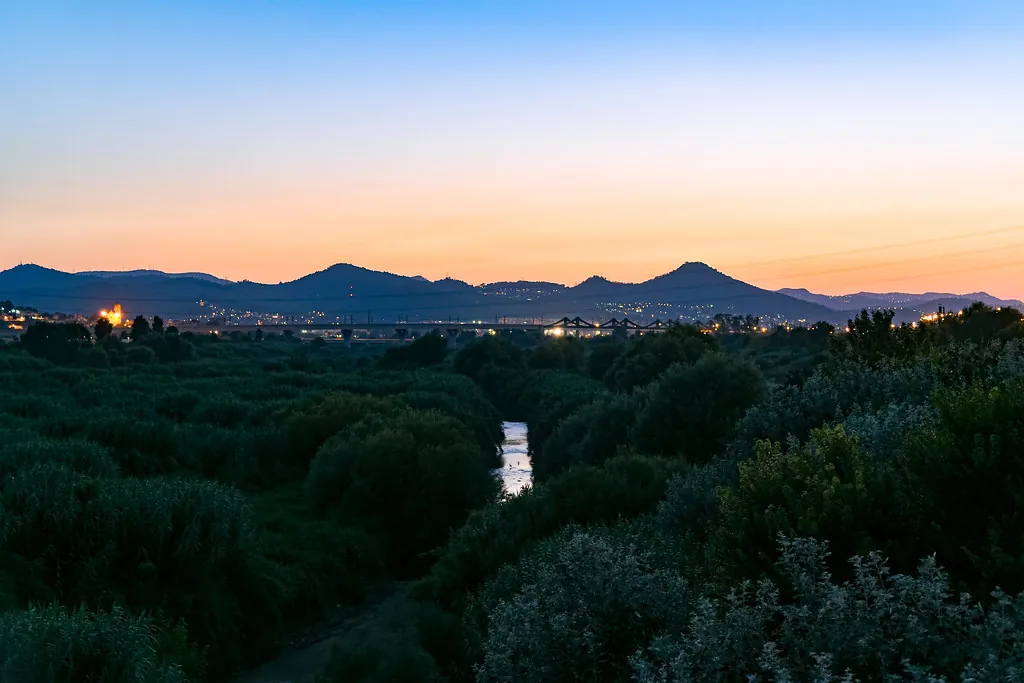
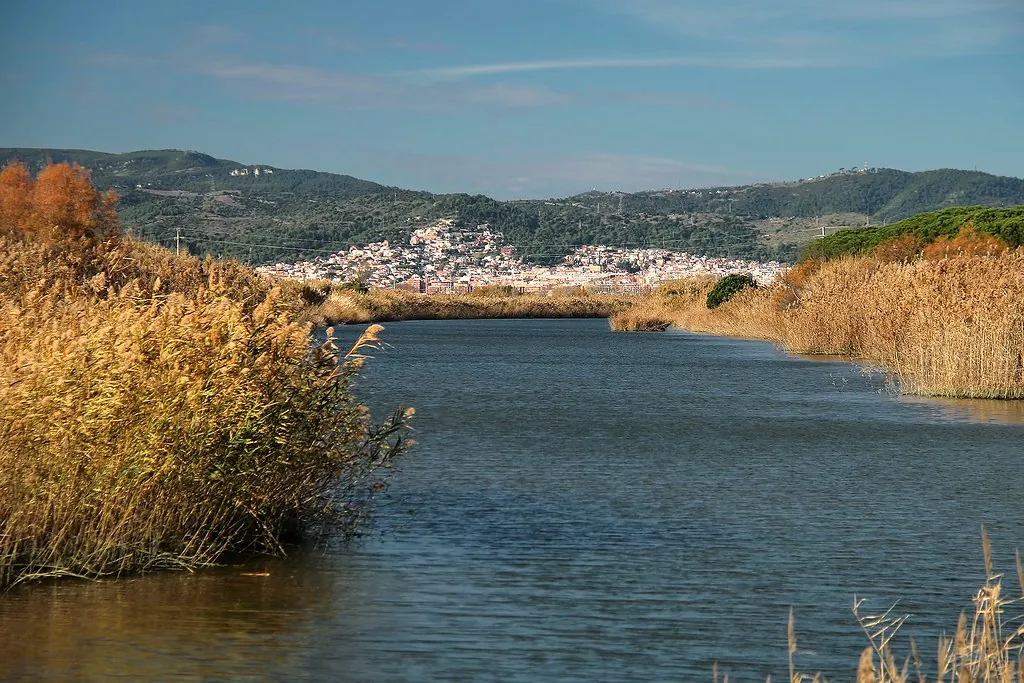
Torrelles de Llobregat sits in the lower valley of the river that gives the region its name. The geography explains its character: a short distance from Barcelona, the terrain begins to rise into the first hills, creating a buffer of cultivated land. The town feels separate from the metropolitan area because it is, its layout still shaped by centuries of working the slopes.
The earliest written record comes from 964, in documents from the monastery of Sant Cugat concerning farmland and tithes. That agricultural origin is visible today. The municipality remains dispersed, with houses scattered among fields, a pattern that has persisted.
Vineyards and dry farming defined the local economy for generations. The shift came in the last century. Now, the slopes are largely planted with cherry trees, a crop that has redrawn the landscape and the annual calendar here.
The parish church on the rise
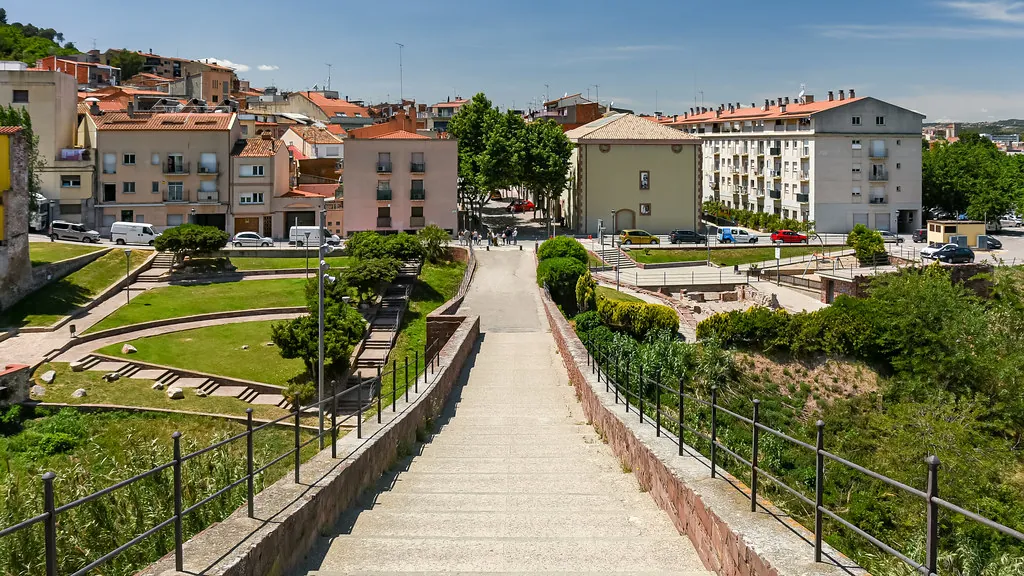
The parish church of Sant Martí occupies a small elevation above the old centre. The building you see is from the late nineteenth century, a Neo-Gothic construction typical of that era's church renovations in Catalonia. It replaced a medieval temple that had become too small.
Look at the base of the walls; you can spot stones reused from the earlier building. It was common practice not to waste material.
The interior is quiet. The main altarpiece is polychrome wood, added around the turn of the twentieth century. The stained-glass windows show scenes from the life of Saint Martin, including the familiar one of him sharing his cloak. It’s a standard iconography for this saint, connecting this village church to a wider visual tradition.
Barraques and the rhythm of the fields
The agricultural tracks leading out from the town pass several dry stone huts, known as barraques de pedra seca. They are small, built entirely from fitted stones without mortar, used for shelter or tool storage.
Many still stand along the trails, some clear, others half-hidden by brush. They mark how work was organized on these hills before machinery changed everything.
Now, cherry trees fill many of the same plots. When they blossom in early spring, the landscape changes for a few weeks. The flowering draws visitors from nearby towns, after which the pace settles back into its quieter rhythm.
Catalunya en Miniatura and its context
On a hillside within the municipality is Catalunya en Miniatura, a park created in the 1980s. It contains scale models of buildings and monuments from across Catalonia.
The setting matters. The miniatures are placed among pines and rolling terrain typical of this area. The contrast between the crafted models and the natural surroundings is part of the visit. They’ve included a model of Torrelles's own Sant Martí church, allowing a direct, if unusual, comparison.
The park presents a specific, condensed vision of heritage. It gathers landmarks you would otherwise have to travel widely to see, yet it remains physically rooted in the soil of Torrelles.
A local collection on cinema
In a restored house in the village, there is a small museum dedicated to cinema history. The collection was largely assembled over decades by a local enthusiast.
It holds early cameras, projectors, and period posters. The scale is modest, but it has a coherent focus on the technical evolution of film. They sometimes organise screenings, linking the objects to the act of viewing.
Its existence here, amid cherry orchards and dry stone huts, points to the layered interests that can coexist in a small community.
Practical notes
Torrelles de Llobregat is a few kilometres inland from Sant Boi. From Barcelona, the drive is relatively short, though the final approach follows local roads that climb into the hills.
There is public transport, but services are not frequent; checking timetables beforehand is necessary.
Spring, during the cherry blossom, is the busiest period. The rest of the year is markedly quieter. For most visitors then, Torrelles functions as a starting point for walks along the network of agricultural tracks and paths that cross its hills—a landscape still defined by cultivation, despite the proximity of the city.