Full Article
about Anglesola
Town with a rich medieval heritage and a tradition of the Tres Tombs festival.
Hide article Read full article
A Village on the Open Plain
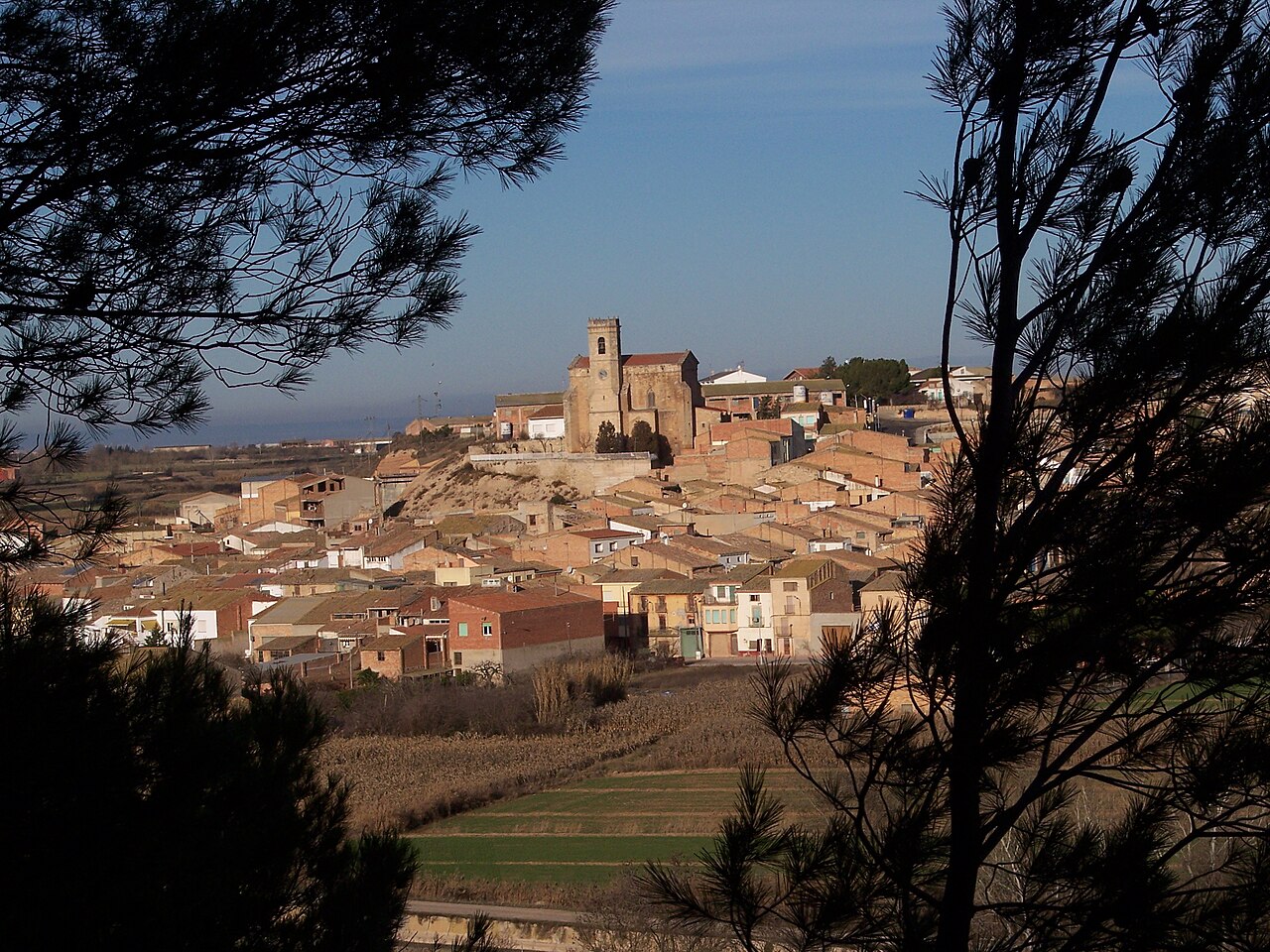
Tourism in Anglesola makes sense when you picture a very simple scene: a straight road, fields on either side, and in the distance a church tower rising just high enough to say, “there’s a village here”. This is not a place people stumble upon while hunting down famous monuments. It is somewhere you turn off to visit for a while, to see what daily life looks like on the plain of Urgell in Catalonia.
Anglesola has around 1,300 inhabitants and lies a few kilometres from Tàrrega, in the heart of an agricultural landscape. That proximity means many travellers see it as a quiet pause while exploring the wider comarca of Urgell. The setting shapes everything. Long plots of farmland stretch towards the horizon, irrigation channels run in straight lines, and tractors begin moving while the air is still cool in the morning.
The impression is immediate and clear. This is a village defined less by headline sights and more by its relationship with the land around it.
Life Centred on Santa María
In Anglesola, most roads and routines seem to lead back to the parish church of Santa María. The current building dates from between the 16th and 18th centuries, with later alterations that become noticeable if you pay attention to the details. It is not monumental in scale, yet it carries the quiet weight of continuity. Generations have passed through its doors for baptisms, local festivals and funerals, while its bells have marked the hours for the whole community.
The nearby square acts as a social anchor. In summer, when the heat eases towards evening, residents gather outside to sit and talk in the open air. Winter brings a more subdued atmosphere, but the rhythm of the bells remains unchanged.
This pattern of church and square at the centre reflects the way many small Catalan villages are organised. In Anglesola, the layout feels practical rather than theatrical, shaped by everyday needs rather than display.
Straight Streets, Solid Houses
The old quarter does not twist and turn like the medieval centres found elsewhere in Catalonia. Streets here are straighter, which makes sense in a place that grew in step with agricultural work rather than defensive walls or fortifications.
A slow walk reveals small details that hint at earlier times. Some doorways preserve old wrought iron. In other places, stone walls appear beneath more recent renovations. Larger houses recall periods when families lived directly from the land and needed space for tools, produce and animals.
Certain homes have been restored. Others remain much as they were, with the look of buildings that have weathered many winters. Nothing feels arranged for effect. The atmosphere is practical and unembellished, shaped by continuity rather than reinvention.
The Landscape of Urgell
The edge of the village is only a few minutes away on foot. Beyond it, rural tracks cross the surrounding crops in every direction.
The terrain is completely flat. As a result, the horizons are wide and the sky seems to take up half the view. The colours change with the seasons. At times the fields turn golden with cereal. At others they appear freshly worked, the soil dark and open. In early growth periods, low green shoots barely break the surface of the earth.
Irrigation channels and small canals form part of this scenery. Sometimes you hear them before you see them, the steady sound of water moving slowly through the network that sustains the crops. The presence of these channels underlines how closely tied the village is to farming.
There are no dramatic viewpoints or forested slopes. The appeal lies in the scale of the plain itself, in the way light and weather alter an apparently simple landscape.
Easy Routes Between Villages
This part of Urgell suits those who prefer uncomplicated walks or cycle rides. Agricultural paths link Anglesola with nearby villages such as Bellpuig and Agramunt. There is barely any change in elevation, so the routes feel accessible and straightforward.
No one should expect mountain trails or shaded woodland. The plan here is simpler: walk or pedal while observing how the fields shift with the time of year. Birds move between the crops, from blackbirds to other species commonly found across these plains.
The experience is gentle and repetitive in a reassuring way. Distance is measured less by climbs and descents than by the gradual change in light and colour.
Festivals and Everyday Rhythms
Anglesola maintains traditional celebrations that continue to shape the local calendar. The Fiesta Mayor usually takes place in summer, with popular events and moments when it seems the whole village gathers outdoors. For visitors unfamiliar with the term, a Fiesta Mayor is the main annual festival common to towns and villages across Catalonia, combining religious elements with community activities.
Winter brings events linked to Sant Antoni, a tradition widely observed in agricultural areas of Catalonia. These occasions include blessings and small rituals that blend religious practice with popular custom, reflecting the longstanding ties between faith and rural life.
Outside festival dates, the atmosphere is defined by ordinary scenes. Neighbours chat in front of the town hall. People tend small vegetable plots. Children play near the church. These moments may appear modest, yet they give a clear sense of how the village functions from day to day.
A Worthwhile Pause in Urgell?
Anglesola is not presented as a weekend destination in its own right. The village does not compete with larger towns or landmark attractions. Its appeal makes more sense as part of a wider journey through Urgell.
A short walk through the centre, followed by time along the tracks that lead out towards the fields, offers a fair understanding of the place. The scale is manageable. The rhythms are easy to grasp.
Anglesola does not try to impress. What it offers instead is a direct view of life on the plain, shaped by agriculture, routine and the steady marking of time by church bells. For travellers interested in how small communities in this part of Catalonia actually work, that can be reason enough to stop for a while.