Full Article
about Vilagrassa
Town known for its almond fair; leaning medieval gate
Hide article Read full article
Vilagrassa: A Medieval Outline on the Plain
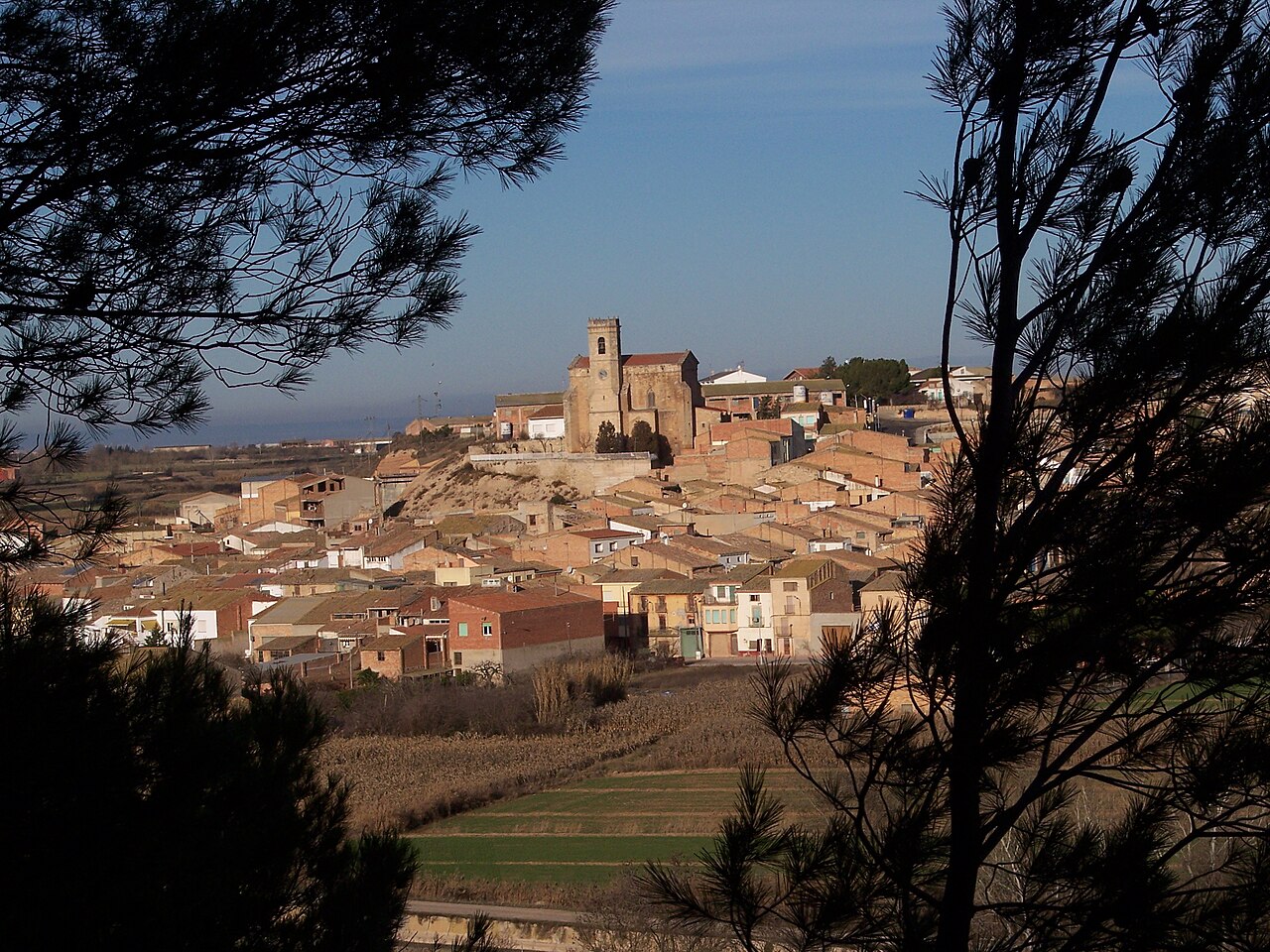
Vilagrassa sits on a gentle rise in the comarca of Urgell, a slight elevation above the vast cereal plain of inland Lleida. Its population, just over six hundred, lives within a street plan that was fixed centuries ago. The village began as a walled medieval settlement, and that defensive origin still dictates the layout of its core.
The old quarter feels compact because it was designed to be. Streets are narrow, turning at sharp angles, confined by the perimeter that once protected them. You can see traces of the old walls embedded in the sides of houses, and certain archways mark where gates would have stood. The architecture is a mix: thick medieval masonry sits beside later, simpler constructions, showing how the village adapted without ever sprawling. This isn't a restored centre; it's simply the place where people have lived for generations.
From any edge of the village, the view opens onto the secà—the dry-farmed cereal fields of the Catalan depression. The landscape is geometric and seasonal. In April, it's a wash of green wheat; by late July, it turns a brittle gold; after the harvest, it becomes a pale expanse of stubble. The horizon is long and flat, with Vilagrassa appearing as a natural part of the terrain, not an interruption to it.
The Logic of a Walled Village
To understand Vilagrassa's shape, start with its walls. Built likely in the 14th century, a period of local conflict in Urgell, they were mostly dismantled or absorbed into housing long ago. Their outline, however, is preserved in the street grid. Walking the perimeter, you can sometimes spot the rough stonework of the old curtain wall forming part of a garden or a house foundation.
The parish church of Sant Magí occupies one of the highest points within this old enclosure. The building shows several phases: a Romanesque base, later Gothic modifications, and a sober 18th-century bell tower. Its importance was always more strategic than artistic. Positioned here, it served as a watchtower over the plain and as the community's spiritual anchor. The interior is unadorned, focusing attention on its functional role.
A walk through the centre takes less than an hour. The Plaça Major, though small, acts as a natural gathering point. Look for stone coats of arms above a few doorways—quiet markers of local lineage. Street names like Carrer del Forn (Oven Street) and Carrer de l’Hospital tell you what services were once housed there. This slight elevation the village holds was a practical medieval choice: it provided a clear line of sight over the crops and any approaching movement.
Paths into the Plain
A network of rural tracks, paved with compacted earth, leads from Vilagrassa towards Tàrrega or Anglesola. These are working roads for tractors, but they are also used for walking and cycling. Their appeal is not in physical challenge but in immersion. They let you step into the ordered geometry of the Urgell plain: immense rectangular fields, straight lines of poplars acting as windbreaks, and the occasional isolated masia, or farmstead.
This is a landscape shaped by scarcity of water and abundance of sky. The sheer flatness makes you notice small things—the way light changes over the course of a day, the distant silhouette of another village on the horizon. In spring and early summer, if you walk quietly at dawn or dusk, you may hear the distinctive call of the sisó (little bustard) or see an alcaravà (stone-curlew) in fallow land. They are shy birds, easily startled in such open country.
For broader context, Verdú is a short drive away. Its castle, prominently visible on a hill, is a reminder that this plain was a frontier zone. Vilagrassa was one link in a chain of such settlements, each within sight of the next, structuring and securing this agricultural territory.
Rhythm of the Year
The village calendar follows the farming cycle. The festa major in late August honours Sant Magí. The pattern is familiar across Urgell: outdoor concerts, communal meals in the square, and a generally slower pace as the summer heat breaks.
Earlier in the year, around January 17th, Vilagrassa marks the feast of Sant Antoni Abat. The tradition includes the blessing of animals—a direct nod to the village's agrarian roots—and the lighting of foguerons, or bonfires, in the streets.
Vilagrassa’s value lies in its clarity. It is a case study of how a medieval defensive settlement was grafted onto an agricultural plain and persisted. There are no grand monuments. Instead, you find a direct relationship between the tight streets of the old quarter and the expansive fields that begin where the last house ends. It shows how form, here, has always followed function.