Full Article
about Canejan
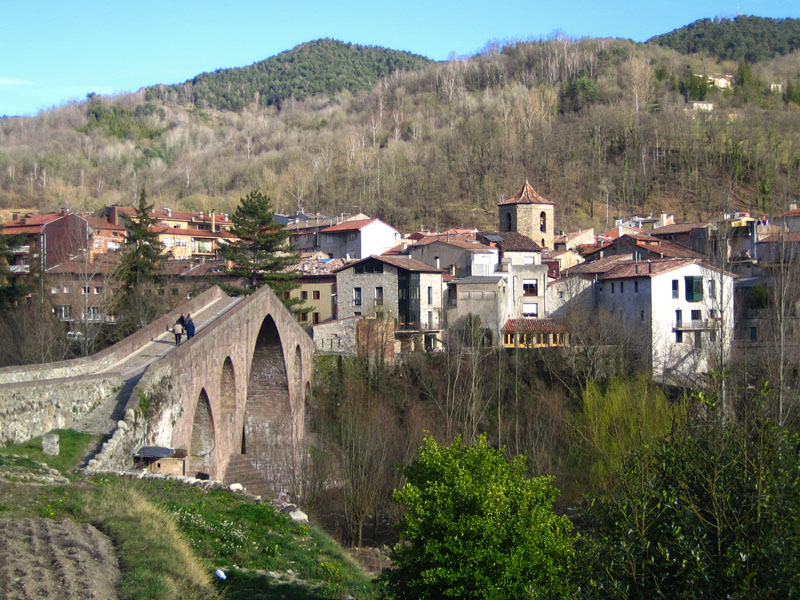
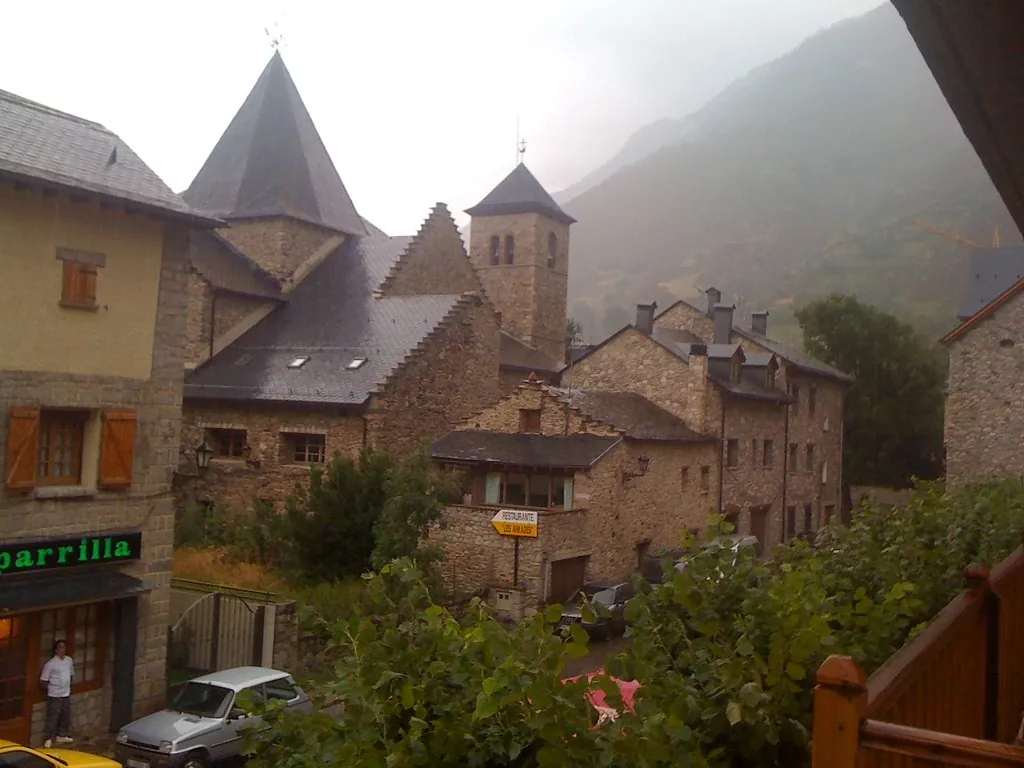
Mountain village overlooking the Toran valley; traditional Aranese architecture
Hide article Read full article
Canejan: A Village on the Border
Canejan occupies the last hillside in the Val d’Aran before the French border. Its population, around ninety-five people, places it among the smallest settlements in the valley. This scale, combined with its position away from the main road that runs through the Aran, has meant change arrives slowly here. The village feels less like a destination and more like a place that has simply continued.
Its structure follows a Pyrenean logic. Houses cluster tightly, built from the local stone with steeply pitched roofs to shed winter snow. For centuries, life here was organised around livestock and what could be grown on the terraced slopes. The proximity to France was not an abstract border but a practical reality; paths over the mountains facilitated everyday exchange and seasonal movement for generations.
The Parish Church and the Layout of Stone
The parish church, dedicated to San Saturnino, anchors the village. The current building shows layers of modification, a common trait in Aranese valley churches where funds and needs changed over time. Its architecture is unassuming: a simple nave, thick walls, a bell tower integrated into the mass of the building. In a community this size, its significance was always more social than monumental.
The lanes spread out from the church square. Many houses retain the clear markers of Aranese construction: dark slate roofs, wooden balconies, and substantial stone doorframes. Look for the ground-floor openings that once led to stables or storage—a practical solution for keeping animals sheltered during the long winters. The orientation of the buildings is deliberate, designed to capture sunlight on the south-facing slopes.
Walking through Canejan, you see a settlement shaped by climate and necessity. The streets are narrow, the buildings compact. There is no superfluous space.
The Forest That Begins at the Doorstep
Mixed woodland—beech, oak, some pine—covers the slopes directly above the village. Paths start between the last houses and enter the trees immediately. These are not recreational trails in origin; they were routes to pastures, to neighbouring hamlets, or over the passes into France.
Many remain walkable today. Some climb steadily to clearings that open up views back across the Val d’Aran and toward the border ridges. You are unlikely to meet many other walkers, even in July or August. The sound is more often the rustle of leaves or a jay’s call.
This is a good area for observing woodland fauna. Roe deer tracks are common in the softer ground near streams. Wild boar root in the forest floor. Birds of prey circle on thermals above the slopes. The transition from village to forest is not a journey; it is a matter of taking a few dozen steps uphill.
Community Rhythm in a Small Space
Canejan exists within the broader cultural frame of the Val d’Aran. Aranese, the local Occitan variant, is heard in conversations among neighbours. Annual traditions follow a community calendar, not a tourist one.
The main festivity, the patron saint’s day in summer, typically involves a morning mass, a gathering in the square, and perhaps a small dance in the evening. It feels like a family reunion, because in many ways it is—a time when people who now live elsewhere return.
The food here is the food of the valley. Dishes are substantial, developed for cold weather and physical work. The olla aranesa, a stew of meats, beans, and vegetables, is a fixture at communal meals. It shares the same pragmatic character as the architecture: nothing wasted, everything serving a purpose.
A Practical Note on Visiting
You reach Canejan by a local road that turns off the main valley route near Les. The village is small; a thorough walk might take forty minutes if you stop to look at details. The real scope for exploration lies on the paths that lead into the woods.
For meals, provisions, or a place to stay, you will need to go to one of the larger towns in the valley, like Vielha. Canejan itself provides none of those services. What it offers is different: a clear example of how a Pyrenean village was organised to endure. In a valley where some towns have expanded considerably, Canejan remains defined by its original scale and its direct relationship with the mountain.