Full Article
about Es Bòrdes
Aragonese town at the confluence of rivers; gateway to the beautiful Artiga de Lin valley
Hide article Read full article
A brief stop in the valley
If you’re heading to Es Bòrdes, parking usually means leaving the car along the main road or in one of the slightly wider sections nearby. Spaces are limited, and in summer they fill up quickly. The village itself is small enough to walk through in 15 or 20 minutes, so timing matters a bit. Mid-morning or later in the afternoon tends to be quieter. At certain times of day there’s a steady flow of traffic passing through, as this is a route within the valley rather than a cul-de-sac.
There isn’t a grand historic centre or a collection of standout monuments waiting to be ticked off. Es Bòrdes is straightforward, lived-in, and modest in how it presents itself. What it offers is closer to a snapshot of everyday life in the Val d’Aran than a curated visitor experience.
Sant Félix and the shape of the village
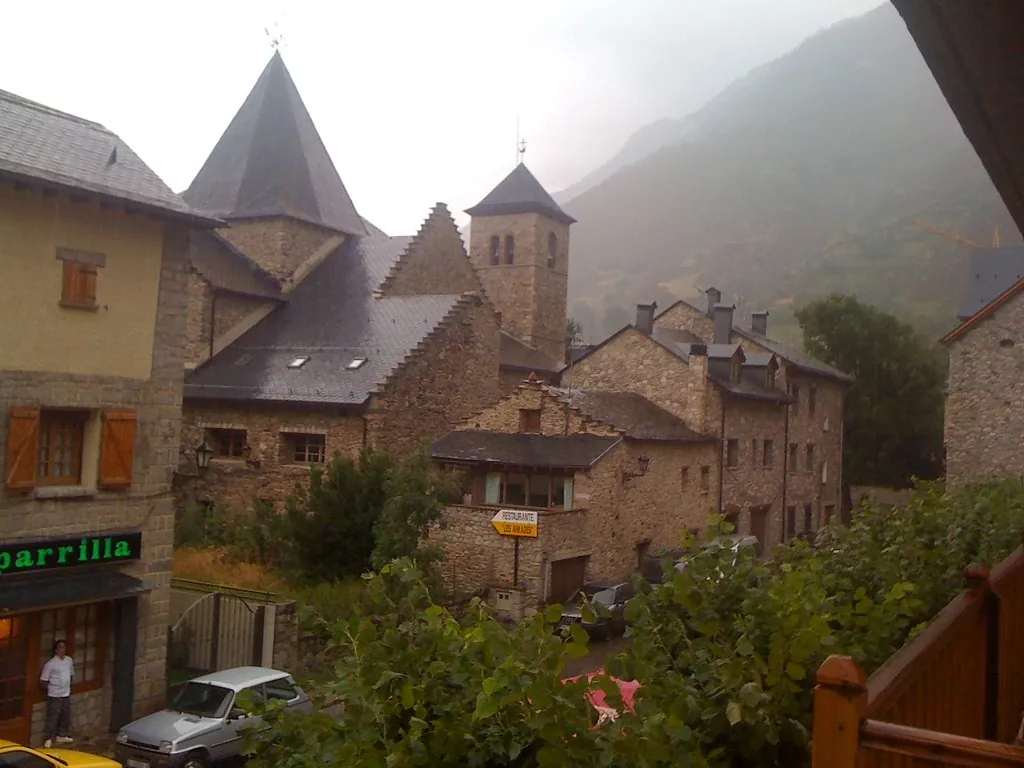
The parish church of Sant Félix is the clearest point of interest. It has Romanesque origins, though later changes are visible, and its tower can be seen from several streets as you move around the village. If it happens to be open, it’s worth stepping inside briefly. There are a few altarpieces and Baroque elements, though opening times do not always line up with a visit.
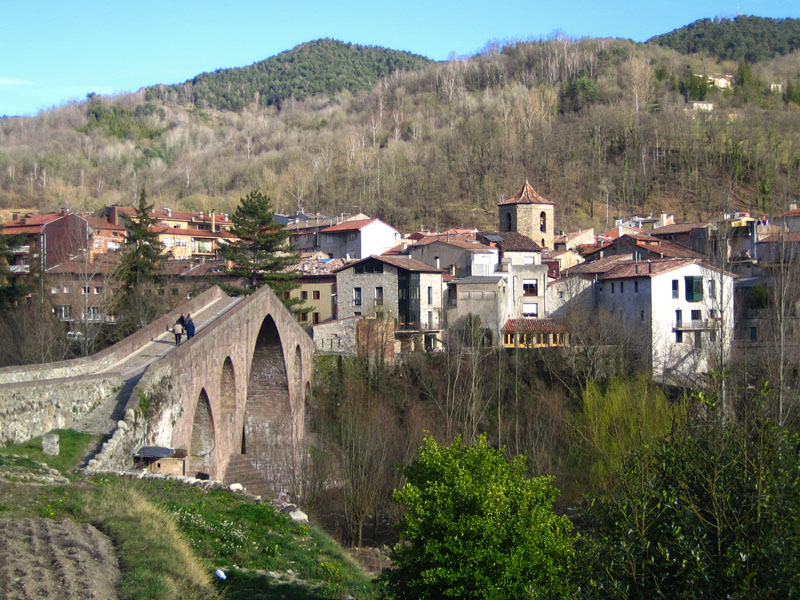
Beyond that, the village unfolds as it is today. Stone houses line the streets, with steep slate roofs and narrow balconies. Nothing feels especially restored or arranged for visitors. These are working homes, many with stacked firewood, parked cars, and the small details that come with daily life in a mountain valley.
The Garona river runs alongside the village and is audible from several points. There are spots where you can get close to the water and pause for a while. In spring, the river carries more force due to snowmelt, and the sound and appearance shift noticeably with the season.
Walking out into the valley
Paths lead out from Es Bòrdes towards the surrounding hills and along the valley floor. You don’t need a car to stretch your legs. A short walk can take you through a mix of woodland and open meadows. Beech and fir trees are common here, typical of this part of the Val d’Aran.
The appeal lies less in marked sights and more in how the village sits within its setting. Houses cluster together, fields spread out around them, and the mountains feel close rather than distant. Arriving on foot from one of the nearby paths tends to give a better sense of this relationship than simply driving in for a quick look.
For those who want a slightly longer wander, there are easy routes along the valley floor. These are not exclusively for visitors. Locals and livestock share the same paths, which adds to the sense that this is a working landscape rather than a designed walking area. In autumn, the change in colour is especially noticeable, particularly where the trails pass through stretches of beech woodland.
Nearby Vielha and seasonal rhythms
Vielha is about a ten-minute drive away and acts as the main hub for the area. If you need shops or are looking for more activity, that’s where most people end up. Es Bòrdes, by contrast, stays quiet and limited in scope.
In winter, some visitors use the village as a base if they are heading to ski in Baqueira‑Beret, which is within reasonable driving distance. There’s no specific transport from the village up to the slopes, so getting there means using a car.
Food in the area reflects the wider Val d’Aran. Dishes such as olla aranesa, a hearty local stew, appear on many menus, alongside game when in season and various cured meats. For greater variety, Vielha again becomes the main reference point.
For photography, the interest is in small details rather than wide, dramatic views. In colder months, chimneys release steady streams of smoke. Stone walls show their texture up close. When heavy snow falls, it gathers on rooftops and changes the look of the streets. Es Bòrdes is not the most visually striking village in the valley, but walking without rushing can reveal quieter, more specific scenes.
Traditions through the year
Local traditions follow a familiar rhythm for this part of the Pyrenees. The patron saint festivities are usually held in August, with simple events taking place in the streets and celebrations linked to the church. Exact dates vary from year to year, so it’s worth checking in advance if you want to coincide with them.
The night of San Juan, marking the summer solstice, is also observed here as in many Pyrenean villages. Bonfires are lit and people gather outdoors, creating a lively atmosphere for the evening.
At Christmas, nativity scenes appear and traditional songs are sung in the church. These are not large-scale events organised for visitors, but rather the usual way of marking the season within the community.
A place to pass through, not to rush
Es Bòrdes works best as a short stop within a wider route through the Val d’Aran. Park the car, walk down towards the river, spend a little time in the streets, and then continue through the valley. The pace here is slow, and the village does not try to be anything else.