Full Article
about Naut Aran
Upscale municipality with the Baqueira Beret resort and beautiful villages like Arties.
Ocultar artículo Leer artículo completo
At 1,267 metres, the morning air bites even in late April. Smoke drifts from slate roofs in Salardú, and the church bell—an octagonal Romanesque tower older than the Magna Carta—echoes across a valley still patched with snow. This is Naut Aran, the uppermost wedge of the Val d’Aran, where Catalan road signs give way to Aranès, a dialect of Occitan, and where the Pyrenees feel suddenly taller, steeper and emptier than anything the French side ever promised.
Most winter visitors race straight to Baqueira-Beret, the sleek ski station ten minutes up the road, and barely notice the string of stone villages they pass through. That is the first advantage: lift queues here are shorter than in the Alps, yet the snow record is equally reliable—200 cm bases are routine by January. The second advantage is what happens after the lifts close. Instead of karaoke bars, you get Unha’s single bakery shutting at six, the smell of pine logs and the sound of the Garona river melting overnight ice.
A Roofline That Survived the Boom
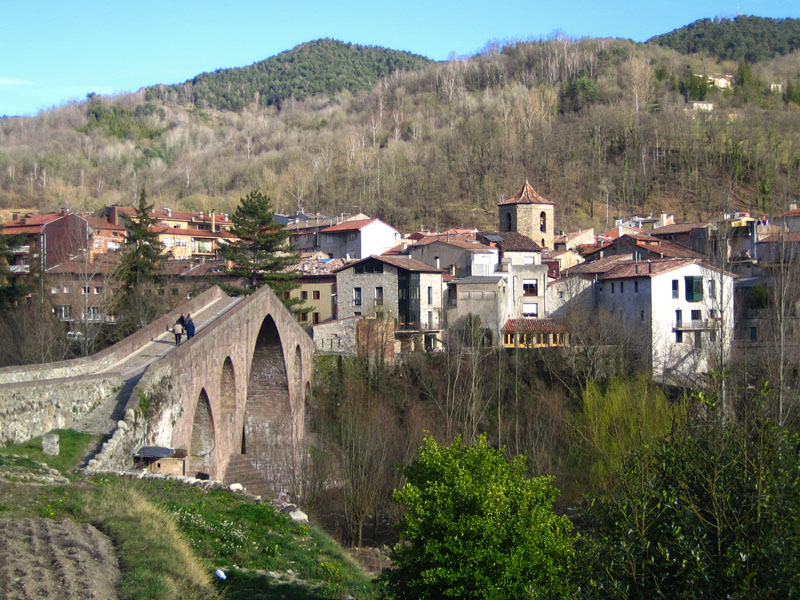
Spain’s coastal resorts rewrote themselves in concrete during the 1970s, but planning laws this high were strict. The result is a cluster of hamlets—Bagergue, Gessa, Tredòs—where houses are still built from local granite and roofed with thin slices of dark schist. Wooden balconies are painted ox-blood red or deep green; geraniums appear in July, yet even in peak season the streets feel lived-in rather than curated. A farmhouse doorway in Tredòs still bears a 1649 datestone; next to it someone has parked a modern Fiat Panda covered in snow. No one thinks this odd.
Churches matter here. Each village has one, usually Romanesque, always unlocked during daylight. Step inside Sant Feliu in Bagergue and you’ll find faded frescoes whose blues remain bright enough to make a Tate restorer weep. In Salardú, the Crist de Salardú, a walnut-carved crucifix from 1150, hangs in deliberate shadow above the altar. Drop a euro in the box and the lights flick on for ninety seconds—time enough to notice the figure’s expression, part serenity, part exhaustion, as if it already knew the mountain passes would stay impassable until May.
Walking, With or Without Skis
Summer brings a different rhythm. The road to the ski station becomes a shuttle service for hikers bound for the Colomers or Restanca cirques, glacial bowls stocked with cobalt lakes. Waymarking is excellent—look for yellow-and-white stripes—but gradients are honest: a “short” stroll to the nearest ibón can still climb 400 m. Start early; afternoon clouds build like clockwork and temperatures drop fifteen degrees in an hour. Carry a windproof even if the village square is baking.
Winter walking is quieter. From Unha, a tracked path follows the old irrigation channel to Bagergue, 3 km of gentle contouring through pine and fir. Snow-shoes can be hired in Salardú for €18 a day; the same shop will lend telescopic poles and sketch a route on a photocopied map. Higher up, the Camino de la Llibertat traces escape lines used by downed Allied aircrew during the Second World War; information panels appear at unlikely intervals, half-buried in drifts, reminding you that neutrality was never simple in these parts.
What Dinner Costs, and What It Tastes Like
Mountain food is built for altitude. The textbook order is olla aranesa, a two-course stew that starts as a thick broth of white beans, cabbage and pork belly, then reappears as meat on a separate plate. One portion feeds two hungry skiers; expect to pay €22–26. Local charcuterie uses wild boar rather than supermarket pork, giving a deeper, almost gamey flavour. Vegetarians survive on grilled mountain lamb—sorry, that’s the extent of the irony—and crespèths, thin crêpes served with blueberry jam made from fruit picked within sight of the chairlifts. House wine from the Somontano region arrives in 50 cl porrons: you lift the spout and aim. White shirts are advised to abstain.
Prices match French Alpine resorts once you factor in lift passes (€62 weekdays, €219 for six days) and mountain restaurants where a burger hits €16. The difference is in the extras. Mid-range hotels—think family-run three-stars—store skis overnight, hand out cake at 4 p.m. and will make you a packed sandwich for the airport if you ask the night before. None of this appears on the bill; it is simply how business is done when the season lasts barely four months.
Getting There, Staying Warm
Toulouse airport is the quickest gateway: two and a half hours on the A64, then the Vielha tunnel, a toll bore that pops you out into the valley like a cork. Barcelona adds an extra hour but gives better flight choice from the North of England and Scotland. Car hire is essential; winter tyres are compulsory on the C-28 above Vielha, yet rental desks sometimes “run out” of equipped vehicles. Pack snow chains in hand luggage and photograph the speedometer: scratches are charged aggressively.
Accommodation splits between ski-in apartments at Baqueira and stone houses in the villages. Salardú has the liveliest après—three bars and a pharmacy open until eight—but light sleepers prefer Unha or Bagergue, where silence is broken only by the clatter of heating oil vans at dawn. Book before mid-October if you want English-speaking ski instructors; the school employs twelve, and they are fully reserved by Christmas.
The Catch
There are downsides. English is scarce once you leave the pistes; learn a courteous “Bon dia” (Aranès) or at least “Buenos días” (Spanish). Mobile data drops to 3G in side streets and supermarket queues can stretch to twenty minutes during Spanish school holidays—book a click-and-collect slot in Vielha on the drive up. Finally, the weather is genuinely alpine: minus eighteen is not headline news, and white-outs close the access road several times each winter. Carry water, blankets and a charged phone on every journey.
Yet the reward is a pocket of the Pyrenees where stone barns outnumber chalets, where shepherds still move cattle to summer pasture along tarmacked roads, and where the loudest noise at ten p.m. is the church clock counting the hour. Stay a week and you start planning excuses to return: one more ridge walk, another bowl of olla, that unskied couloir you spotted from the chairlift. The mountains will still be there, still empty, still waiting.