Full Article
about Vilamòs
Considered the oldest village in the valley; panoramic views of Aneto
Hide article Read full article
A hillside village in the Val d’Aran
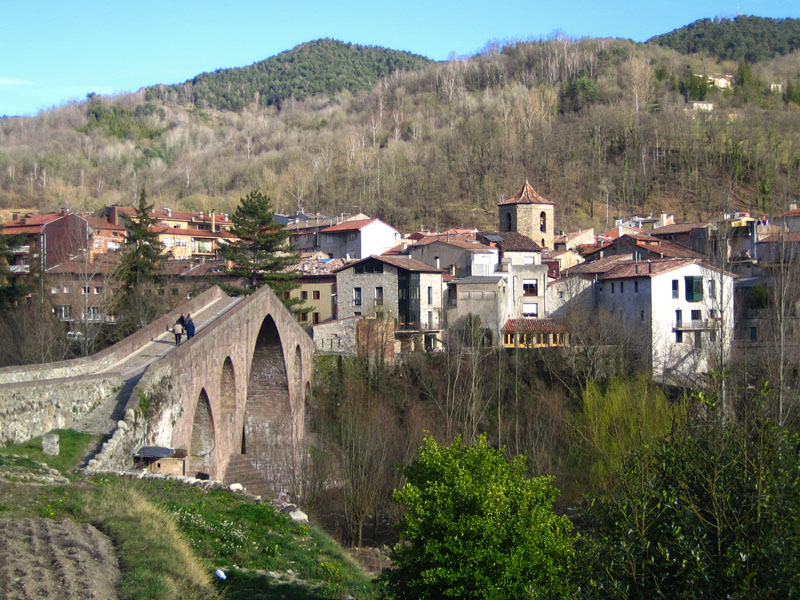
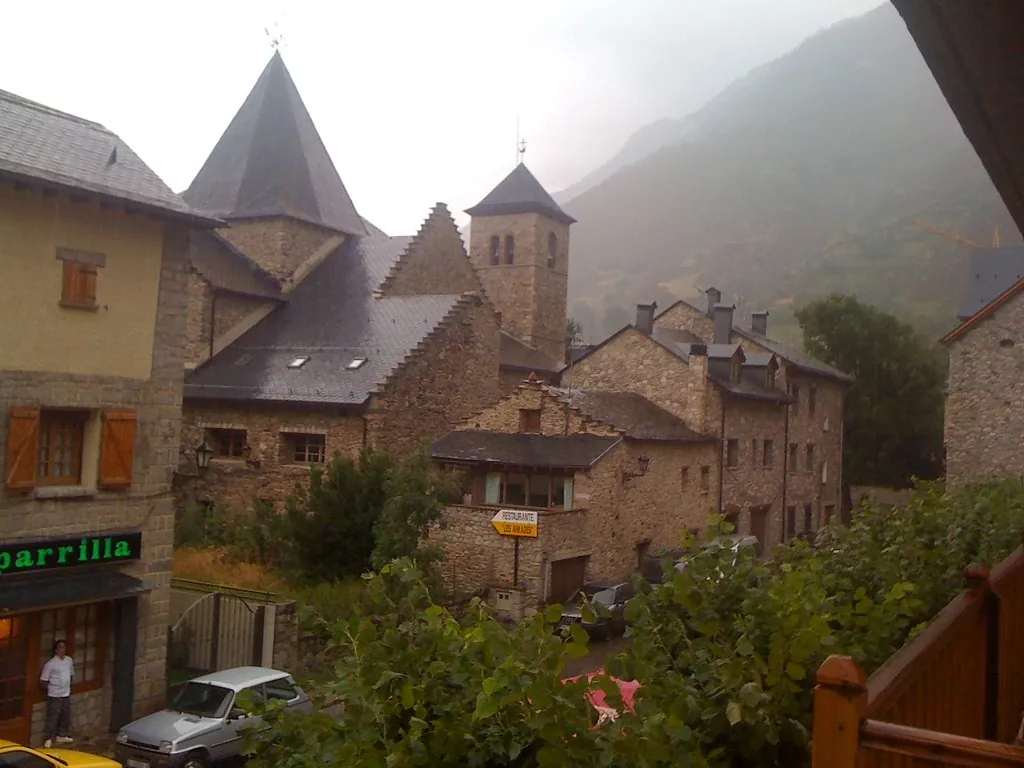
Tourism in Vilamòs begins with a simple fact: it is one of the smallest villages in the Val d’Aran and one of the best at preserving the structure of a traditional mountain settlement. It sits on the southern side of the valley at around 1,255 metres above sea level, spread across a slope that forces the houses to be arranged on different levels. With just over a hundred residents, the village keeps the compact layout typical of Pyrenean communities, with narrow streets, stone walls and slate roofs designed to cope with long winters.
At the centre stands the church of Santa María, around which the small cluster of houses is organised. This is not a place reshaped by tourism. Its scale remains that of a rural community in the valley, something that comes through in the quiet rhythm of its streets and the lack of large facilities.
The immediate surroundings are covered by beech and fir forests, with open meadows closer to the village. This part of the valley lies slightly away from the busiest areas, which helps explain why Vilamòs has changed less than other settlements in the Aran. Even so, Vielha is only a few kilometres away by road and acts as the main point of reference for services and travel within the valley.
Stone, slate and the shape of the village
The church of Santa María is the most visible building in Vilamòs. Its origins are usually placed in the Romanesque period, probably in the 12th century, although it has undergone later alterations. It retains a semicircular apse and the restrained style typical of rural Pyrenean churches, with thick walls and small openings that soften the light inside.
Around it stand the traditional houses, many built in stone and topped with sloping slate roofs. Arched doorways are common, along with wooden balconies facing the sunnier sides of the slope. Some buildings still show elements linked to the valley’s domestic economy: former haylofts, bordas, or small storage spaces that reflect the past importance of livestock farming.
The layout of the village follows the natural incline of the hillside. Streets climb and dip between the houses, occasionally opening onto small views across the valley floor. From the edges of the village, old paths lead outwards, once used to reach meadows and grazing areas and to connect Vilamòs with nearby settlements.
Walking into the landscape
Footpaths begin right in the village and link directly to the surrounding landscape. Many of these routes were once part of everyday life, used to reach bordas, cross between meadows or travel to neighbouring villages. Today they are mainly used for walking. It is worth checking conditions before setting out, as some stretches involve changes in elevation and can be covered by snow in winter.
Vilamòs’s elevated position offers a clear sense of the geography of the Val d’Aran. Forested slopes alternate with open pasture, creating a pattern that defines the valley. In spring and summer, the meadows fill with mountain flowers. In autumn, the beech woods change colour quite noticeably.
During winter, those interested in skiing usually travel by car to the ski areas elsewhere in the valley, which are located some distance away. It is also common to see people heading out for ski touring or using snowshoes when conditions allow.
Traditions and everyday life
Cultural life in Vilamòs follows the usual calendar of Aranese villages, with celebrations linked to religious dates and the changing seasons. These are not events designed with visitors in mind, but part of local life as it has long been lived.
The cuisine of the valley is present here as well. Olla aranesa, a thick soup made with meat, pulses and vegetables, remains one of the dishes most closely associated with the area. For eating out, it is generally more practical to head to nearby villages or to Vielha, where there is a wider choice.
More than a place defined by major attractions, Vilamòs works as a way to understand what small villages in the Val d’Aran are like: compact settlements, a landscape that begins at the edge of the houses, and a still visible relationship between the village and the surrounding mountains. It is easy to explore at a slow pace and without much planning. The centre can be walked in about an hour, after which attention naturally shifts to the paths leading out into the hills.