Full Article
about Llinars del Vallès
Set between Montseny and El Corredor, it stands out for its Renaissance castle.
Hide article Read full article
The Town That Doesn't Pose for Pictures
Llinars del Vallès is the kind of place you drive past on the C-35, a blur of warehouses and roundabouts. It’s the practical flatmate of the Vallès Oriental, not the one you take photos of. But get off the road and it starts to make sense. This is a town built for living, not for showing off. The streets are wide and functional, and you’ll hear the highway hum. Its stories don’t shout; you have to lean in to hear them.
Castellnou: A Ceiling That Stops You Mid‑Sentence
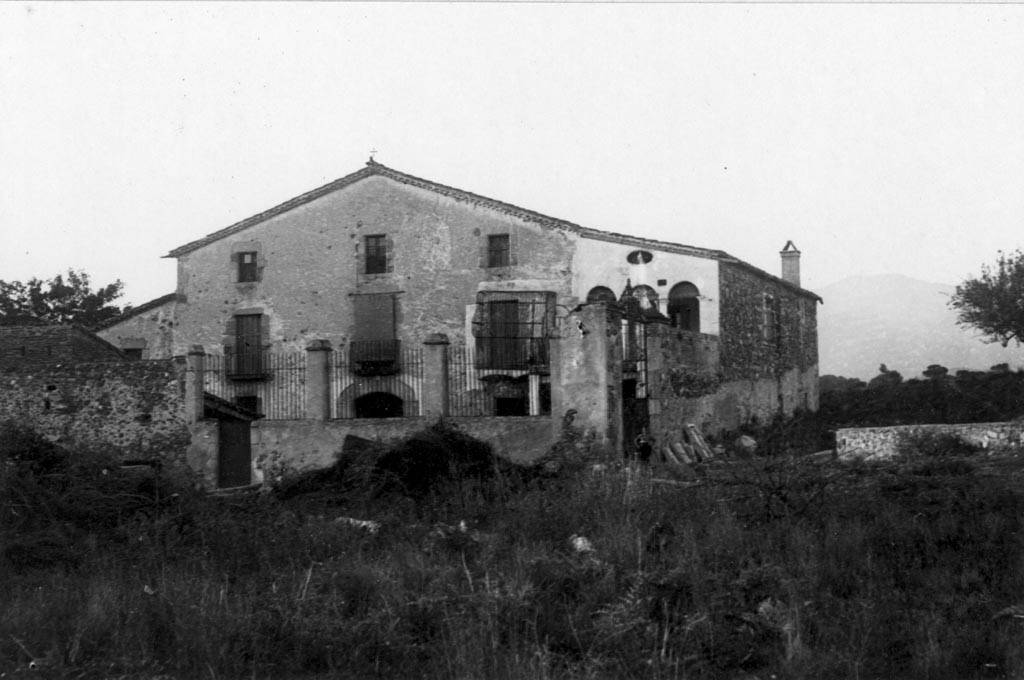
The main event here is Castellnou. From the outside, it’s a solid, square palace. Inside, you look up and forget what you were going to say. The entire wooden ceiling is a calendar carved and painted in 1528. Thirty-two panels show farmers sowing, angels gossiping, and all the mundane work of a year in the 16th century. The silence in there is thick, broken only by the creak of floorboards.
Now, the practical bit. It’s not a museum with set hours. It opens mornings and some weekends. If the big door is shut, you do what locals do: ask at the town hall or mention it to someone in a shop. It’s that sort of town.
The Walk to What's Left: Castellvell
For a different vibe, head up to Castellvell. Calling it a castle is generous today; an earthquake in 1448 started the job and time finished it. What’s left are outlines in the rock: a moat cut into stone, footprints of walls.
The walk up from Coll de Can Brodai takes about twenty minutes on a rising path. The reward is the view over the plain and a stubborn Roman watchtower next door, the Torrassa del Moro. It looks like a giant stone doughnut stuck in the hill. Come on a misty autumn morning when the valley fills with cloud, and you’ll understand why people bother walking up here.
The Weekend Everything Smells Like Almonds
For two days in early December, Carrer Major smells like honey and toasted almonds. The Feria del Turrón takes over. It’s not a sprawling spectacle; it’s families buying their Christmas nougat from stalls where they still crack slabs with a small hammer.
The move here is simple. Buy a piece of soft torró de Xixona, find a bench, and just sit. Watch kids with sticky fingers, listen to debates about which stall has the best turrón de Alicante. If it rains, they pack it all into the sports hall down the road. The setting changes but the feeling doesn’t.
Chasing Romanesque Churches (And Getting Slightly Lost)
There’s a signed route connecting several old Romanesque churches: Sant Joan, Santa Maria, Sant Sadurní, Sant Esteve. I say ‘signed’. Some markers are clear, others have faded or vanished down farm tracks leading to masías.
It’s worth the mild frustration for Sant Esteve del Coll alone. Stepping inside feels like entering a quiet cave of stone and wood. Look up at its 16th-century ceiling and remember this church was old when Llinars was just a few houses.
Bring water, use a map app as backup, and be ready to ask directions from someone pruning olive trees.
Grab Something To Eat And Walk
Don't come looking for quaint lanes. Come hungry instead. Start at a bakery when it opens and ask if they have coca de llardons, that salty-sweet pastry with pork crackling. Someone will likely tell you how their grandmother made it better. Then just walk. Stroll Carrer Major when the turrón fair isn't on. Try your luck at Castellnou. If your legs are up for it, hike to Castellvell. That's Llinars.
You can see it in half a day. It won't try to charm you. But you might leave thinking that sometimes, the places that don't try so hard are the ones where you actually get to see how life is lived