Full Article
about Vallfogona de Ripollès
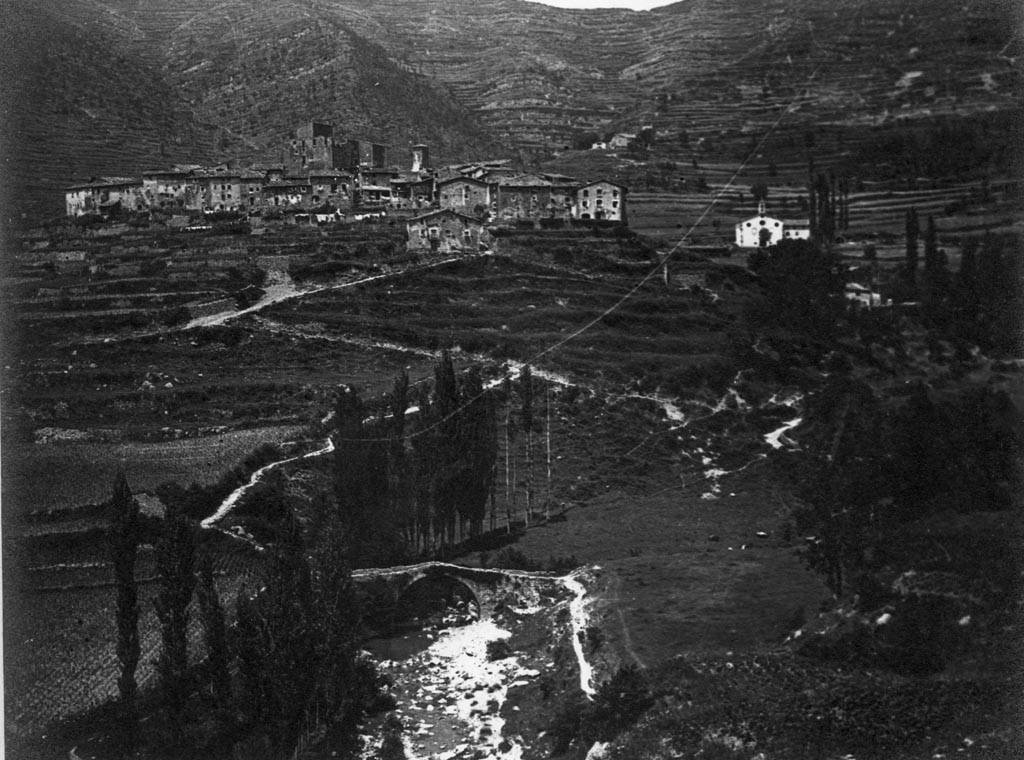
Well-preserved medieval village; stone core and rural setting
Hide article Read full article
At first light, in the centre of the village, the smell of damp wood and wet earth drifts through the air, mixed with the song of greenfinches moving across the pines. The light is still soft, slipping through narrow windows and laying pale patches across grey stone walls. In Vallfogona de Ripollès, at that hour, there is little sound beyond the occasional car passing slowly along the road or the creak of a door opening somewhere in a stable.
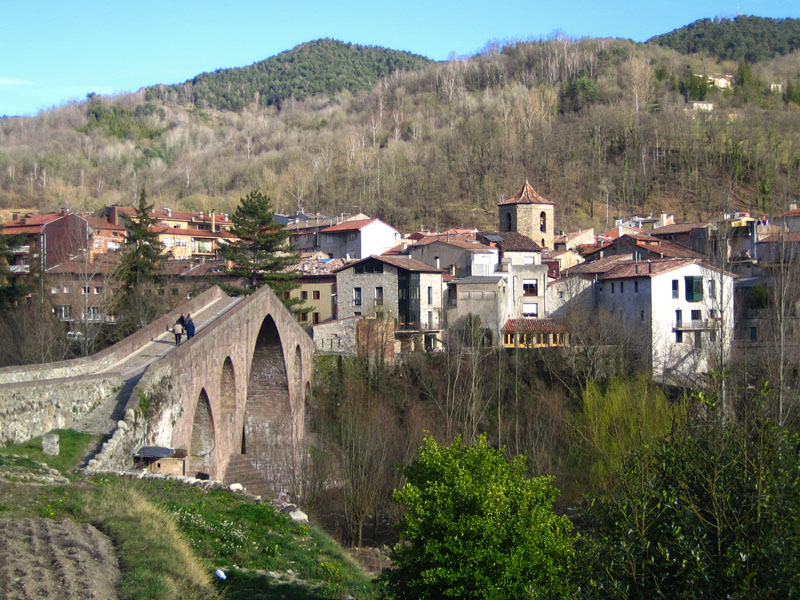
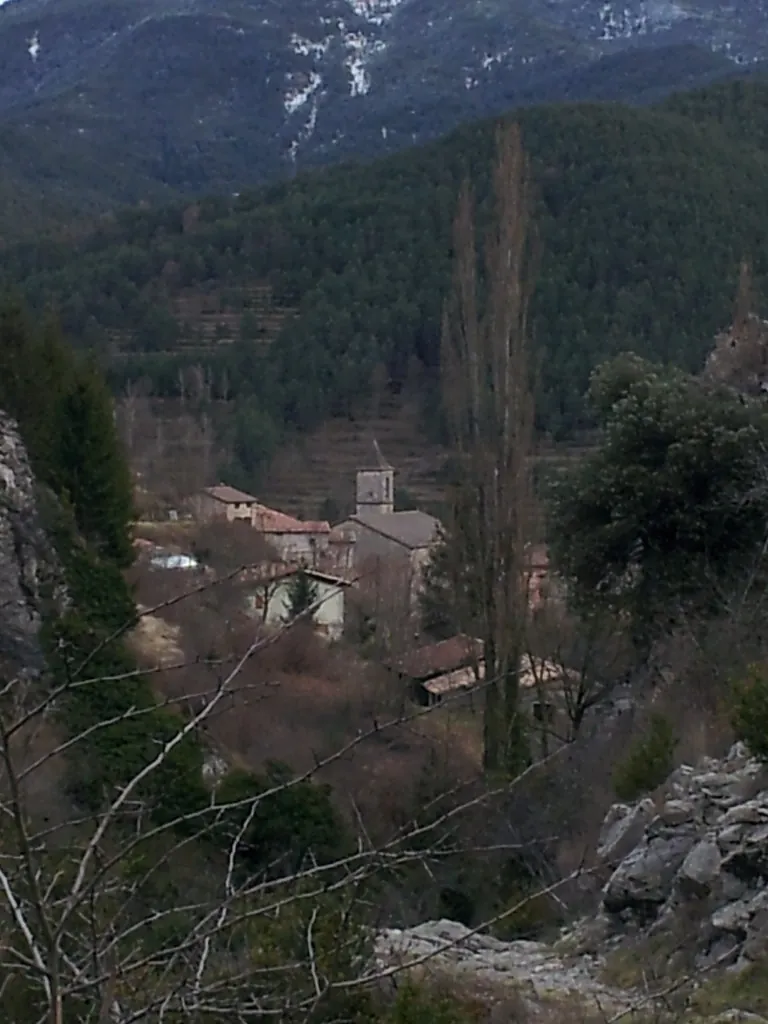
Set at almost 1,000 metres above sea level, this small village in the Ripollès region has just over two hundred residents. At its heart stands the parish church of Sant Sadurní, shaping the look of the main square. Its origins are medieval, often placed in the 12th century, and it keeps the restrained character typical of mountain churches. Thick stone walls, a simple bell tower, and an interior with little decoration define the space. Inside, rounded arches and dark wood carry a faint scent of damp on cold mornings.
A slow walk through the old centre
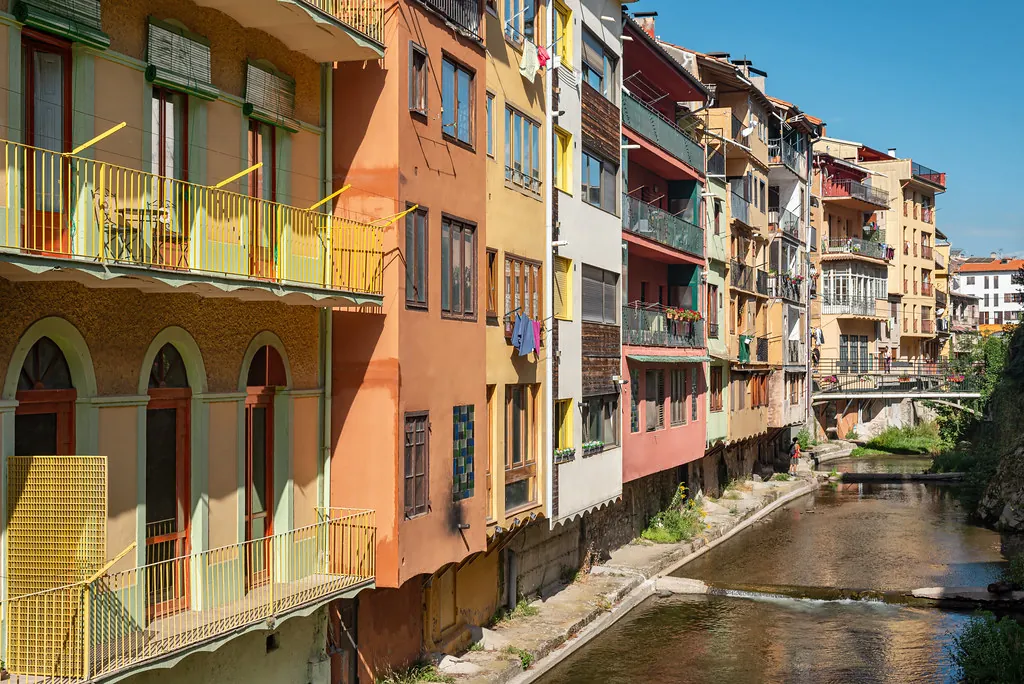
The narrow streets reveal details that are easy to miss at first glance. Wooden doors fitted with heavy ironwork, exterior staircases leading up to upper floors, and small terraced vegetable plots appear between houses. In summer, tomato plants grow there, alongside rosemary bushes pressed against the walls. The buildings themselves are built for endurance rather than display, with thick walls and sloping roofs of reddish tiles or slate, designed to withstand long winters.
The village can be crossed quickly if walking with purpose, but that is rarely how it unfolds. Small interruptions slow the pace. A cat sleeping on a warm stone, the trickle of water running through a channel, or a neighbour crossing the street at an unhurried pace can all hold attention for a moment longer than expected.
Early morning and late afternoon are the best times to wander. As the sun drops in the west, the façades take on a soft orange tone that changes the look of the stone completely.
Forests at the edge of the village
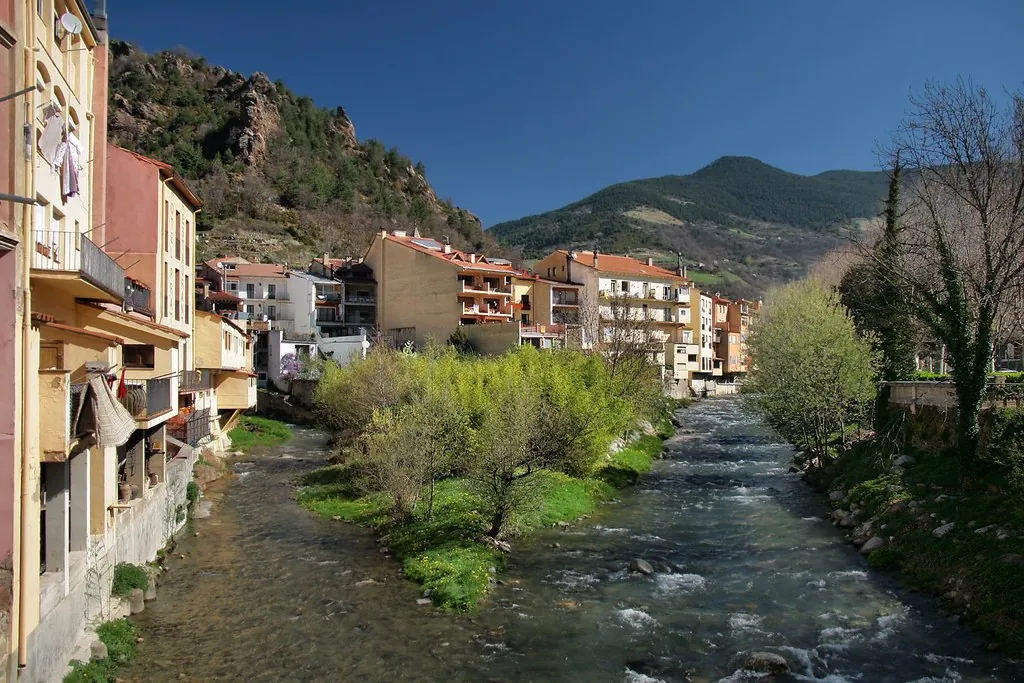
Nature begins almost at the last house. Within minutes, paved roads give way to dirt tracks that wind through meadows and into patches of woodland. Beech trees dominate the area, with some oak groves and scattered pine on the sunnier slopes.
In spring, the ground is often damp and layered with old leaves. Autumn brings a marked shift. The forest turns to yellows and ochres, and the quiet deepens, broken mainly by the sound of dry leaves underfoot. It is common to see cows grazing in nearby fields or to hear the distant ringing of bells tied around their necks.
From various points in the surrounding area, views open towards higher peaks in the Ripollès. On clear days, the outlines of Puigmal or Bastiments can be seen on the horizon, although they remain some distance away. There is no need to climb far to take in the landscape. Some nearby mountain passes can be reached on foot from the village in under an hour.
Gentle routes and longer climbs
Several short routes begin directly in Vallfogona and cross nearby woodland or low passes, offering a clear sense of the valley’s shape. These walks are accessible when taken at a steady pace and with suitable footwear, especially after rain, when certain sections can become slippery.
Those used to longer days on foot often extend their route towards nearby summits such as Pic dels Bessons. These are not technical climbs, but they are longer, and conditions should be checked beforehand. The weather in this part of the Ripollès can change quickly.
Winter quiet and occasional snow
In winter, snowfall varies from year to year. When it does arrive, it can linger for several days or even weeks in shaded areas. At those times, forest tracks become suitable for walking with snowshoes, although caution is needed. There are no prepared circuits or specific signposting for this activity.
During these weeks, the village grows even quieter. Sounds shift with the season. Footsteps on compacted snow, smoke rising from chimneys, and very little movement in the streets define the atmosphere.
A place that has changed little
Vallfogona de Ripollès has not been heavily reshaped by tourism. There are no large facilities and no constant stream of visitors. Daily life remains closely tied to the countryside and the rhythm of the seasons.
It helps to arrive with a clear idea of what the place offers. Walking, following the paths, and observing the landscape at an unhurried pace form the core of the experience. Those looking for a busier setting or a wider range of activities will find larger towns elsewhere in the valley more suitable.
During the week, especially in spring or early autumn, the village settles into its most natural rhythm. The wind moves through the trees, a tractor may be heard in the distance, and little else interrupts the quiet. For visitors arriving from a city, that silence can feel unusual at first. After a while, it stops feeling like silence at all.