Full Article
about Vilassar de Dalt
Inland town with a castle and a well-known water park
Hide article Read full article
A hillside settlement shaped by control and passage
The earliest known reference to Vilassar de Dalt dates to 978. At that time, the area formed part of the County of Barcelona’s sphere of influence, along a coastline still exposed to incursions and shifting borders. The site was not chosen at random. A castle tower, traditionally believed to have been raised about a century earlier, stood watch over the natural route between the Maresme coast and the inland Vallès.
That position explains the village’s origin. Control of movement and oversight of nearby farmland defined its role from the beginning. Even today, the layout reflects that purpose. The settlement gathers around its defensive core, with routes that once linked coast and interior still shaping how the place is understood.
The castle and its documentary memory
Vilassar de Dalt’s castle does not fit a romantic image. It was built for use rather than display. Sections of very old walls remain, along with a cylindrical tower that survived later alterations, particularly those carried out between the 13th and 15th centuries. Since the 20th century, the structure has been protected as a historic monument.
Inside, however, lies what many consider its most valuable feature. The castle holds a significant private archive containing thousands of parchments along with several medieval manuscripts. These documents record contracts, agricultural activity, censuses and tithes. Together they allow a long view of everyday life in the area across centuries. The importance lies less in the building itself than in this continuity of written record.
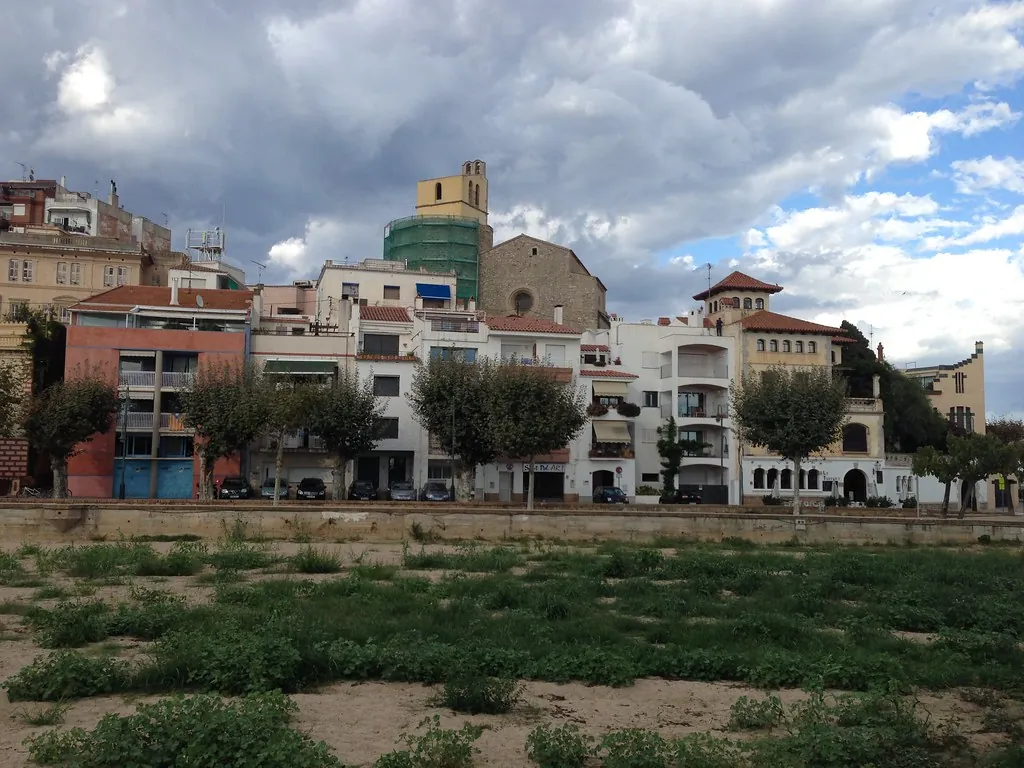
Next to the castle stands the parish church. The current building replaces an earlier one destroyed during the Spanish Civil War. Its design attempts to preserve the scale of the former Gothic temple, though the interior is far more restrained. This break in history is visible in the village centre. The religious space changed, but the castle square remained the point around which civic life is organised.
A theatre linked to a wider world
In 1867, the municipality supported the construction of a theatre. The project was led by Rafael Guastavino, then at the beginning of his career. He would later become known in the United States for developing a system of tiled vaulting used in many public buildings in cities such as New York and Boston.
The Teatre La Massa uses that same construction principle. Its light brick vaults rely on geometry rather than heavy metal structures. The building itself is modest in scale, yet the technique mirrors what Guastavino later applied on a much larger stage. The theatre remains active and retains a notably good acoustic quality, something already mentioned in local accounts from the 19th century.
This link between a small Catalan town and major American architecture sits quietly within the building. There is no sense of spectacle, just a technical continuity that connects different places and periods.
The museum few expect
In a modernist house from the early 20th century sits the Cau del Cargol. The name is literal. The collection consists of thousands of snails and shells gathered from various parts of the world.
It began with the scientific interests of Josep Antoni de la Ferrería, a naturalist and collector. The displays remain straightforward. Specimens are classified and labelled, with typed descriptions and little attempt at theatrical presentation. The overall impression is closer to a study room than to a modern museum. It reflects a time when natural history collecting had a visible place within the bourgeois culture of the Maresme.
Access often depends on local volunteers, so it is worth checking in advance whether it is open on a given day.
Inland cooking with a maritime trace
Although Vilassar de Dalt lies only a few kilometres from the sea, it became administratively separate from the coast when Vilassar de Mar formed its own municipality in the 19th century. Despite that division, local cooking still carries elements of maritime tradition.
One example is arròs a la marinera, which still appears on some simple menus in the village. The dish is usually prepared with cuttlefish, some seafood, and fish preserved in oil or confit. The sofrito, as in much of the surrounding region, includes ñora pepper and tomato. This is home-style cooking rather than elaborate restaurant fare, shaped by habit and memory more than by presentation.
Walking through the historic centre
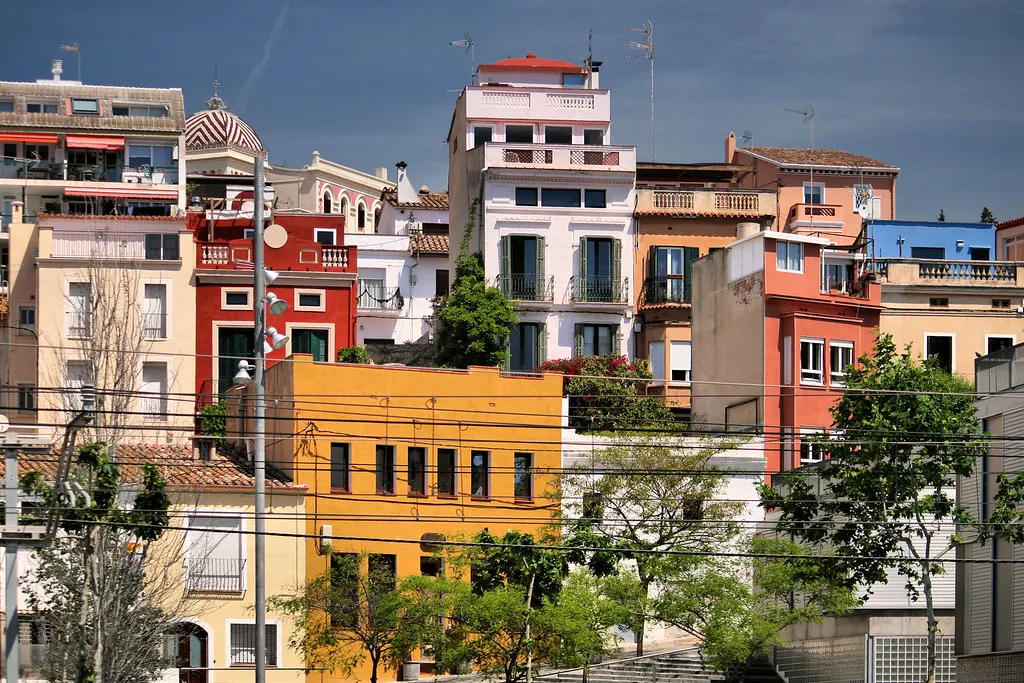
The historic core of Vilassar de Dalt is easy to explore on foot. The Castle Square forms the centre. From there, several narrow streets climb towards the upper part of the village.
Carrer de la Creu stands out for its worn steps, shaped by long use. Many houses reveal two distinct construction phases. Ground floors in stone date from earlier periods, while upper levels were whitewashed during 19th-century reforms, when changing ideas about hygiene altered the appearance of many towns.
At the top sits the hermitage of the Mare de Déu de Loreto, traditionally dated to the 17th century. Beyond this point, the path leads into the Serralada Litoral. The shift in landscape is quick. Mediterranean pine woodland takes over, and the first open views towards the coast begin to appear.
There is also a short marked route around the castle linking several historic buildings in the centre. The explanatory plaques are minimal, limited to dates and basic functions rather than extended interpretation.
Practical notes
The castle is generally open to the public on some weekends or through visits organised by the town council. Availability can vary, so checking beforehand is advisable.
The Cau del Cargol typically opens on Saturday mornings and sometimes also in the afternoon, depending on local arrangements.