Full Article
about Vinaixa
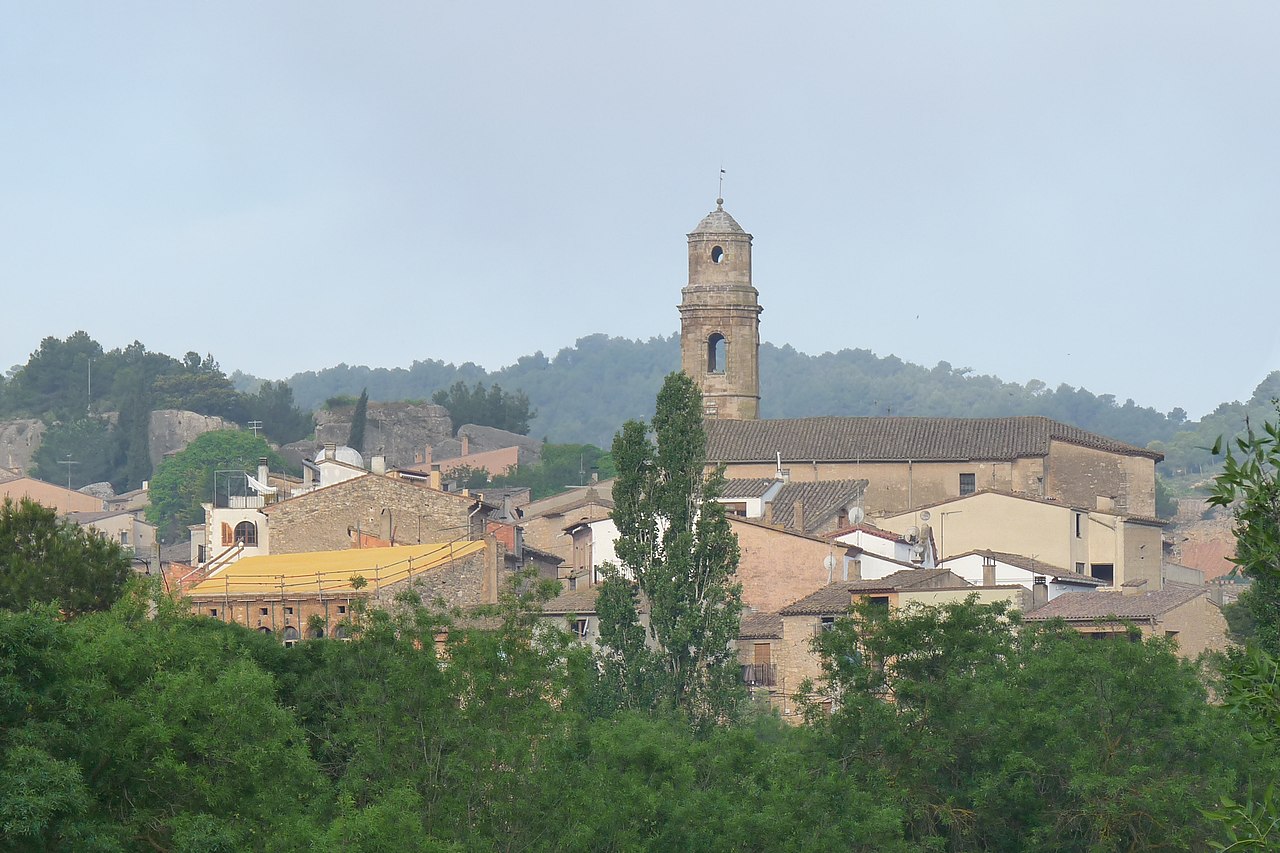
Stone-and-oil village; Romanesque church amid wooded hills.
Hide article Read full article
A Village That Moves at Its Own Pace
Some places look as though they were designed for a postcard. Vinaixa is not one of them. Tourism in Vinaixa feels more like pulling over in the middle of an ocean of olive trees and thinking: this is where life slows down.
The sensation arrives quickly. A tractor rolls slowly along the street. Someone chats from a doorway. The quiet of the surrounding countryside reaches right into the centre of the village.
Just over four hundred people live here. That fact shapes everything. The countryside is not a backdrop, it is daily work. Above all, it is about olive trees. Olive oil forms part of the local economy and slips naturally into everyday conversation.
Vinaixa sits in Les Garrigues, a comarca in Catalonia known for its olive groves. The rhythm of agricultural life sets the tone, and visitors notice it from the moment they arrive. There is no attempt to impress. The appeal lies elsewhere, in the steady continuity of rural routines.
Corners That Explain Its Character
The church of Santa María stands at the centre of the village. It has medieval origins, although the building has changed over the centuries. Thick walls remain, and certain sections have clearly been rebuilt. It is not an eye-catching monument. It fits the scale of the place, which is precisely the point.
The old quarter invites wandering without a plan. In fact, that is the best way to see it. Short streets branch off in different directions. Stone houses line the way, with simple doorways and façades that have evolved over time. These are not houses arranged for photographs. They are homes that have adapted gradually, shaped by practical needs rather than aesthetics.
Step beyond the last houses and the olive groves begin. Around the village means exactly that: in every direction. Some trees are very old. Their trunks twist into sculptural forms, branches stretch low, and in summer they cast short, compact shadows. This landscape has governed life here for generations.
Each season alters the same scene. Spring brings a greener countryside. Summer flattens the colours beneath a hard, bright light. Autumn introduces the harvest, and with it a noticeable change in the atmosphere of the village. Activity increases. Conversations turn even more towards the crop. The scent of freshly picked olives drifts through the air.
Walking Without a Plan
Vinaixa suits those who enjoy walking without too many expectations. Set out without watching the clock too closely and see where the path leads. That approach makes sense here.
Rural tracks cut across the cultivated land. Slopes are generally gentle. There are no dramatic viewpoints or striking landmarks waiting at the end. The interest lies in observing how the countryside is organised in this part of Les Garrigues. Fields stretch in ordered patterns. Dry soil contrasts with the silvery green of the trees. Agricultural logic shapes the terrain.
Signposting can be minimal at times. A simple map or a route saved on a phone helps. In exchange, traffic almost disappears. A tractor passes occasionally, and little else disturbs the quiet.
The dominance of olive oil extends to the table. Bread with tomato, known locally as pa amb tomàquet, appears frequently. Cured meats accompany it. Dishes are straightforward and rely heavily on the local oil. There are no elaborate presentations or complex techniques. This is home cooking, the kind prepared in the same way for years.
Food here reflects the same values as the landscape: practicality, continuity and respect for what the land provides. Meals feel connected to the fields that surround the village. Olive oil is not an accessory, it is the foundation.
When the Village Becomes Livelier
For much of the year, calm defines daily life. August usually brings the fiesta mayor, the main annual festival. The exact dates change from one year to the next. Many people who have family ties to Vinaixa return during these days. The atmosphere shifts from quiet to noticeably livelier for a short period.
Streets that normally feel spacious fill with conversation. Familiar faces reappear. The rhythm changes, although only briefly. After the festival ends, the village gradually returns to its habitual pace.
Another important moment arrives with the olive harvest. There is no single day that marks its official start. Even so, the change is obvious once it begins. Trailers loaded with olives move along the rural tracks. Activity increases in and around the fields. The smell of freshly picked fruit becomes part of the air.
Certain celebrations linked to Santa María also continue to take place. They are simple events. Neighbours gather, music plays, a short procession passes through the streets, and afterwards people talk in the square. These occasions reinforce the close-knit nature of a small community.
Understanding Vinaixa
Vinaixa does not try to dazzle visitors. That restraint may be its defining quality. Expectations need to adjust accordingly. This is not a destination of grand monuments or packed schedules. It is a place best understood without hurry.
A slow walk through the old streets reveals how architecture adapts to everyday needs. A stroll along a rural track shows how the fields structure life in Les Garrigues. Sitting for a while in the square makes clear how central conversation remains in a village of just over four hundred residents.
The olive tree dominates both landscape and livelihood. Its presence explains much about Vinaixa. Generations have worked the same soil. The annual cycle of growth and harvest continues to shape routines. Visitors witness that continuity rather than a performance staged for tourism.
Silence plays a part too. The countryside presses close, and with it comes a sense of space. Even in the centre, rural quiet never feels far away. The sound of a passing tractor or voices drifting from a doorway stands out precisely because there is so little background noise.
Vinaixa reveals itself gradually. Arrive without rushing. Walk a little. Look at the olive groves stretching out in every direction. Sometimes that is enough.