Full Article
about Mutxamel
Residential town known for its tomatoes and historic irrigation systems; near Alicante
Hide article Read full article
A town shaped by water and watchtowers
Mutxamel makes most sense when viewed in relation to the huerta that surrounds it. The town forms part of the historic irrigation system of the Huerta de Alicante, an agricultural landscape organised over centuries around acequias, azarbes and slight rises in the land where houses were built. About eight kilometres from the sea, close enough to feel its presence yet far enough not to function as a port, Mutxamel developed as a place of agricultural work and territorial control.
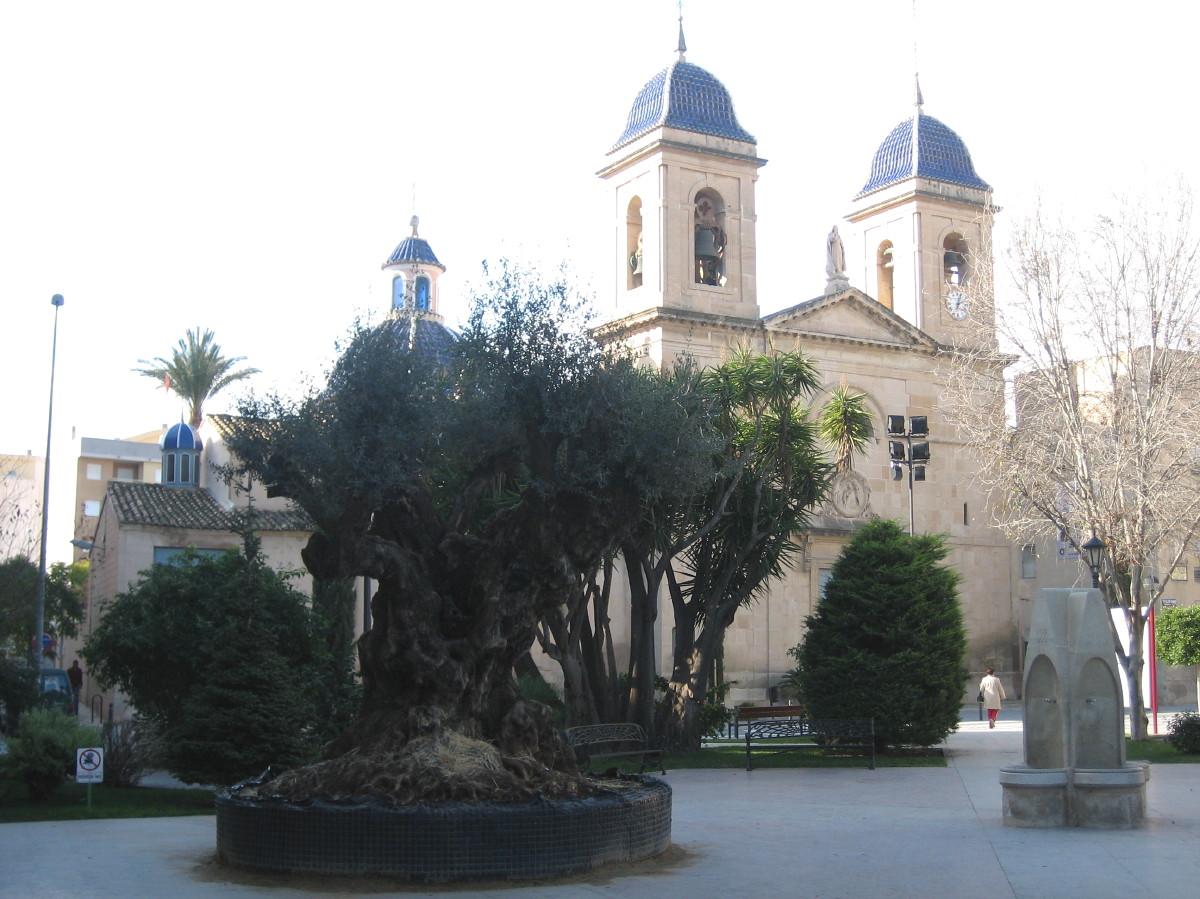
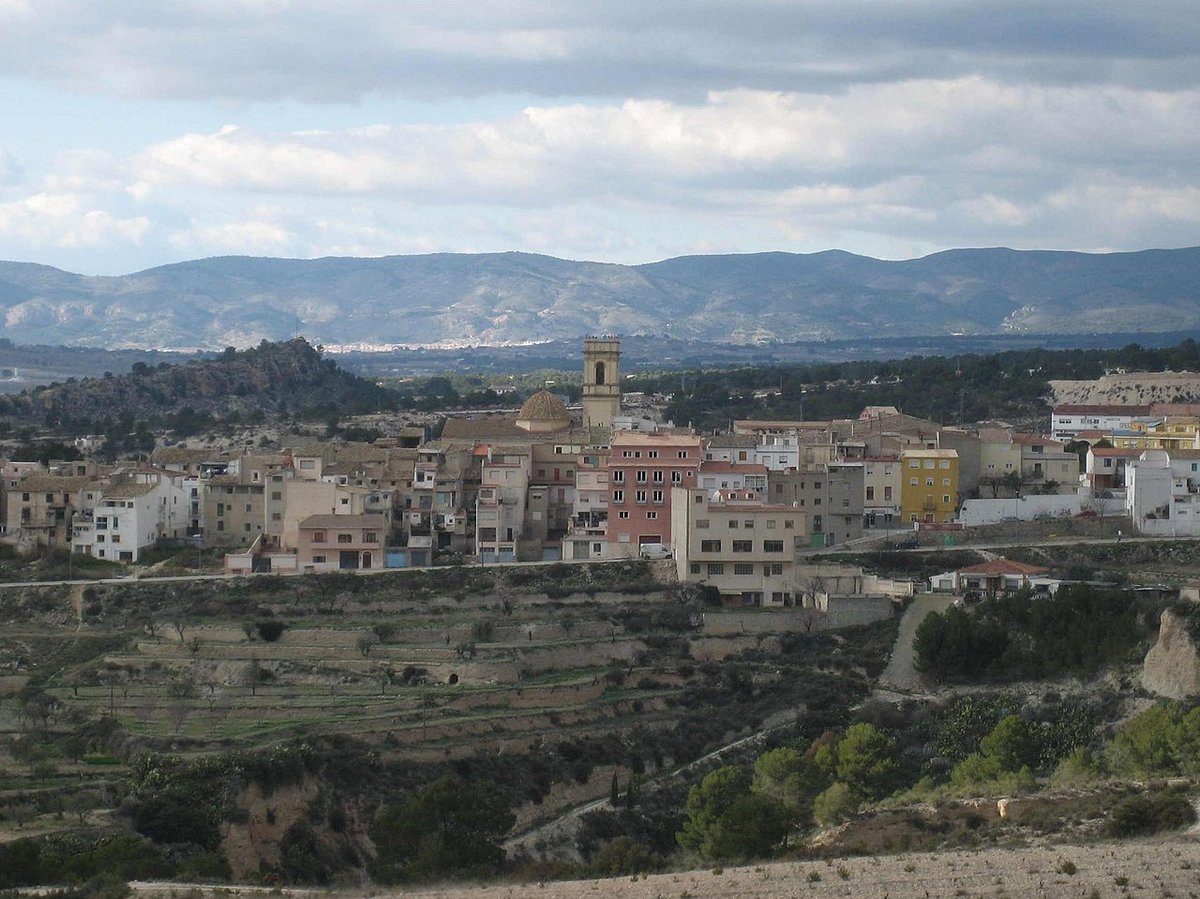
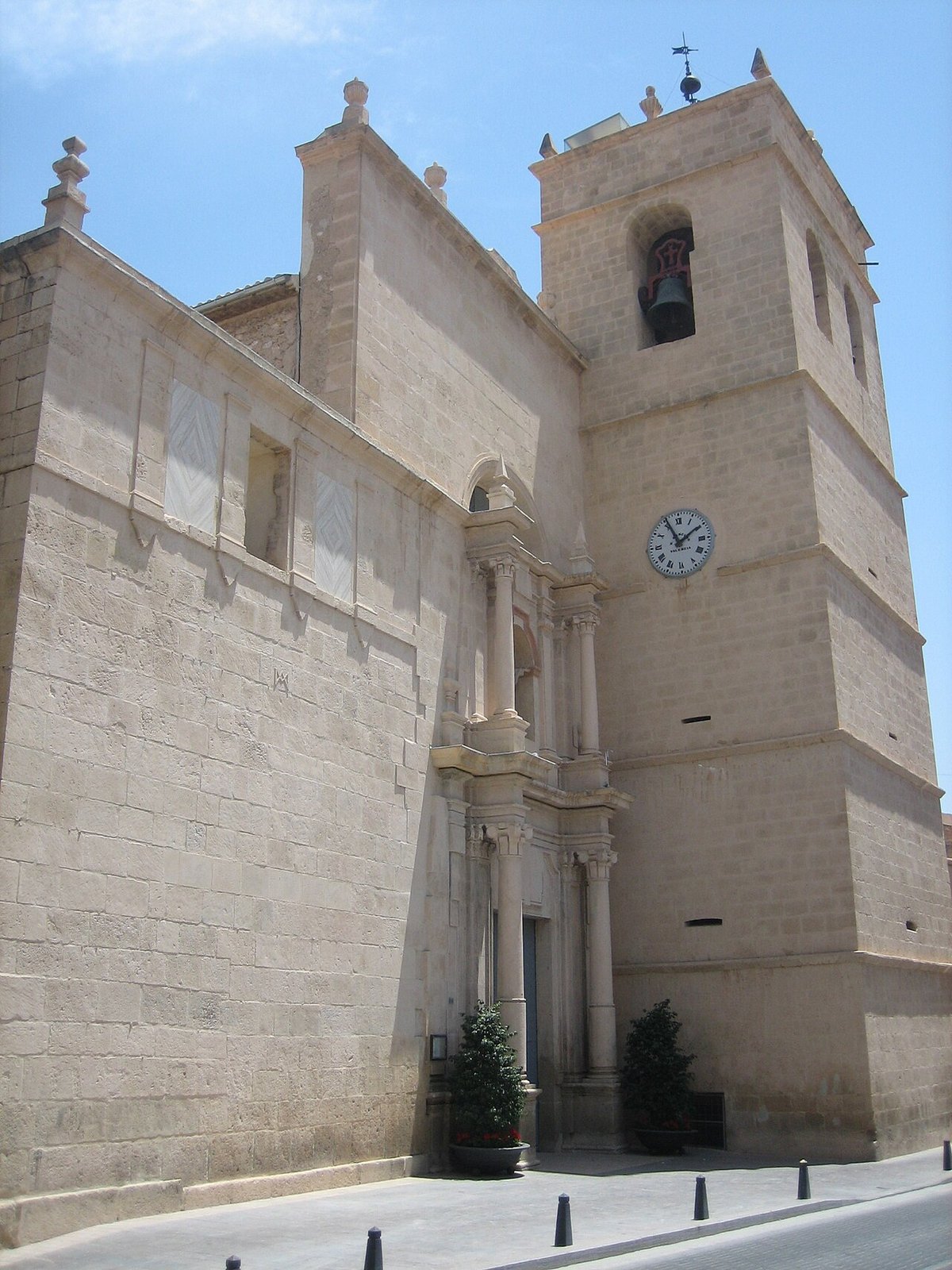
That context explains the town’s most recognisable structure. The tower of Mutxamel was built at the beginning of the 16th century, when the Alicante coast faced incursions by North African corsairs. Watchtowers along the shoreline and inland formed a warning network. This tower is attached to the church of San Salvador, almost as if it were a defensive extension of the temple itself. From the top, the horizon could be monitored, while the church bells served as an alarm. Together, tower and church still define the historic centre.
Inside the tower, old graffiti have been documented. For a long time they went unnoticed, but recent studies have drawn attention to them. They add another layer to a building that was never purely religious or purely military, but part of a wider system of vigilance tied to the coastline.
From dependent settlement to independent villa
For much of its history, Mutxamel was administratively dependent on Alicante. Before that, it had been an alquería of Islamic origin linked to the agricultural system of the huerta. After the Christian conquest in the 13th century, this pattern was common in the area, with rural communities structured around irrigation and cultivation.
The separation from Alicante came in the 18th century, at a time of tensions between local landowners and the municipal authorities of the city. In 1743 the Crown granted Mutxamel the title of villa. This status allowed the town to administer its own taxes and territory. The change helps to explain the character of the present-day centre, where some civil buildings appear more ambitious than one might expect in what was primarily an agricultural settlement.
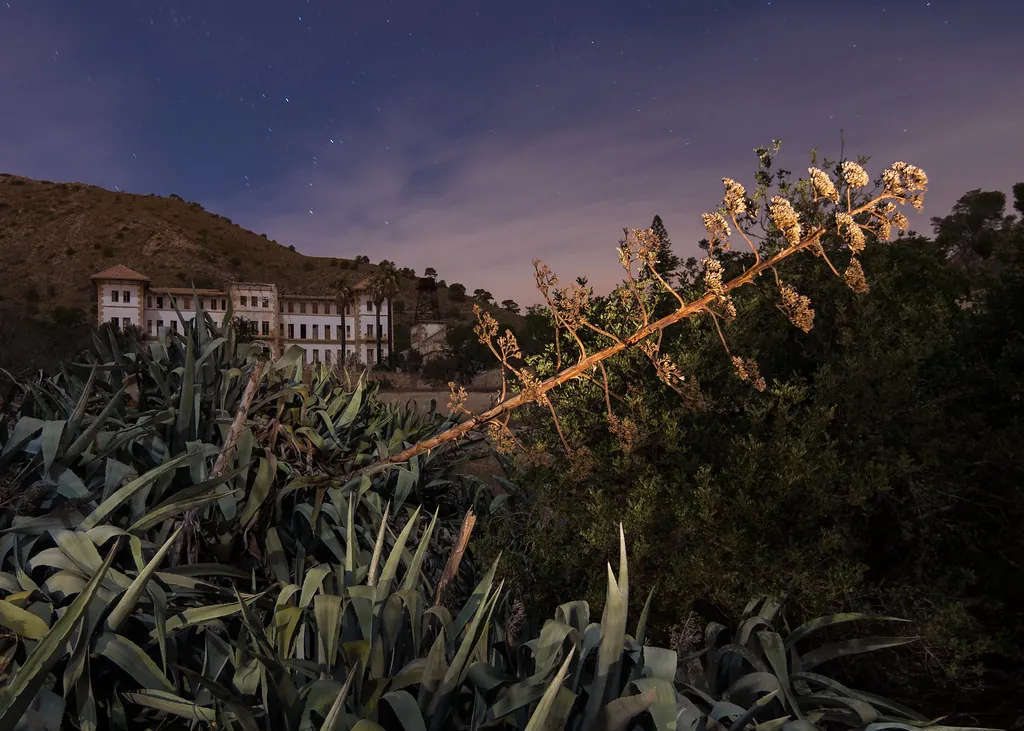
Among them is the palace associated with the marquisate of Peñacerrada. Built in the midst of former farmland, the building reflects a very different architectural idea from that of the traditional huerta house. It now serves other functions, yet elements of representation remain visible, including the main staircase and the layout of the garden. Its presence speaks to a moment when local elites sought to express status within a rural setting.
San Salvador: a church built in stages
The parish church of San Salvador mirrors the gradual growth of Mutxamel itself. The oldest core is usually dated to the 15th century and has a simple Gothic structure. As the population consolidated over time, extensions were added to increase capacity. This pattern was common in towns that expanded slowly but steadily.
In the centuries that followed, further rooms and alterations introduced Renaissance and Baroque elements. The result is a building that does not correspond to a single style. The exterior makes this evolution particularly clear. The stone blocks of the oldest sections are smaller and more irregular, while later additions use more regular masonry.
Inside, the atmosphere is sober. Interest lies less in individual furnishings and more in the way the structure records different phases of construction. The church is best understood as a layered building, shaped by practical needs rather than by a single architectural programme.
The huerta and the network of acequias
Although many residents today work in Alicante or along the coast, the landscape around Mutxamel still reflects the old huerta. The hydraulic system that distributes water across the area is organised around several historic azudes on the river Monnegre. These small dams traditionally supplied Mutxamel and Sant Joan, regulating the flow that feeds the irrigation channels.
The acequias continue to trace out rectangular plots of cultivation. Along some agricultural tracks, the structure is still easy to read: stone edges, small sluice gates and narrow paths dividing one parcel from another. The layout reveals a territory designed around water management, where each field depended on a carefully maintained network.
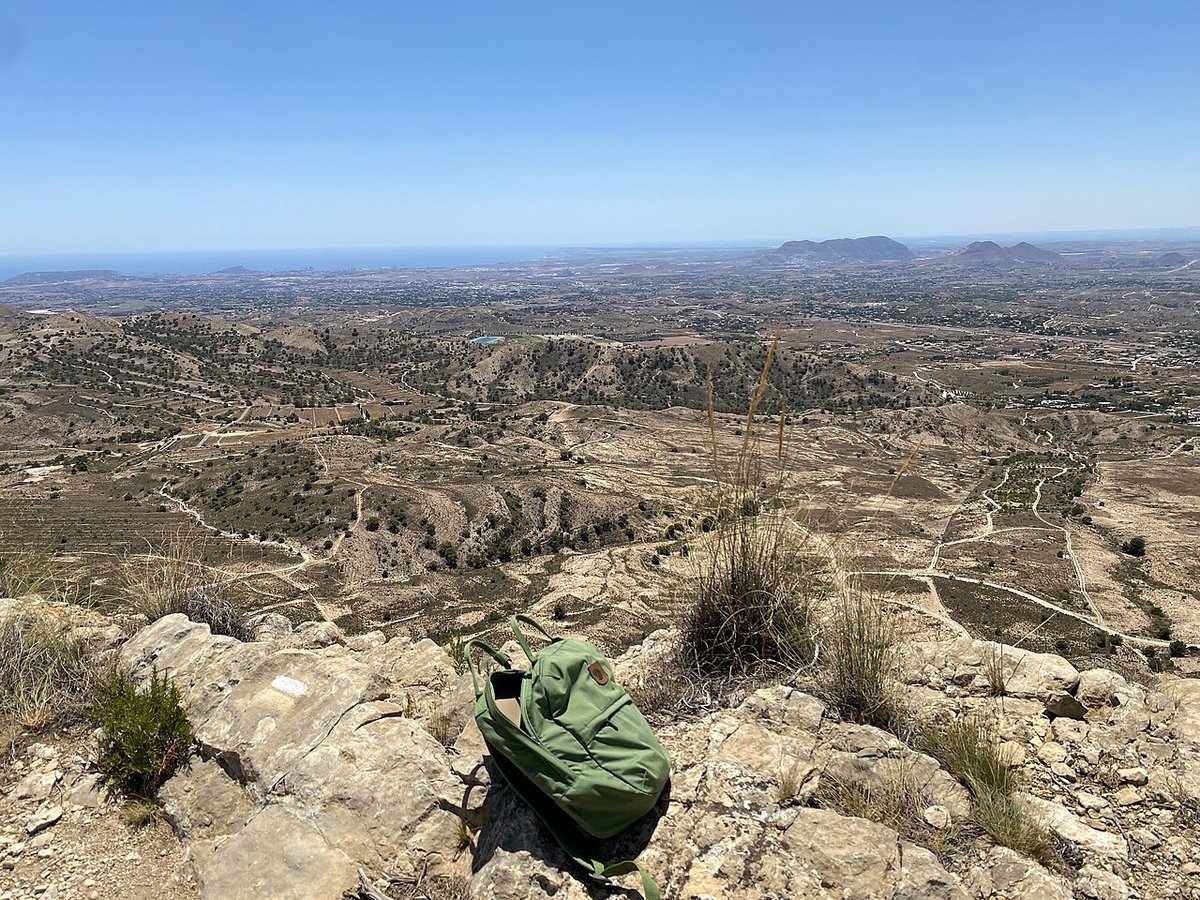
Within the municipal boundaries, a common short ascent is to the Calvario. From the higher ground there are views over much of the Huerta de Alicante and, on clear days, the mountain ranges that enclose the valley inland. The panorama reinforces the sense of Mutxamel as part of a broader agricultural plain rather than an isolated settlement.
A short walk through the centre and beyond
The old quarter is compact and can be explored at an unhurried pace in less than an hour. The tower beside the church forms the focal point. Around it lie a handful of narrow streets in the historic centre, along with the Jardines de Santa Elena. In these gardens stands a large ficus planted in the 19th century, which has become one of the town’s most recognisable trees.
Beyond the urban core, several rural paths link former hydraulic constructions and towers connected to water management or agricultural estates. One local route connects the tower of Mutxamel with the so-called Torre Ferraz, a 19th-century structure associated with hydraulic infrastructure. These routes underline the practical logic of the territory, where architecture and irrigation were closely intertwined.
Mutxamel lies very close to Alicante and the coast, so many visits take place over the course of a morning or an afternoon. The appeal here is not about assembling a long checklist of sights. It lies in understanding how the town fits into its surroundings: a huerta settlement that for centuries depended on water and land, with occasional glances towards a sea just a few kilometres away.