Full Article
about Albocàsser
Capital of the Alt Maestrat region, set among almond and olive groves; known for its ermitorio and as Templar land with a rich historical and cultural heritage.
Hide article Read full article
A slow start beneath the church tower
Early in the morning, when the air of the Alt Maestrat still carries a chill from the surrounding hills, the tower of the church of the Nativitat rises above the outline of Albocàsser. The streets are almost silent at that hour. Moisture from the night lingers on the pale stone façades, and the narrow, cobbled Calle Mayor sets the tone with a pace that feels unhurried from the outset.
The town centre is compact. It can be walked in around half an hour, though moving quickly misses the point. The interest lies in noticing the details that surface along the way: carved coats of arms above doorways, wide entrances once designed for carts, and thick stone walls that have stood through generations. These elements give the streets a sense of continuity rather than spectacle.
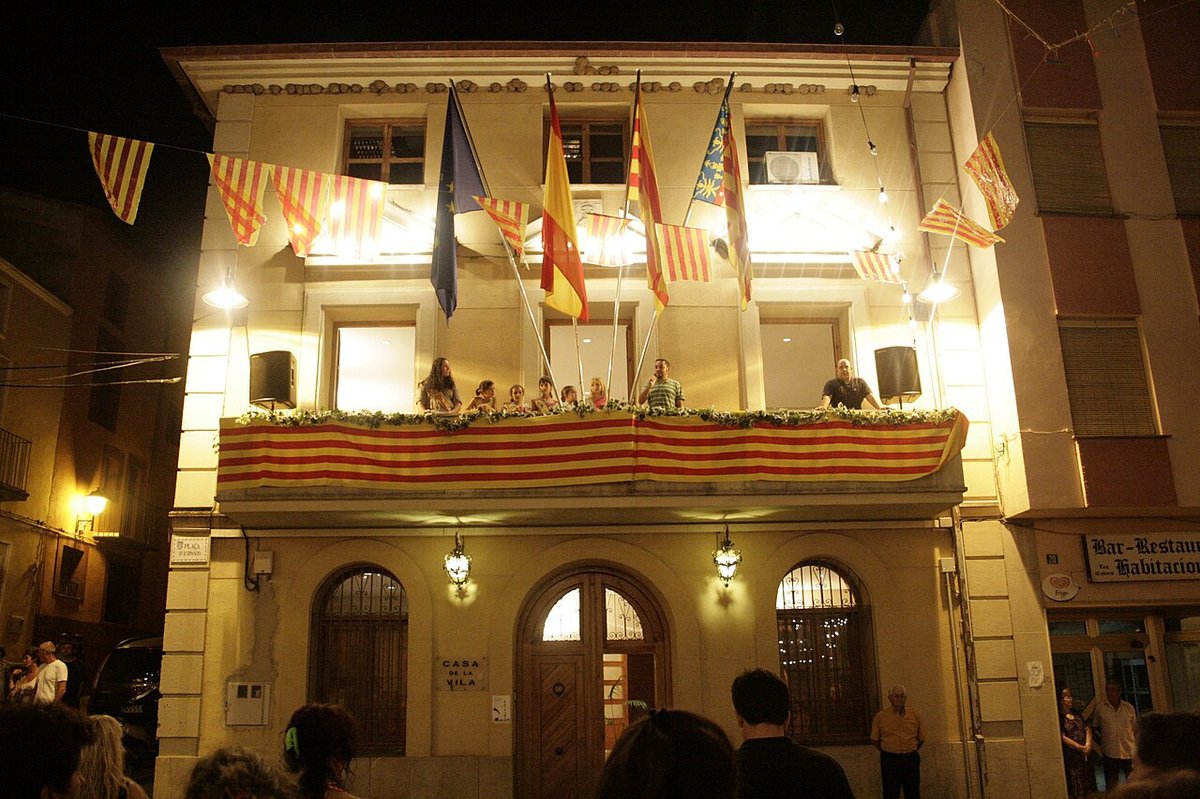
The parish church dates back to the late Middle Ages, although it has been altered over time. Inside, some Gothic features remain visible, hinting at earlier phases of construction. Close by stands the former Casa Consistorial, its façade restrained and solid, the kind of building that served for centuries as a place of assembly and decision-making. Elsewhere in the town, smaller clues appear in passing: engraved lintels, reused stone, and sealed-up doorways that reflect successive changes to the built fabric.
Slopes and views across the Alt Maestrat
From the centre, several streets begin to rise gradually. There is no need for a set route. Walking uphill at random often leads to small openings between houses or to the edge of the village, where the view suddenly widens.
From these points, the Alt Maestrat reveals itself in layers. Dry-stone terraces step down the slopes, while fields of almond and olive trees spread across the land. Patches of pine woodland cover the higher ground. On clear days, distant ravines and repeated ridgelines stretch towards the horizon, fading into one another.
The landscape shifts with the seasons. In spring, the scent of damp earth mixes with almond blossom, softening the feel of the terrain. Summer brings a harsher character, with drier ground and the steady sound of wind moving through the tops of the pines. The changes are not dramatic but they are constant, shaping how the surroundings are experienced at different times of year.
Paths beyond the last houses
A network of old paths extends out from Albocàsser into the surrounding countryside. These routes were used for centuries by farmers and shepherds moving between masías, which are traditional rural farmsteads, and cultivated plots. Some of these paths are now marked as walking trails.
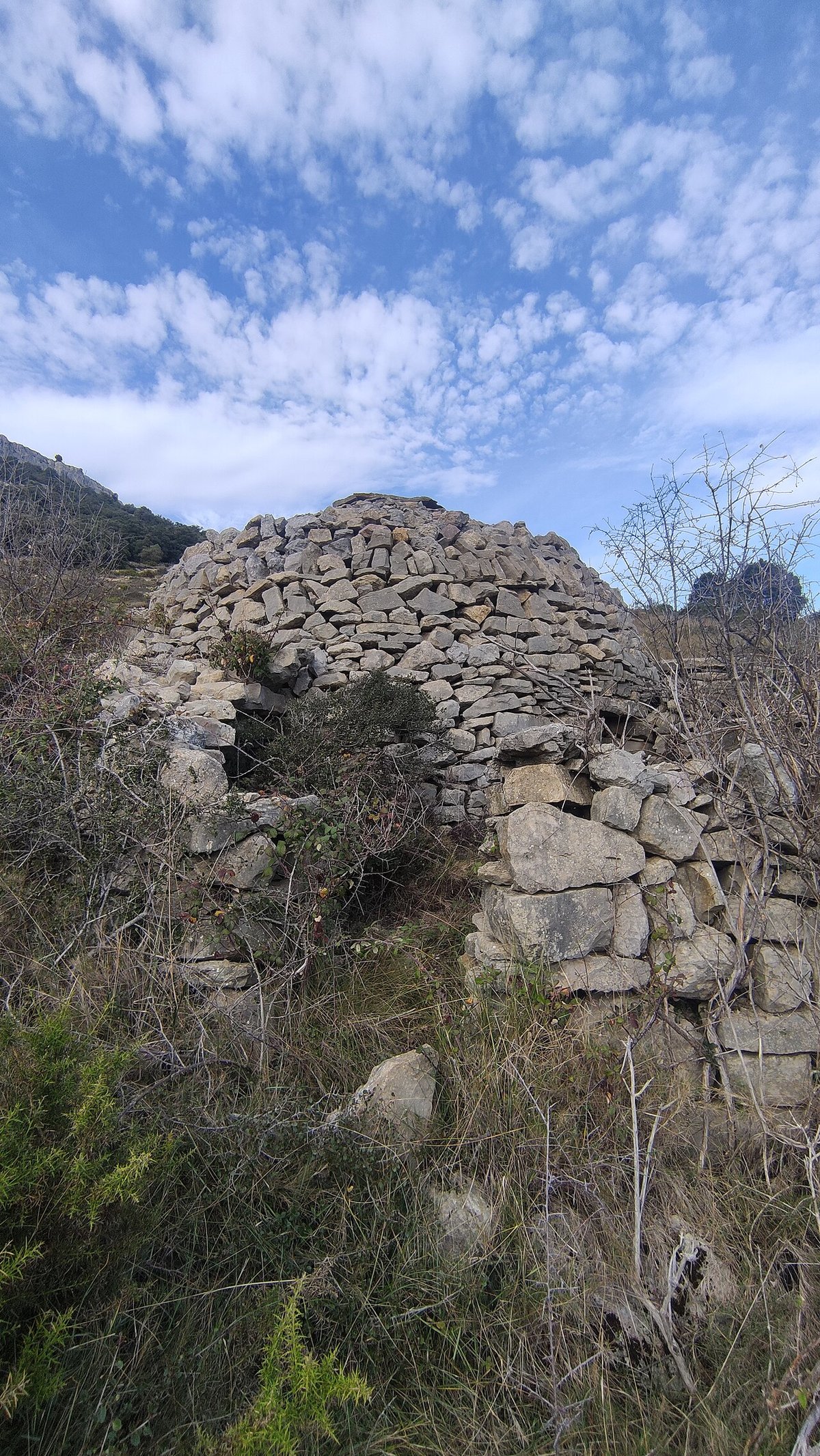
The ground is often uneven, with sections of loose stone and compacted earth. The routes are not especially technical, yet sturdy footwear is advisable. Even a short walk is enough to see how the agricultural landscape of the Maestrat has been organised over time. Dry-stone walls define boundaries, scattered huts appear at intervals, and terraces follow the natural slope of the land rather than reshaping it entirely.
In autumn, nearby pine woods attract people interested in mushroom foraging. It is a well-established activity in the area, tied to seasonal rhythms and local knowledge. Anyone taking part is expected to be aware of local guidelines and to collect responsibly.
Moments that shape the year
Albocàsser remains quiet for much of the year, but certain dates bring a noticeable change in atmosphere. In September, the town celebrates festivities dedicated to the Natividad. During those days, the streets fill with activity. Processions take place, events unfold outdoors, and there is a clear increase in the number of people returning to the town.
January brings a different kind of gathering, centred on San Antonio Abad. Bonfires appear in the streets, and by nightfall the smell of burning wood spreads through the village. The celebration is closely linked to rural traditions and to the presence of domestic animals, reflecting practices that have long been part of life in this region.
Outside these periods, Albocàsser settles back into a steady rhythm. Movement is limited, and the sense of calm that defines the place becomes more evident again.
Practical notes and a final impression
There are a few practical points worth bearing in mind. As in many inland towns, some buildings may be closed unless there is a religious service or a specific activity taking place. This includes the parish church, which is not always open to visitors.
Distances in this part of the Maestrat can also be deceptive. On a map, places may seem close together, yet the roads include bends and changes in elevation that extend journey times beyond what might be expected.
Albocàsser itself can be explored fairly quickly if staying within the centre. A couple of hours is enough to walk its main streets. It works well as a stop within a wider route through the Alt Maestrat, or as a base for heading out on foot into the surrounding countryside.
At the end of the day, as the sun lowers and the light softens, the village becomes quiet again. In winter, the air may carry the scent of pine mixed with smoke from chimneys. Footsteps on stone stand out more clearly in the stillness. It is in that combination of fading light, simple materials and near silence that Albocàsser is most easily understood.