Full Article
about Ares del Maestrat
Spectacular village perched on a high rocky crag; offers sweeping views and a medieval quarter topped by castle ruins.
Hide article Read full article
A village held above the void
Short gusts of wind slip through the narrow streets while the morning has yet to warm the stone of Ares del Maestrat. The village stands on top of a rocky plateau, and from below it almost seems suspended, as if the houses had gripped the slope to avoid slipping into the void. Early in the day, sound barely carries: a door opening, wind brushing along façades, a car passing slowly along the main road.
Ares del Maestrat sits at the northern edge of the Alt Maestrat region and has just over a hundred residents. That small scale is immediately noticeable. Streets are short and steep, often ending in an improvised viewpoint over the ravines that surround the village. There is little distance between one corner and the next, and the landscape is always close at hand.
The castle above the plateau
Above the cluster of houses rises the outline of the castle. It occupies the highest point of the plateau and, from a distance, looks like a natural extension of the rock itself. For centuries it served as a strategic position in this part of the Maestrazgo, and even now it dominates everything around it.
The stone walls, a muted grey, shift in appearance depending on the time of day. In the afternoon, as the sun drops towards the west, the relief becomes more defined and long shadows stretch across the village. From the top, the setting of Ares becomes clear: an isolated promontory, ringed by ravines and low hills covered in pine.
The ascent is best taken slowly. The final stretch is steep, and the rock can be slippery after rain or when winter ice sets in.
Stone streets and quiet squares
The centre of Ares preserves the layout typical of mountain villages in the Maestrazgo. Narrow streets climb sharply between stone houses with low doorways and iron balconies. Some façades still show old marks carved into lintels or cornerstones, small traces of earlier times embedded in the fabric of the buildings.
Between one street and another, small squares appear. These are the places where village life tends to gather. In summer, as the heat drops in the evening, it is common to see chairs set outside front doors once the sun no longer hits the walls.
The patron saint festivities, dedicated to the Virgen de la Natividad, usually take place in September. During those days, people with family roots here return, and the streets regain a sense of movement that contrasts with the usual quiet rhythm of the village.
Terraces, ravines and the Alt Maestrat landscape
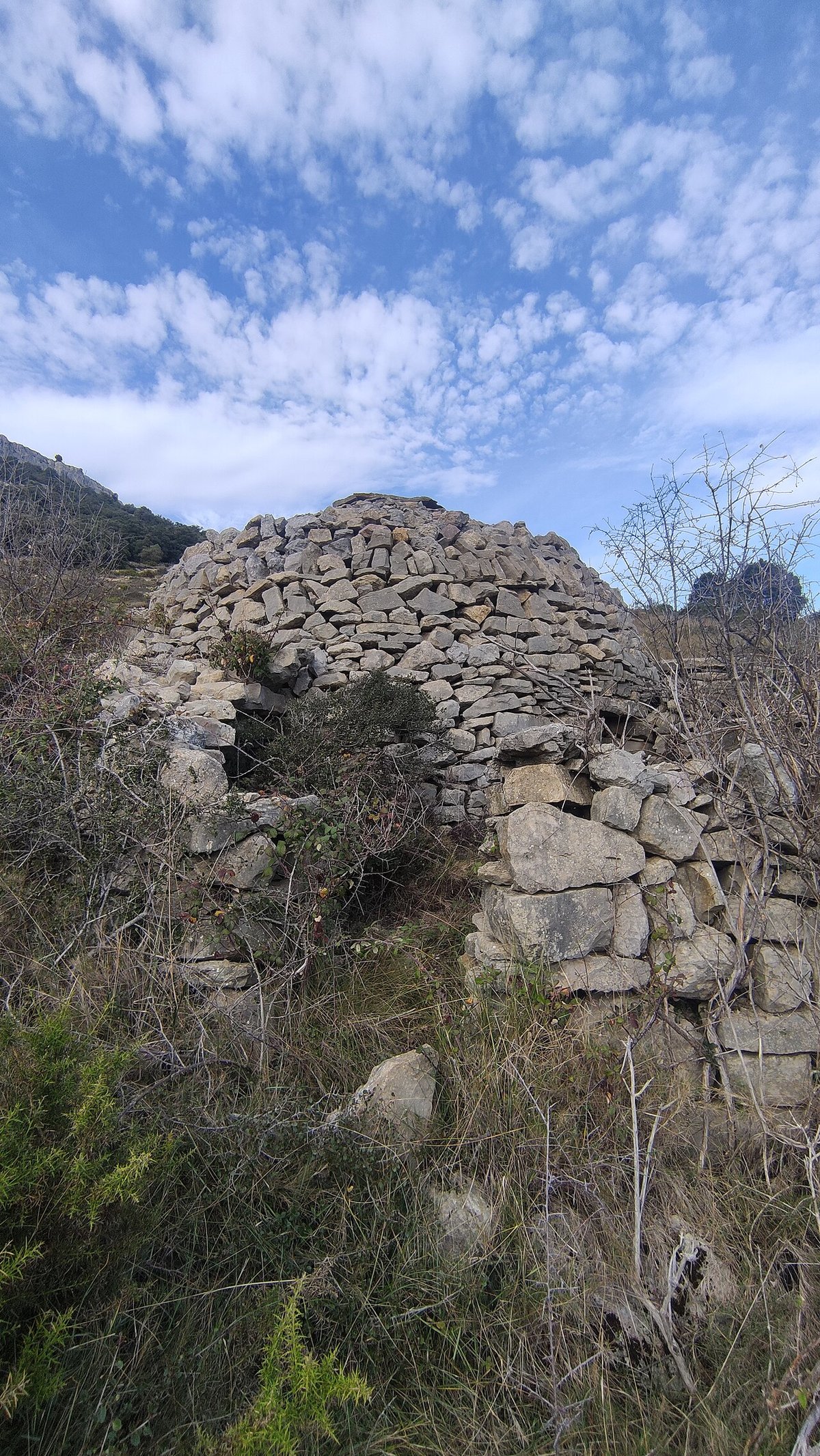
Step beyond the built-up area and the terrain shifts quickly. Dry-stone terraces run along the slopes, many now overtaken by scrub and young pines. They are clear traces of a time when these lands were cultivated far more intensively.
The landscape is rugged and open. Limestone hills rise and fall, rocky cliffs cut through the terrain, and deep ravines appear suddenly after a bend in the path. Among the trees, Aleppo pine and holm oak are the most common, accompanied by rosemary, gorse and thyme. On warm days, their scent lingers in the air.
Birds of prey are often seen riding thermal currents above the cliffs. In quieter areas, the Iberian ibex also moves through the terrain, though it tends to keep its distance from paths and people.
Paths across the Maestrazgo
Several traditional paths begin in Ares, routes that for centuries connected the village with other settlements in the Maestrazgo such as Culla or Benassal. Some stretches still retain old stone paving and dry-stone boundaries that mark the edges.
There are shorter walks that circle the village, offering different perspectives of the plateau and its position above the surrounding land. Others extend further out, leading towards scattered farmhouses, ravines or small caves in the limestone rock.
For walking, early morning or the end of the afternoon tend to be the most comfortable times. In summer, the sun can be intense in exposed areas, with little shade along certain stretches.
Food shaped by the interior
The cooking of the Alt Maestrat reflects a demanding landscape. Dishes are warm and filling, designed for long days in the countryside and for the cold of winter.
Typical meals include stews made with lamb or goat, locally cured sausages and soups prepared with stale bread. There are also recipes that depend on what the land provides at different times of year: mushrooms after the autumn rains or small game during the permitted hunting season.
The road up to Ares
The approach to Ares del Maestrat winds upwards through bends and pinewoods until it reaches the plateau where the village stands. In the final kilometres, the surrounding ravines and rock faces come into view, giving a clear sense of the terrain that defines the area.
Driving calls for patience. Some stretches are narrow, and it is common to encounter cyclists or even a flock moving along the road.
Spring and early autumn are usually the most pleasant times for walking in the area. Summer brings strong midday heat, while in winter it is not unusual for wind and fog to wrap around the plateau for hours, completely erasing the horizon.