Full Article
about Benassal
Town known for its mineral-medicinal spa and the old La Mola quarter; it blends health tourism with history and nature in the Maestrazgo.
Hide article Read full article
A Village Defined by Water
Tourism in Benassal begins, in many cases, with water. In this small town in the Alt Maestrat region, people have long treated a visit to the spring as part of everyday life. The Font d’en Segures has shaped local routines for generations, and it still does.
Benassal stands around 830 metres above sea level, in the interior of the province of Castellón. The altitude makes itself felt. Winters are noticeably cold and summers are milder than on the coast. The air feels different from the Mediterranean shoreline, and the pace does too.
The village itself is compact. Stone streets thread between houses that combine recent renovations with walls that have clearly stood for centuries. It is not large. A relaxed walk carries you across the historic centre almost without realising.
At its heart stands the Iglesia de la Asunción. The current building is the result of several reconstructions over the centuries. Inside, it is not particularly ornate, yet it has the quiet order of a parish church arranged with practical sense rather than grandeur. A few Baroque altarpieces draw the eye if you pause for a closer look.
Walking through the old quarter becomes a kind of informal observation game. Stone doorways, coats of arms carved into façades, wrought-iron balconies that seem older than they first appear. These details hint at earlier periods when local life revolved around agriculture and regional trade.
The Font d’en Segures
If one place has put Benassal on the map, it is the Font d’en Segures. The spring lies just outside the village and has long been associated with medicinal properties. Traditionally, its waters were used for rheumatic conditions and skin problems. Today, many visitors simply come to spend a few quiet hours.
A spa has developed around the spring and has adapted over time. It is not a vast complex and does not aim for spectacle. The emphasis remains firmly on the water itself. Even now, it is common to see people filling large bottles to take home, treating the visit as something both practical and restorative.
The setting encourages unhurried time. The spring is part of the local identity rather than a staged attraction. It connects present-day visitors with habits that have shaped the village for decades.
Walking the Alt Maestrat Landscape
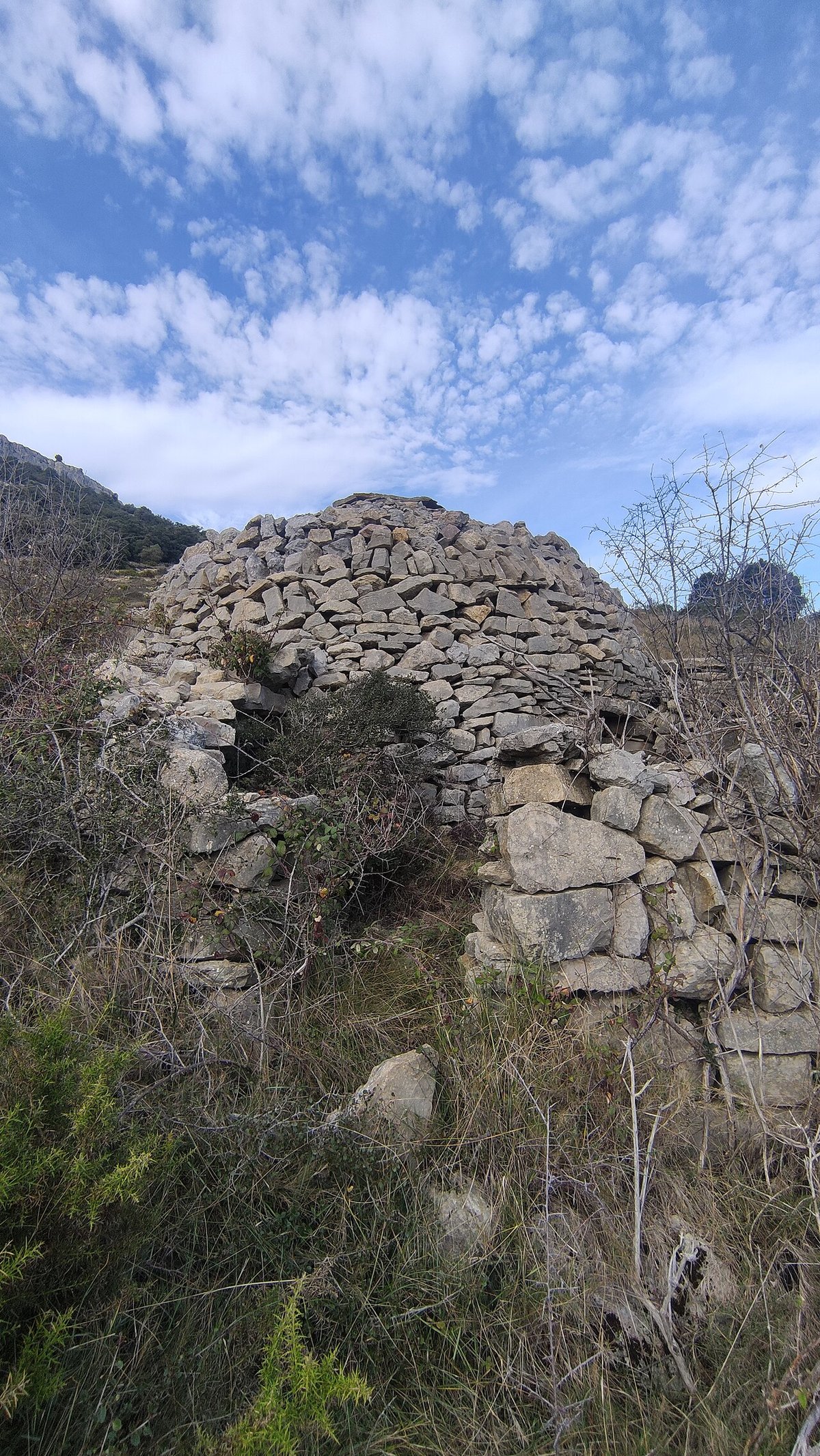
Beyond the streets of Benassal, the landscape opens into low hills, pine woods and former terraced fields. It is typical of the inland areas of Castellón: dry-stone walls tracing old boundaries, agricultural tracks winding through scrub, the occasional masía standing apart from the village.
One of the best-known walking routes links several springs in the surrounding area. The path crosses pine forests and fields that are no longer cultivated as intensively as they once were. The route is not demanding, and many people take it at a steady, unhurried pace. In summer it is wise to set off early, as there are stretches where the sun falls directly overhead.
There are also shorter trails that descend towards small ravines or follow former rural paths. Nothing technical or extreme. These are the sort of walks that suit conversation as much as movement, with the rhythm set by the terrain rather than by signposts.
The wider Alt Maestrat region gives Benassal its context. The open views, the changing light over the hills and the traces of agricultural life explain much about how people have lived here. The environment is not dramatic in a showy way. It is steady and practical, shaped by work and weather.
Food from the Interior
The cooking in Benassal reflects its inland setting. Expect substantial dishes, meat stews, home-cured embutidos and olive oil produced locally. These are recipes designed for long days in the fields and for winters that demand warmth.
There is little fuss in the presentation. The emphasis is on flavour and sustenance. Preserved meats and traditional preparations speak of a time when self-sufficiency mattered, and when preserving food was part of the annual cycle.
Many visitors choose to take something home, often embutido or locally made preserves from the wider comarca. It is a straightforward way of extending the memory of the trip beyond the return journey.
Festivities and Everyday Life
In August, the fiestas dedicated to San Roque bring a noticeable change to Benassal. The streets fill with activity. Religious events share space with music and gatherings that draw together residents and those who return for the summer. The village feels fuller, louder and more animated during these days.
Semana Santa also has a visible presence. Processions pass through the historic centre, and the sound of footsteps on stone carries along the narrow streets. The setting of the old quarter gives these moments a particular atmosphere, shaped as much by the space as by the ceremony itself.
Outside these periods, Benassal does not function as a destination of headline attractions. It is better understood as a place for a measured visit. A few hours wandering the old streets, time spent at the Font d’en Segures, a look across the landscape of the Maestrat. The experience is simple and grounded.
The appeal lies in understanding how life unfolds in this part of inland Castellón. Water drawn from a spring, fields that once demanded constant labour, festivals that mark the calendar year. Benassal does not require a long list of sights to justify a visit. Its character emerges gradually, through small details and familiar routines that have endured over time.