Full Article
about Culla
One of Spain’s most beautiful villages, with a flawless medieval core set high on a rocky outcrop, sweeping views, and a deep Templar past.
Hide article Read full article
Early in the morning, when the sun has yet to lift the mist that sometimes lingers in the ravines, the outline of Culla appears on its hill as a compact mass of stone. From the road you can make out tightly packed houses and the old enclosure at the top. Culla lies in the Alt Maestrat, more than 1,000 metres above sea level, and keeps the steady rhythm of Spain’s inland villages, where wind and winter cold still set the pace of the year.
Entering the old quarter on foot, the atmosphere shifts. Cars remain outside and the narrow streets return the echo of footsteps on stone. Houses retain solid doorways, small windows and dark iron balconies. There are no broad avenues or large squares revealed all at once. The village unfolds gradually, through short climbs and unexpected turns that follow the natural shape of the hill.
Stone Walls and Enduring Traces
Culla’s historic centre is protected as a heritage site, and it shows in the way many buildings have been preserved. On several façades, worn stone coats of arms point to former stately homes from the 16th and 17th centuries. In some streets, stretches of the old town walls remain, absorbed into later houses.
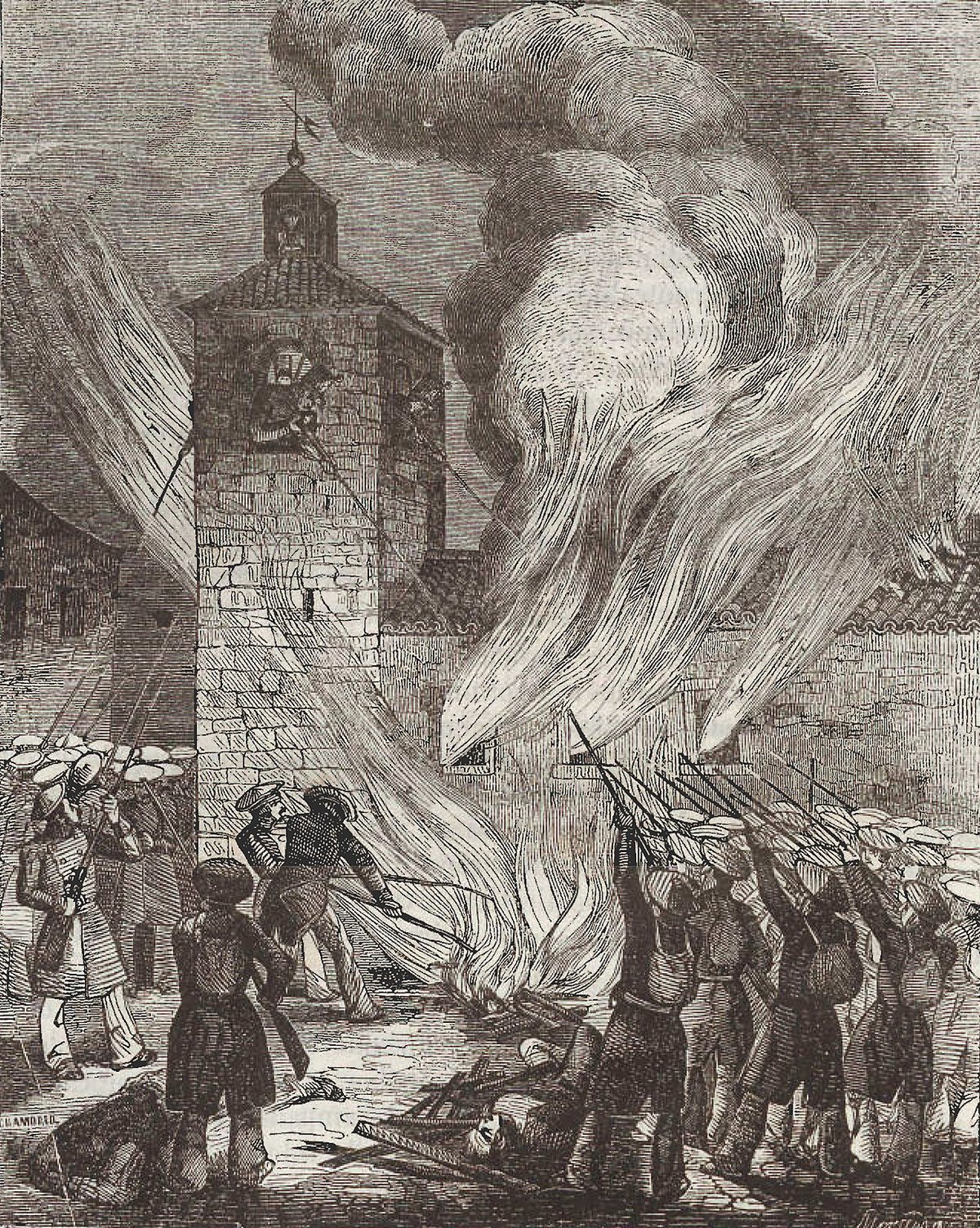
The Iglesia del Salvador stands at the most visible point of the village. Its tower can be seen from a distance as you approach by road. Inside are older elements, including a baptismal font that predates later alterations. The church has changed over the centuries, and these details hint at its long evolution without the need for grand statements.
A little higher up lie the remains of the former castle. Today there are scattered walls and parts of the defensive layout, yet the location explains why it was built here. From this height, much of the Alt Maestrat landscape comes into view: grey hills, abandoned terraces and ravines opening towards the interior of the comarca, a local administrative region. The sense of height is constant, and so is the exposure to weather that can shift quickly.
Paths Beyond the Last House
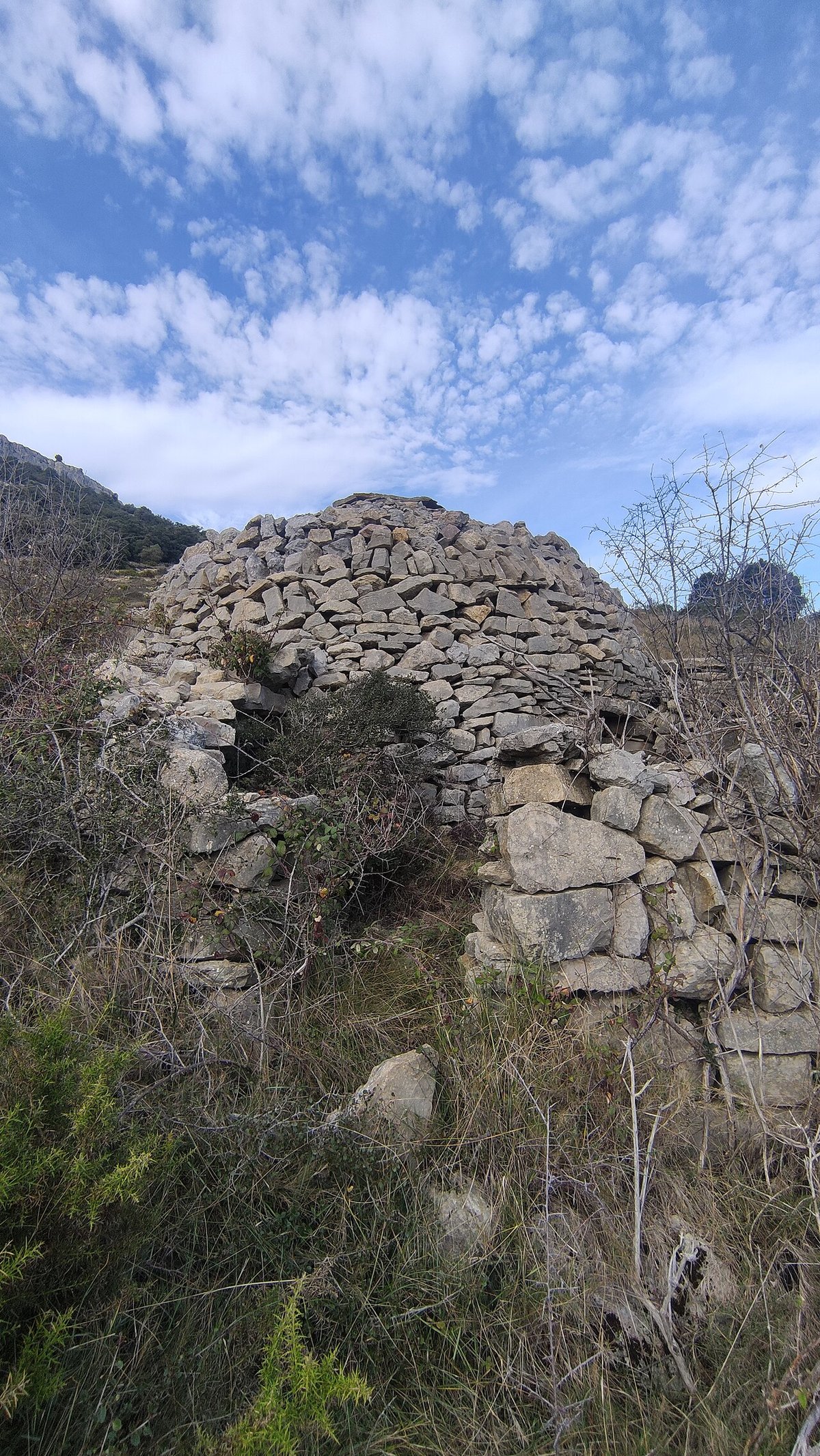
Once outside the built-up area, the terrain changes almost immediately. The landscape is rugged, marked by limestone rock, low holm oaks and fields that for centuries were shaped into dry-stone terraces. On clear days the air feels particularly sharp, and the silence is broken only by choughs overhead or the distant sound of a tractor.
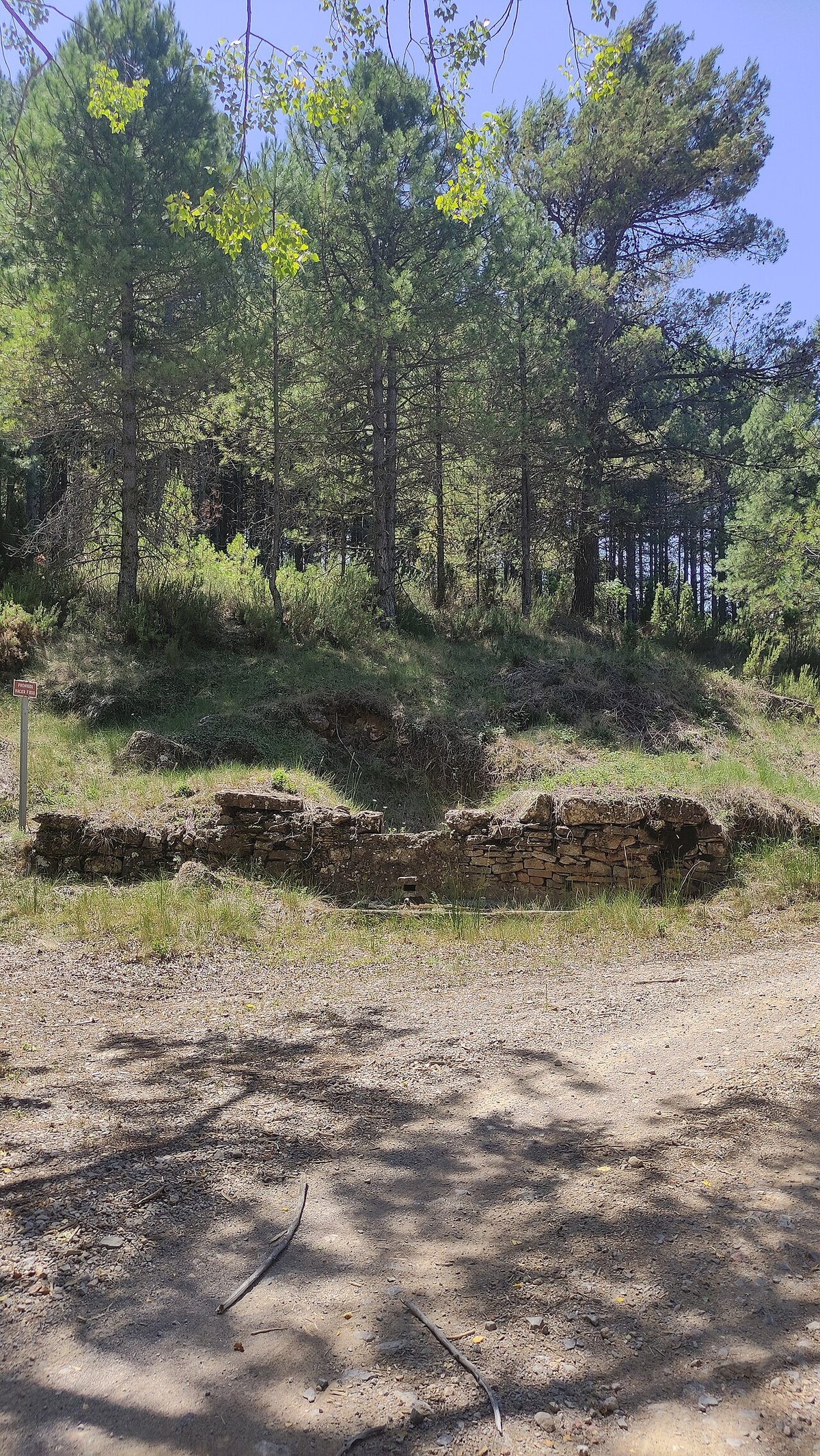
Old rural tracks survive around the village and now serve as walking routes. Some lead to former watermills powered by streams, others to small springs that supplied the population for generations. These are not crowded trails. In places the surface is uneven, so suitable footwear and water are advisable, especially in summer.
The wider setting of the Alt Maestrat reinforces the sense of distance from the coast. Although the Mediterranean is not far as the crow flies, the character here is firmly inland. Farming has long shaped the surroundings, and even where terraces are no longer cultivated, their lines remain visible across the slopes.
Food for the Cold Months
In this part of inland Castellón province, cooking is hearty. Winter brings slow-cooked stews and lamb or kid goat prepared over time rather than in haste. Cured sausages made locally are also common, reflecting a tradition of preserving meat for colder months.
Black truffle is part of the agricultural landscape of the comarca and is typically harvested in winter. During that period it appears in simple dishes such as eggs, meats or stews, where its aroma is immediately noticeable. The approach is straightforward, letting the ingredient speak for itself rather than turning it into something elaborate.
Seasonality still matters here. The colder climate at over 1,000 metres influences both what is grown and what is cooked, and the food mirrors the environment.
Festivals and the Pace of Village Life
The festive calendar remains important for residents. In August, Culla celebrates fiestas dedicated to San Roque, with religious events and activities that spill into the streets of the old quarter. The setting, among stone houses and narrow lanes, shapes the tone of these days.
Towards the end of summer there is usually a fair linked to truffle and other local products. For a few hours, producers and visitors fill the main square. It is a moment when the village briefly shifts from its usual calm to something busier and more social.
Outside those dates, life is much quieter. On weekdays, particularly in winter, it is entirely possible to walk through the streets without encountering anyone. The quiet is part of the experience, not an absence of activity but a reflection of a small population and a climate that encourages indoor life during the coldest months.
The Road Up and Getting Around
The road that climbs to Culla winds through hills and almond groves. From Castellón de la Plana the journey takes a little over an hour. It is best approached unhurriedly, as there are bends and some narrow stretches along the way.
Within the village, the historic centre is explored most easily on foot. Several streets are steep and paved with worn stone. In rainy weather or when winter frost sets in, care is needed underfoot. Those who can choose their moment may find early morning or late afternoon the most peaceful times, when the village is at its quietest and the light slides more softly across the stone façades.
Culla does not overwhelm with grand monuments or large-scale attractions. Its character lies in elevation, in the continuity of its built fabric and in the surrounding terrain that shapes daily life. The compact outline seen from the road becomes, once inside, a network of slopes, walls and views that connect past and present in a straightforward way.