Full Article
about La Torre d'En Besora
Small municipality with remains of its old castle and a notable parish church; quiet rural setting with views over the Maestrat.
Hide article Read full article
A hillside village shaped by work and altitude
In the interior of the Alt Maestrat, around 647 metres above sea level, La Torre d’En Besora reflects a way of life tied for centuries to agriculture and, to a lesser extent, mining. With a population of about 164 people, the surrounding landscape makes that history easy to read. Olive trees dominate, alongside terraces held in place by dry-stone walls and traces of former mining activity on nearby slopes.
The village itself follows the terrain rather than reshaping it. There are no large modern expansions. Houses cluster along the incline, adapting to the land in a way that feels gradual rather than planned. The overall impression is of continuity, with few abrupt changes in how space is used or built.
The church and the beginnings of the village
Life in La Torre d’En Besora centres on the church of Sant Miquel. The current building dates from the 16th century and was reformed in the 18th, a pattern seen across many parishes in the Maestrat where growth led to later विस्तार and modification.
Its bell tower is simple in design but stands out clearly, visible from different points around the municipality. It still acts as a reference point when moving through the village streets, helping to orientate visitors within the compact centre.
Inside, there is a modest Baroque altarpiece. It is not considered exceptional within the Valencian Baroque tradition, yet it illustrates how artistic styles of the time reached even small communities. The scale and execution reflect more limited resources, but the connection to wider cultural movements remains evident.
Streets that follow the slope
The old centre can be explored quickly. Streets climb and curve according to the hillside, without a strict grid or regular plan. Some stretches are paved with stone, and short bends appear where the terrain demands them.
Buildings, many of which have been restored, retain traditional forms. Stone walls are common, along with arched doorways and relatively small windows. These features respond to practical needs: protection from winter cold and from the winds that often sweep across this elevated part of the Maestrat.
There is little sense of excess or ornament. Instead, the architecture reflects function and local materials, with a consistency that ties the streets together visually.
Terraces and cultivated land
Just beyond the last houses, the landscape opens into dry-stone terraces. These define plots where olives, almond trees and small vegetable gardens are still cultivated. This stepped terrain is characteristic of inland Castellón and represents accumulated labour over generations.
The appearance shifts with the seasons. In spring, vegetation softens the outlines of the stone walls, and wildflowers appear between the rocks. During winter, the land looks more exposed, and the structure of the terraces becomes clearer, revealing the underlying geometry of the fields.
This agricultural setting remains active rather than decorative. It continues to shape daily life, even if on a small scale.
Paths through the Alt Maestrat
Several rural paths begin in the village and connect it with other parts of the comarca. Many follow older routes once used by carts or to reach fields and isolated farmhouses known as masías.
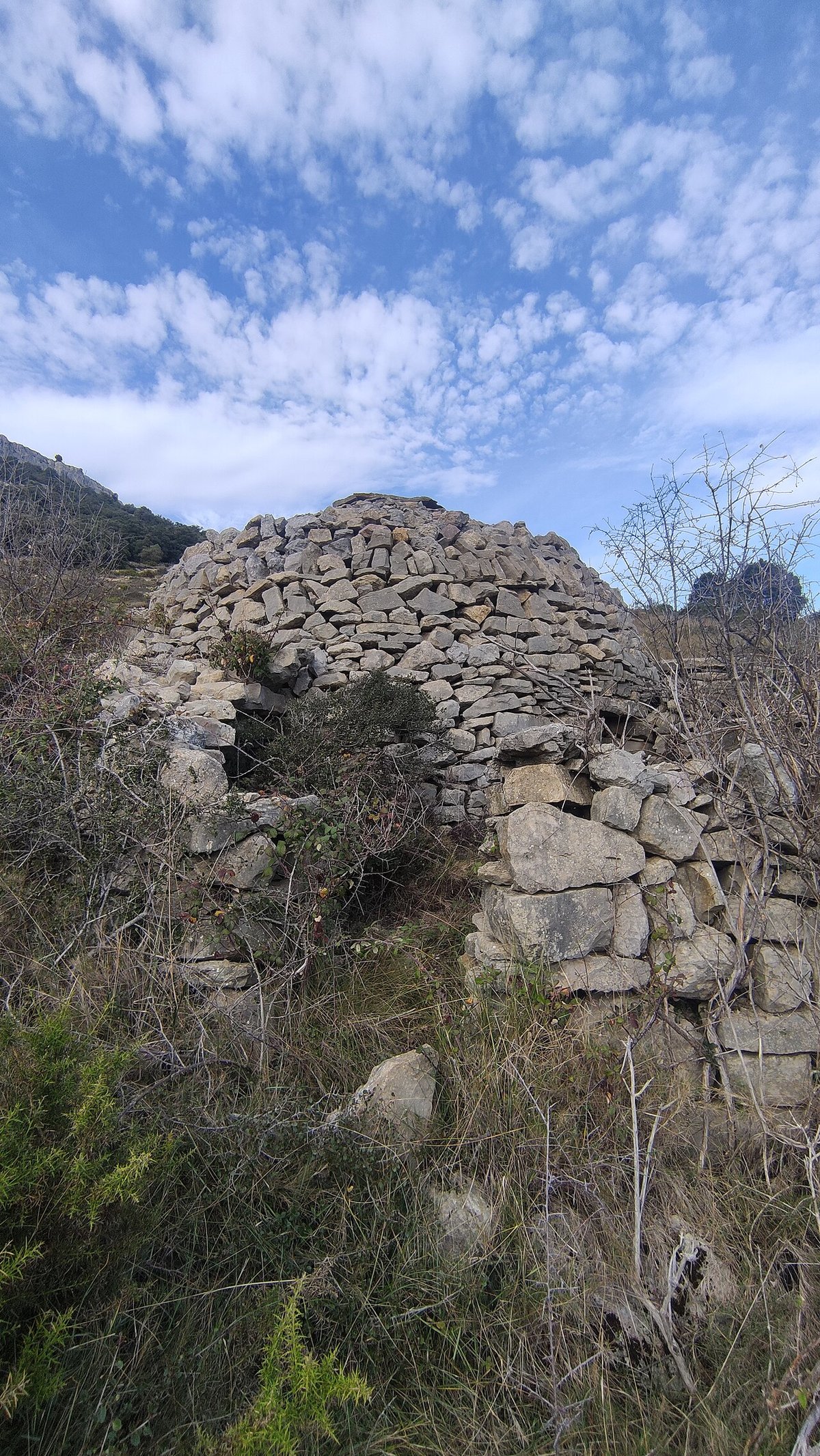
Walking along these paths, sections of stone paving still appear, along with dry-stone walls that mark boundaries or support the land. In some areas, there are also remains linked to former mining activity, subtle reminders of another economic layer in the area’s past.
These routes do not involve steep climbs, but they offer a clear sense of how the territory has been organised over time. Movement between settlements, fields and resources followed practical lines that are still visible today.
Festivities and local rhythms
The main celebrations are held in honour of Sant Miquel, usually in summer. During those days, the pace of the village changes. Processions and communal events take place, and there are gatherings that bring together residents with family members who return for a short stay.
In a village of this size, festivities retain a strongly local character. They are less about attracting visitors and more about reinforcing connections among people who share ties to the place. The population briefly increases, and the streets take on a different energy before returning to their usual calm.
Getting there and moving around
Access from Castellón de la Plana is via inland roads through the Alt Maestrat. The final stretch follows a secondary road with bends, typical of the region. The distance is not especially long, though journey times depend on the pace allowed by these roads.
Within the village, walking is the most practical way to get around. Streets have gentle slopes, but surfaces can be uneven in places. Comfortable footwear is advisable, especially for anyone planning to continue along the surrounding rural paths.
La Torre d’En Besora does not present itself through large landmarks or busy itineraries. Its character comes from how it has grown in relation to the land, how its buildings respond to climate and terrain, and how its paths continue to link past and present without much alteration.