Full Article
about Vilar de Canes
Small farming village at the source of the Molinell river; quiet landscape of almond and olive trees.
Hide article Read full article
Arriving Without Urgency
Tourism in Vilar de Canes begins by lowering expectations. This is a small village in the interior of the Alt Maestrat, and it does not try to be anything else. You arrive, park at the entrance beside the paved track where there is an open area, and continue on foot. Inside, most streets are narrow and cobbled. A car would only get in the way.
At around 668 metres above sea level, Vilar de Canes sits quietly among dry farmland. Just over a hundred people live here. There is no tourist infrastructure to speak of. Daily life still revolves around agricultural work and the domestic routines that have shaped the place for generations.
If you come mid-morning, you might notice a little more movement. A neighbour crossing the square, someone opening a door, a brief exchange between residents. Beyond that, the pace is slow. The village can be explored quickly, but it rewards taking your time.
A Compact Historic Core
The urban centre is small enough to cover in a short walk. Streets are brief, houses whitewashed, and stone walls common. Some façades have been restored, others left as they are. There is no decorative flourish, no grand civic building dominating the skyline.
The most visible structure is the parish church of the Inmaculada Concepción, dating from the 19th century. Its appearance is simple. A few wooden and ceramic details add modest character, but overall it reflects the restrained tone of the village itself.
From the Plaça Major, several streets branch out and cut across the old centre. Walking up carrer Sant Antoni or heading down carrer Baix gives a clear sense of the place. The layout is straightforward, the scale intimate. Many houses still have their original doors and worn iron balconies. There is little attempt to modernise appearances beyond basic upkeep.
Everything is close. In a little over an hour, the centre can be seen at an unhurried pace. Stretch it to two hours if you linger, look up at details or pause in the square. The interest lies less in specific sights and more in the overall atmosphere of a rural settlement that continues much as before.
Fields, Terraces and Masías
Step beyond the last houses and the landscape opens into the typical scenery of the Alt Maestrat: dry-farmed terraces known as bancales. Almond trees dominate, with some olive groves and small plots divided by low stone walls. In spring, when the almond trees blossom, the surroundings change noticeably for a few weeks. The pale flowers soften the otherwise muted tones of earth and stone.
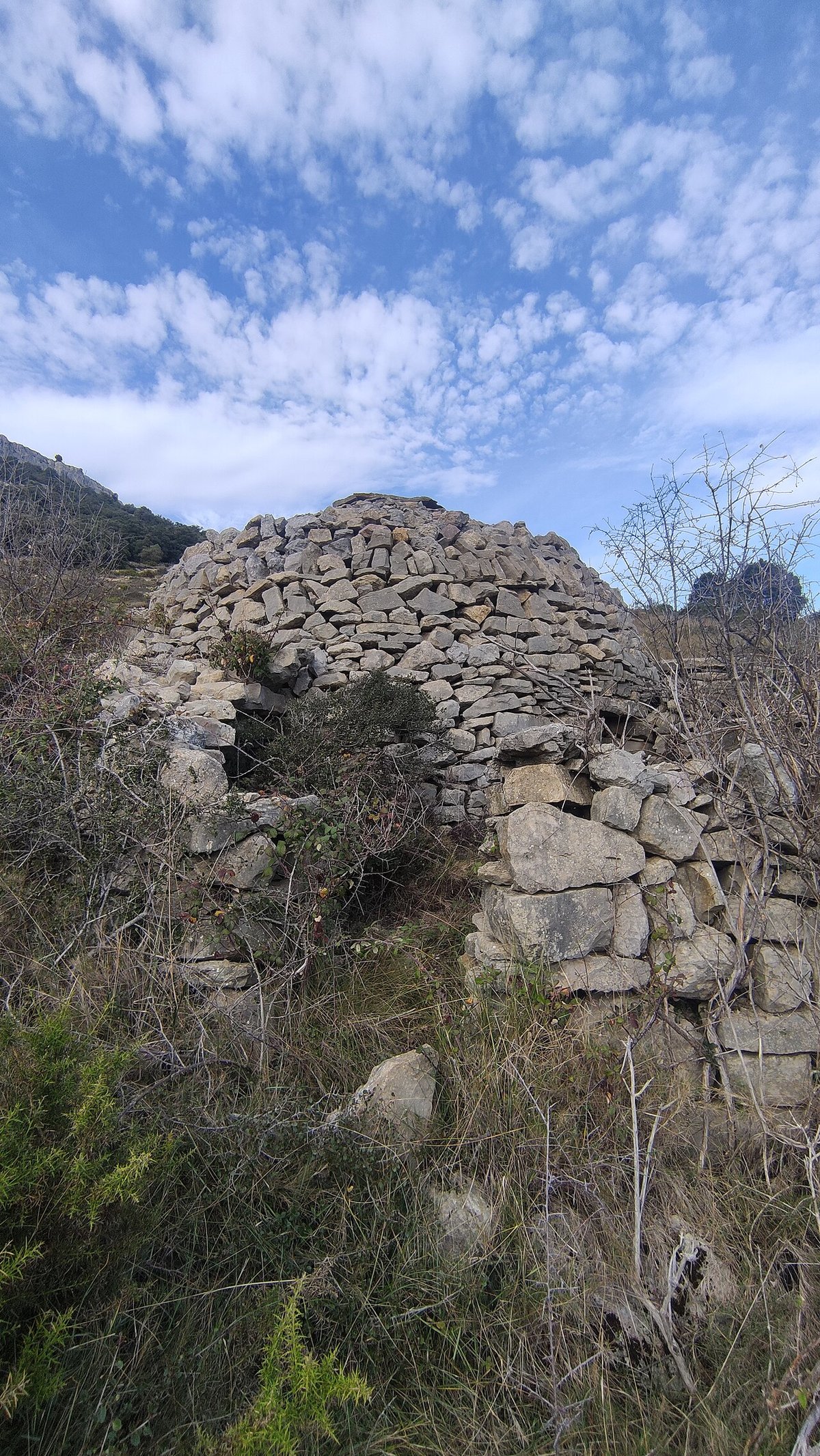
Scattered across this countryside are masías, traditional rural farmhouses linked to agricultural activity. Some, such as Mas Peret and Mas l’Ermita, can be clearly identified from the paths. Built in dry stone, they sit among fields that once sustained families through mixed farming and livestock.
There are no marked hiking routes. Even so, it is possible to walk along rural tracks that connect fields and low hills. The paths are clear and present no technical difficulty. They are working routes rather than designed trails, and that is part of their character. In summer, it is sensible to carry water, as there are no fountains near the village.
Between the terraces, older remains appear: stone corrals, abandoned threshing floors and stretches of dry-stone wall half covered by vegetation. These elements speak quietly of agricultural cycles and of a landscape shaped by manual labour. Nothing is signposted or interpreted. You notice them as you go.
Everyday Food and Village Gatherings
The food associated with Vilar de Canes follows the traditions of inland cooking in the Comunidad Valenciana. Cured sausages are common, as are simple stews based on local produce. Potatoes, hardy vegetables suited to a dry climate and olive oil from the area form the basis of many dishes.
Almonds feature prominently. They are eaten toasted or used in homemade sweets. The ingredients reflect what the surrounding fields can provide, and the style is practical rather than elaborate.
Village life continues to revolve around the religious calendar. In December, celebrations are held in honour of the Inmaculada Concepción. At that time, people who still have a family home in the village often return, and the population briefly increases.
In winter or towards the end of winter, events sometimes take place in connection with agricultural cycles, particularly when the almond trees begin to flower. Summer brings neighbourly meals and an occasional simple verbena, an open-air evening gathering with music, in the square. These occasions are modest but meaningful within a small community.
How Long to Stay
Vilar de Canes does not demand a long visit. The centre can be covered in just over an hour. Two, if you take it slowly through the streets. What extends your time here is walking out along the agricultural tracks or approaching one of the masías.
If you are travelling through the Alt Maestrat and want to pause for a while, it serves its purpose. Park at the top, wander through the village without hurry, then head out among the terraces. There is not much more to it, and it does not pretend otherwise.
The appeal lies in its simplicity. A handful of streets, a 19th-century church, terraces of almond and olive, scattered masías. Vilar de Canes offers a brief encounter with rural life in the interior of the Comunidad Valenciana, at a rhythm that resists spectacle.