Full Article
about Arañuel
Small town on the banks of the Mijares river; perfect for rural tourism and relaxation with its natural pools and quiet mountain setting.
Hide article Read full article
A small settlement in the Mijares valley
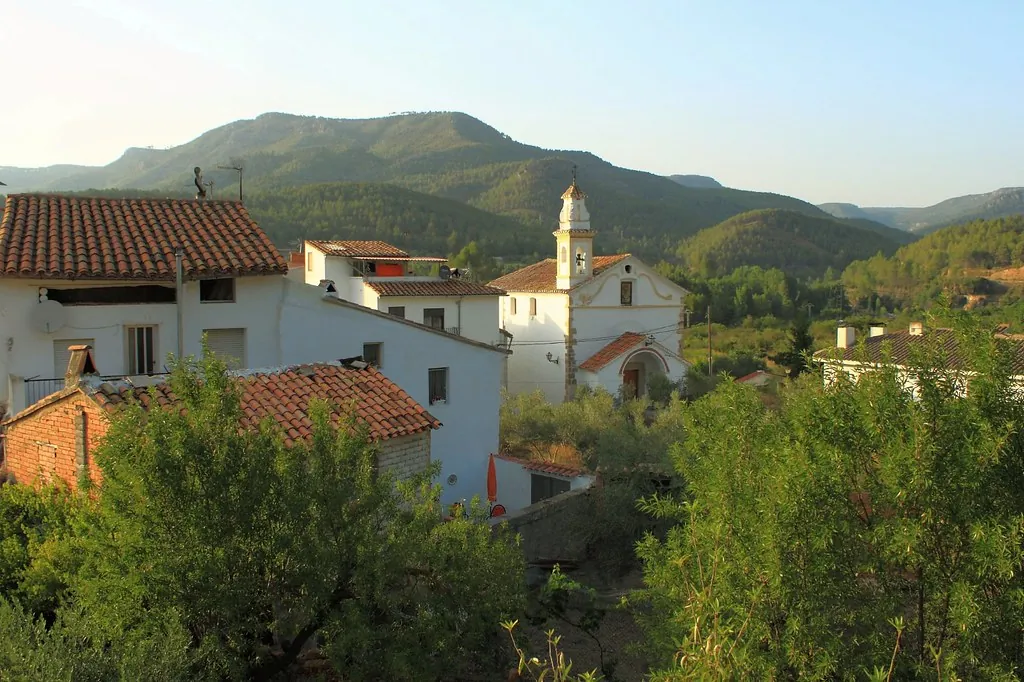
Arañuel sits in the Alto Mijares comarca, in the inland area of Castellón, within the Comunidad Valenciana. It is one of several small villages along the valley of the river Mijares, where the scale of life still reflects its agricultural roots. The municipality stretches across slopes covered in pine forest and old खेती terraces, shaped over time for growing olives and almonds.
With just over a hundred residents, daily life moves at an unhurried pace. The rhythm of the seasons, the weather, and the demands of the land still influence how time is organised here. This is not a place that has grown beyond its surroundings. The relationship between village and landscape remains direct and easy to read.
The village itself stands on a slight rise beside the valley. It is compact. A handful of streets form the centre, and it takes only a few minutes to walk from one end to the other. There is no sense of expansion or sprawl, only a small cluster of houses that has stayed close to its original footprint.
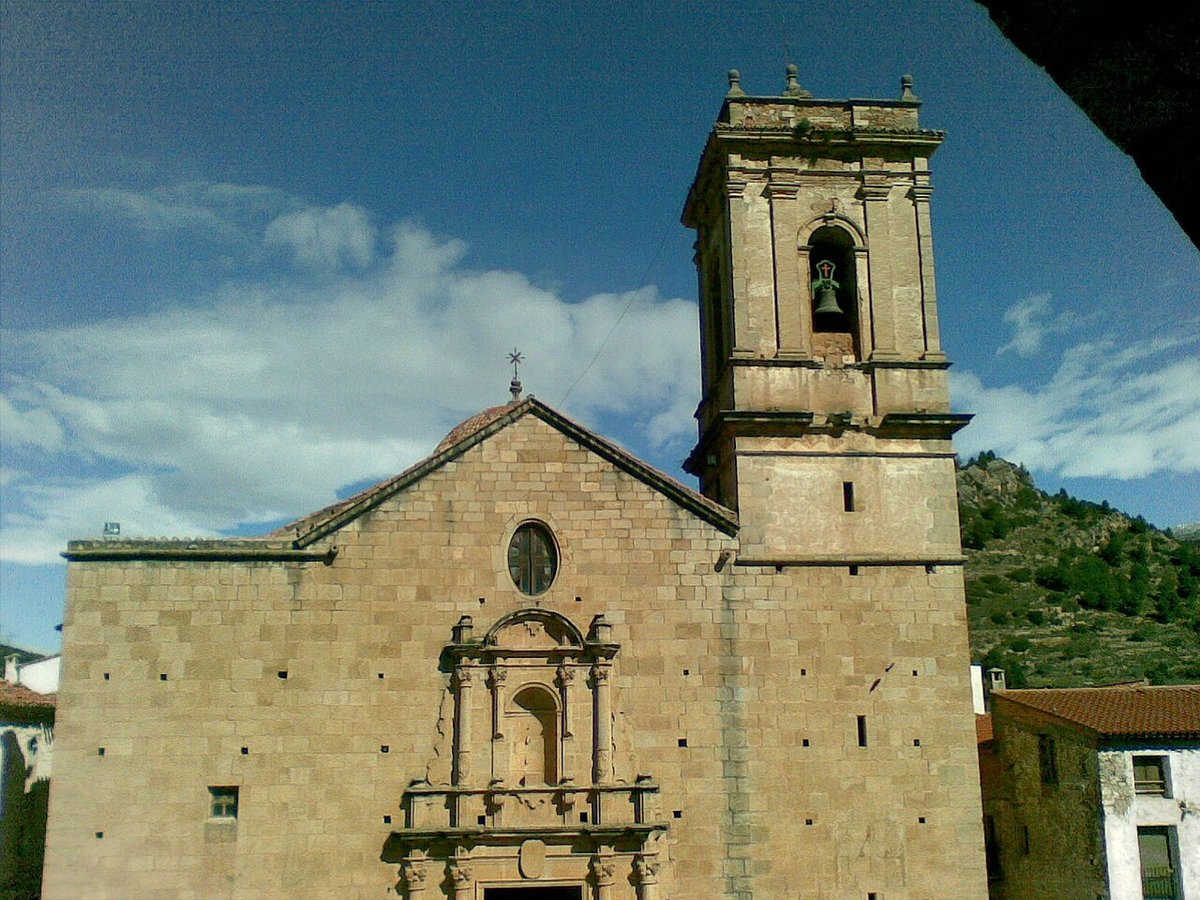
The parish church, dedicated to the Purísima Concepción, occupies the most prominent position in the village. Its origins appear to date back to the 16th century, with later modifications, as happened in many churches in the area during the 18th century. The façade is plain, without elaborate decoration. A brick bell tower rises above it, and the entrance features a rounded arch. The design reflects a practical parish building, intended for everyday use rather than display.
Houses shaped by use and change
Walking through Arañuel reveals features typical of rural architecture in inland Castellón. Arched doorways appear at street level, iron balconies overlook narrow lanes, and roofs are finished with traditional tiles. These elements form a consistent visual language that ties the village together.
Many of the houses were altered during the second half of the 20th century. Families adapted older buildings to suit modern needs, which brought changes in layout and materials. Even so, earlier structures are still visible beneath these updates. Thick walls remain in place, and the arrangement of spaces often reflects their original purpose. Corrals and agricultural outbuildings continue to appear as part of the domestic layout, showing how closely daily life was once tied to farming activity.
Small fountains and shared spaces can still be found in certain corners of the village. These were traditionally used for everyday tasks and communal work. Their presence adds another layer to the understanding of how the village functioned in the past, when water sources and open working areas played an essential role.
Terraces and woodland around the village
The landscape surrounding Arañuel is defined by terraces, known locally as bancales. Over generations, these were built with dry stone walls to create flat areas on sloping ground. This allowed for the cultivation of olives, almonds, and small vegetable plots. The effort required to construct and maintain these terraces speaks to a long history of working the land in difficult conditions.
Some of these cultivated areas remain in use today. Others have been gradually abandoned, and natural vegetation is beginning to reclaim them. The process is visible across the slopes, where former खेत areas blend into scrub and woodland.
Pine forest dominates much of the nearby terrain, mixed with Mediterranean scrub. In steeper sections, holm oaks and other hardy species appear. The vegetation changes subtly depending on altitude and exposure, creating a varied but cohesive landscape. From certain higher points within the municipality, there are open views towards the surrounding sierras that enclose the Mijares valley. These viewpoints give a clearer sense of how the village sits within a wider geographical setting.
Paths that trace older routes
A network of traditional paths still runs through the area around Arañuel. These routes were originally created to connect orchards, corrals, and water sources. Their layout often follows the logic of the terrain rather than any formal planning, weaving between terraces and across wooded slopes.
Not all of these paths are marked as official hiking routes, but many remain accessible. The existing network of rural tracks makes it possible to explore the surroundings without difficulty, provided attention is paid to the terrain and direction.
Activity in the countryside is more noticeable in the early hours of the day and towards evening. Birds of prey can often be seen flying above the slopes. Signs of other wildlife also appear, including traces left by wild boar or fox. These encounters are not guaranteed, but they form part of the natural rhythm of the area.
Local celebrations and shared time
Festivities in Arañuel continue to follow the traditional calendar, closely linked to the parish and to community gatherings. The feast of the Purísima Concepción, held in December, maintains its religious character, with ceremonies that reflect long-standing customs.
In August, the village usually celebrates its patronal festivities. During this period, people who live elsewhere return, and the atmosphere changes noticeably. The streets become busier, and local groups organise activities. Processions also take place, reinforcing the connection between social life and religious tradition.
These moments mark a contrast with the quieter periods of the year. They show how the village expands temporarily, both in population and in energy, before returning to its usual pace.
When to visit and what to expect
Spring and autumn tend to offer the most comfortable conditions for walking the paths around Arañuel. Temperatures are milder, which makes exploring the surrounding terrain more manageable. Summer brings intense heat during the middle of the day, a common feature of inland Castellón. Winter is calmer and generally dry, although weather changes can be sudden.
Arañuel is not a place that requires several days within the village itself. A visit can be brief. It works well as a stop within a wider route through the Alto Mijares, or as a base for short walks in the valley. The main interest lies in understanding how the area has been organised over time: a small settlement, agricultural terraces spreading outward, and woodland closing in around them.
This balance between human activity and natural surroundings remains clearly visible. It defines both the appearance of Arañuel and the way it is experienced today.