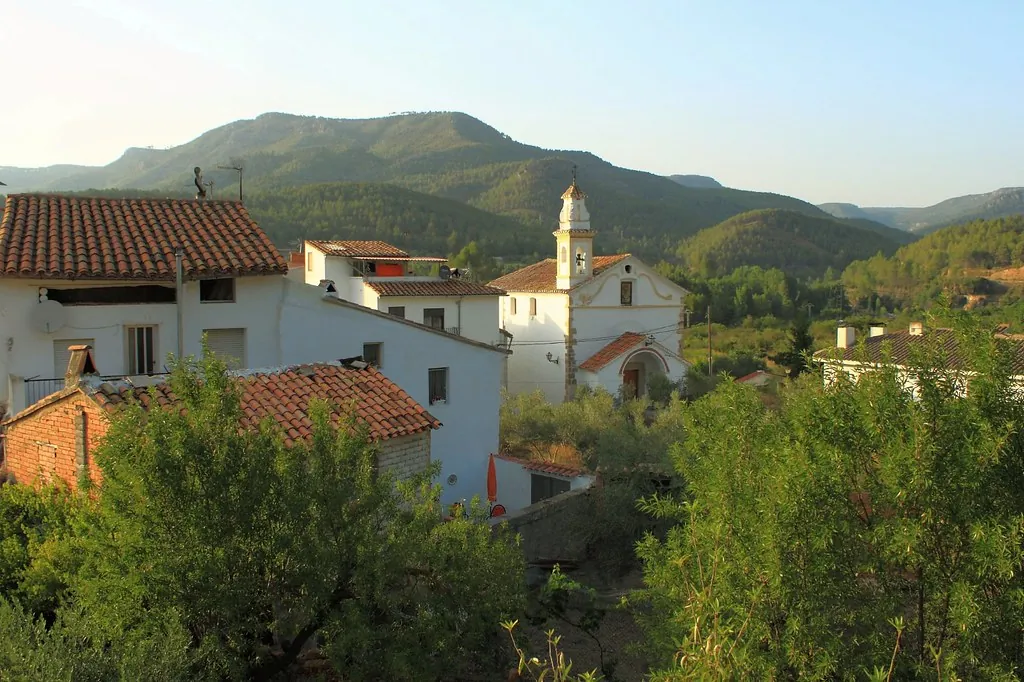
Ayódar - Flickr
Paco Gómez · Flickr 5
Comunidad Valenciana · Mediterranean Light

Ayódar

The church bell strikes noon and nobody quickens their pace. In Ayódar, 418 metres above the Mediterranean and forty kilometres inland from Castell...

176 inhabitants · INE 2025
418m Altitude

Why Visit

Mountain Castle Tower Baths at Pozo Negro

Best Time to Visit

summer

Patron Saint Festivals (August) agosto

Things to See & Do
in Ayódar

Heritage

  • Castle Tower
  • Church of San Vicente Ferrer
  • Palace of the Dukes

Activities

  • Baths at Pozo Negro
  • Hiking
  • Birdwatching

Festivals
& & Traditions

Fecha agosto

Fiestas Patronales (agosto), San Antonio (enero)

Las fiestas locales son el momento perfecto para vivir la autenticidad de Ayódar.

Full Article
about Ayódar

A village set in the Sierra de Espadán natural park, known for its wooded surroundings and the river’s natural pools that draw swimmers in summer.

Ocultar artículo Leer artículo completo

The church bell strikes noon and nobody quickens their pace. In Ayódar, 418 metres above the Mediterranean and forty kilometres inland from Castellón de la Plana, time keeps to the river’s rhythm rather than any timetable. The Mijares murmurs below the village, its voice carrying farther than the occasional car that creeps along the CV-223.

A Village You Can Walk Across Before the Kettle Boils

Barely 180 people live here year-round. The whole centre—stone houses, Arab-tiled roofs, geraniums on windowsills—spans three parallel lanes that take six minutes to traverse at an amble. Elderly residents still use the corrals tucked between houses for a few goats; the smell of straw drifts from half-open doors. There is no ticket office, no interpretive centre, no souvenir stall. Instead, a single bar opens onto the tiny plaça where the weekly delivery lorry blocks traffic for twenty minutes and nobody minds.

Altitude matters. Even in May the dawn air carries a nip that coastal Valencia never feels. Night-time temperatures drop eight to ten degrees below the coast, so pack a fleece whatever the season. Summer afternoons top 32 °C instead of the 38 °C suffered on the beach, and in January you may wake to a sugar-dusting of snow that melts by lunchtime. The village’s height also grants it Valencian Community’s cleanest night sky: walk fifty paces beyond the last streetlamp and the Milky Way appears without ceremony.

Stone, Soil and Silence: What You Actually See

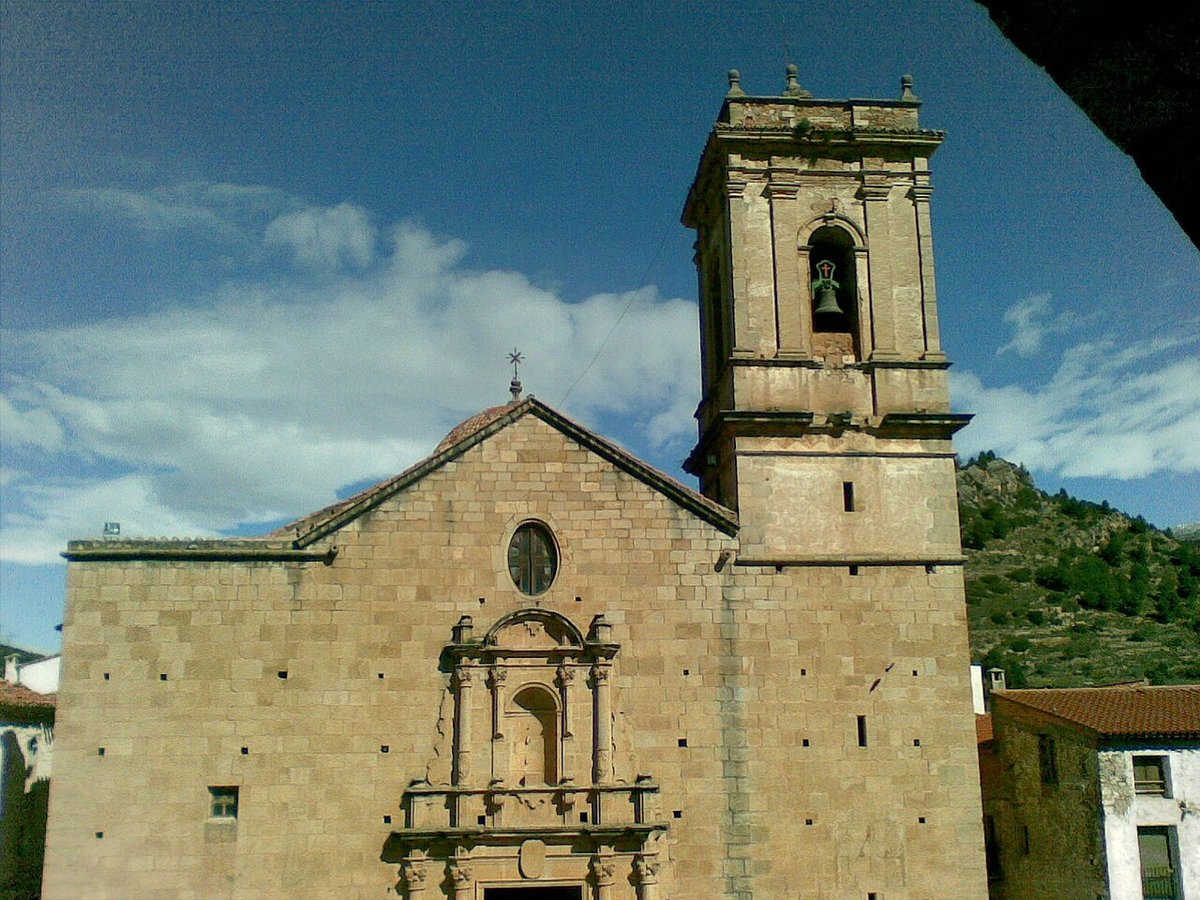
Start at the parish church, a modest 17th-century rectangle whose bell tower doubles as the local mobile-phone mast. The stone is the same honey-coloured marl that builders quarried from the ridge opposite; repairs still come from the same seam. Inside, the only flourish is a painted wooden crucifix said to have arrived with friars expelled from Teruel in 1835. It is used, not curated: Thursday-evening Mass draws twenty parishioners, the village’s largest weekly gathering.

From the church door, Calle Mayor climbs gently past houses whose ground floors once sheltered animals. Look for the iron rings set into the walls—mooring posts for mules that carried charcoal to the coast until the 1950s. A parallel alley, so narrow that neighbours can shake hands across the gap, leads to an unexpected orchard: three terraces of apricot and apple trees watered by a Moorish irrigation channel still flowing after eight centuries. The channel is only a foot wide, yet it feeds the vegetable plots that supply most households with greens from April to November.

Leave the last cobble behind and you are immediately inside pinar de carrasco—Aleppo pine forest planted during the Franco era to halt erosion. Paths are neither signed nor graded; they are the routes children take to school or shepherds use to reach higher pastures. One track switchbacks uphill for twenty minutes to a sandstone bluff called El Picot. From here the view opens south-west along the Mijares gorge: a pleated landscape of abandoned almond terraces, rosemary scrub and the distant glint of the coast you can just make out on clear days. Binoculars help, but silence is the real luxury—only cicadas and, if the wind is right, the faint clang of a goat bell.

Walking, Eating, Star-Gazing: Low-Key Pursuits

You do not need Ordinance Survey precision. Park by the football pitch (half a pitch, actually—goals are chalked on a wall) and pick any stony lane. A two-hour loop north-east follows the ridgeline to an abandoned limekiln, then drops past cherry orchards back to the river. Gradient is moderate, stout trainers suffice, and the only hazard is overfriendly dogs at the farmstead of Mas de L’Oller. Take water; there are no cafés beyond the village.

Food is seasonal and stubbornly local. The bar offers two set menús: €12 for three courses at lunch, €16 if you want meat. Expect chickpea-and-spinach stew in winter, rabbit with bay in spring, and in late September a brief glut of roasted red peppers dressed only with local olive oil. Wine comes from the neighbouring village of Villanueva de Viver: a young tempranillo that tastes of mountain herbs and costs €2.50 a glass. Vegetarians survive on tortilla and the excellent local sheep’s cheese, but vegans should self-cater.

Darkness arrives suddenly. By 10 p.m. the last bar customer has shuffled home and streetlights—four of them—switch off to save money. Walk fifty metres towards the cemetery and the sky becomes an obsidian bowl. On moonless nights the Andromeda Galaxy is visible to the naked eye; shooting stars are so common that wishes feel extravagant. Serious astronomers drive up the cement track to Mas de la Costera, 650 m, where the horizon is unbroken. There is no charge, no gate, no closing time. Just take a torch and remember the track is also used by night-hunting wild boar.

When the Village Remembers It Has Visitors

August turns Ayódar briefly sociable. The fiesta mayor (15–17 August) squeezes bull-running into streets barely four metres wide, followed by paella for 200 cooked in a pan the size of a satellite dish. Beds are impossible unless you booked in June; day-trippers arrive from neighbouring villages, doubling the population and filling the single car park by 11 a.m. Music thumps until 4 a.m.; if you want rural tranquillity, come in May or October instead.

Holy Week is quieter but equally atmospheric. The Thursday-night procession squeezes past houses so close that incense drifts through bedroom windows. Participants wear traditional robes—navy, not Seville’s purple—and bear a 17th-century paso weighing 350 kg. There is no seating, no tickets, no schedule published online; turn up at 10 p.m. by the church and follow the candlelight.

Getting Here, Staying Here, Leaving Again

From the UK, fly to Valencia or Castellón. Hire cars at Valencia airport face a 70-minute drive: A-23 towards Zaragoza, exit at Soneja, then CV-223 through tight corkscrew bends. The final 12 km take thirty minutes; meeting a bus on a single-track section requires reverse skills and good manners. Petrol is cheaper at the coast—fill up before you climb. There is no train; the nearest station, Barracas-Bejís, is 18 km away along a road so sinuous that taxis refuse the fare.

Accommodation is limited to three casas rurales, each sleeping four to six and booked solid at weekends. Expect €90–€110 per night for the whole house, linen included. Two lie within the village; the third, Casa Masía La Olla, sits alone at 600 m with its own spring and no phone signal—perfect if you want to disappear. Wild camping is tolerated above the tree line, but fires are banned in summer and the Guardia Civil patrol sporadically.

Mobile coverage is patchy. Vodafone works on the main square; Orange users must stand by the church door and wave. The cashpoint inside the bakery accepts UK cards but dispenses only €50 notes, which the bar cannot change. Bring coins.

The Honest Verdict

Ayódar will not change your life. It offers no Michelin stars, no souvenir tea towels, no ancient mosaics roped off for selfies. What it does offer is a working mountain village where the bread van still toots its horn at 9 a.m. and the evening news travels faster by neighbour than by Wi-Fi. Come for the walking, stay for the night sky, leave before August unless you enjoy sharing a single shower with twenty German astronomy students. Pack sturdy shoes, a sense of quiet, and enough cash for the bread man. The river will do the rest.

Key Facts

Region
Comunidad Valenciana
District
Alto Mijares
INE Code
12017
Coast
No
Mountain
Yes
Season
summer

Livability & Services

Key data for living or remote work

2024
Connectivity5G available
HealthcareHospital 16 km away
Housing~5€/m² rent · Affordable
CoastBeach nearby
Sources: INE, CNMC, Ministry of Health, AEMET

Official Data

Institutional records and open data (when available).

  • Espacio de Protección Arqueológica Asentamiento de Castro
    bic Monumento ~2.6 km

Planning Your Visit?

Discover more villages in the Alto Mijares.

View full region →

More villages in Alto Mijares

Traveler Reviews