Full Article
about Castillo de Villamalefa
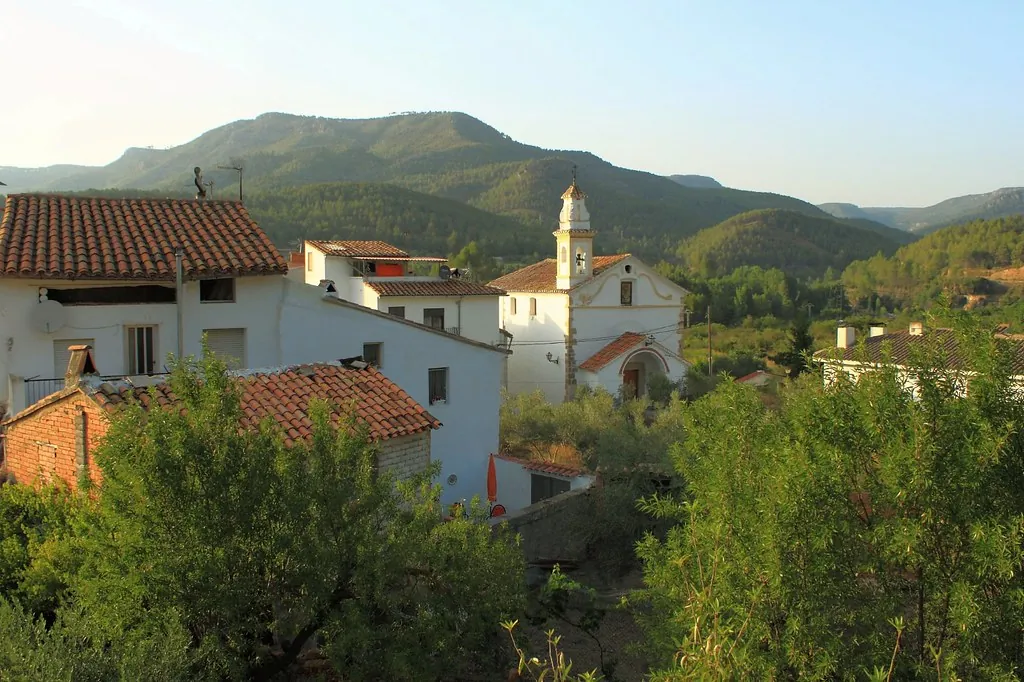
Small mountain village set atop a hill; known for views over the Villahermosa river and its surrounding pine forest.
Hide article Read full article
A Small Village in the Hills of Alto Mijares
Castillo de Villamalefa lies in the Alto Mijares, in the inland part of the province of Castellón, within the Comunidad Valenciana. Set at around 800 metres above sea level, it stands in broken terrain where ravines and wooded hills shape both the landscape and daily life. Today the population hovers around a hundred residents.
The village is gathered into a handful of narrow streets that adjust to the slope rather than trying to tame it. Life moves at the pace typical of small inland settlements: few cars, doors left open in summer, and long stretches of quiet during much of the day.
Alto Mijares is one of the least populated areas in the Comunidad Valenciana. It is a territory of pine forests, holm oaks and abandoned terraces that recall a farming economy now greatly reduced. Throughout much of the 20th century these villages steadily lost inhabitants, and that recent history is still visible. There are shuttered houses, kitchen gardens returning to scrub, and a calm that is not curated for visitors but simply the result of very low population density.
Parish Church and Mountain Architecture
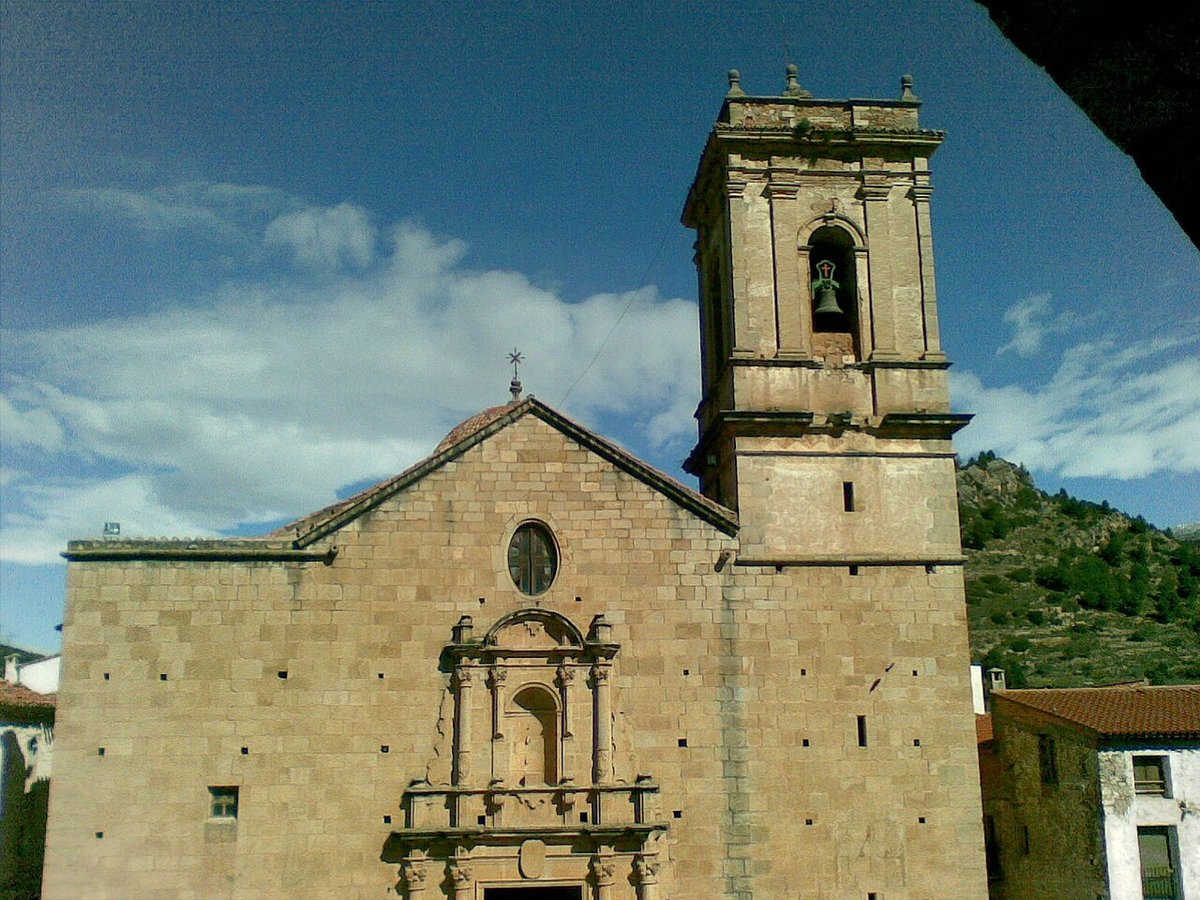
At the centre of the village stands the parish church of the Asunción. The current building is usually dated to the 16th century, although, as in many churches in the area, it has undergone later alterations. Its stone façade is sober and practical, more in keeping with local building traditions than with any grand artistic ambition. Inside, Baroque elements added during subsequent reforms can still be seen.
Beyond the church, Castillo de Villamalefa is best understood through its domestic architecture. Traditional houses were built with rubble masonry and wooden beams, topped with Arabic tile roofs. Their heights vary, adapting to the incline of the streets. Some façades still display iron balconies and old wooden gates, reminders of earlier ways of life. It is not a monumental old quarter, yet it offers a clear sense of how mountain villages in inland Castellón were constructed.
On the edges of the village, where the streets begin to open out towards the countryside, there are broad views across the valley. These are not formal viewpoints with signs or railings, but small spots from which the relief of Alto Mijares becomes clear: pine-covered slopes, deep ravines and roads winding between hills.
Walking Routes and the Alto Mijares Landscape
Castillo de Villamalefa works better as a base for exploring the surrounding countryside than as a place for long urban strolls. From the village, forest tracks and traditional paths lead towards other settlements in Alto Mijares and to former cultivated areas.
These routes pass through pine woods, areas of holm oak and ravines where dry stone walls and the remains of terraces still appear. For decades, such paths connected one village to another on foot or with livestock. Today they are mainly used for walking and mountain biking.
At certain times of year, especially after the first autumn rains, local people head into the hills to look for wild mushrooms. The forests also provide opportunities to observe common Mediterranean wildlife, although patience is more useful here than high expectations.
The wider setting of Alto Mijares is central to understanding the village. The region’s forests and uneven terrain have long conditioned its economy and communications. Roads twist through the hills rather than cutting straight lines, and the sense of distance is measured as much in bends as in kilometres.
Festivities Rooted in Local Life
The main patron saint festivities take place in August in honour of the Asunción. During these days the village changes noticeably. Residents who now live elsewhere return, and religious ceremonies are combined with popular activities in the square and nearby streets. For a brief period, the quiet routine gives way to a busier, more sociable atmosphere.
In January, San Antón is usually celebrated, a tradition widely observed in inland parts of the Valencian Community. It is common to light a bonfire and bless animals, a gesture that recalls the historical importance of livestock in the local economy. In rural Spain, San Antón is traditionally associated with the protection of animals, and the ritual continues even in places where herding is no longer central to daily life.
Throughout the year there are also small romerías, or pilgrimages, to hermitages within the municipal area or nearby. These gatherings are simple and closely tied to the lives of local residents. They tend to revolve around shared meals, religious observance and the maintenance of long-standing customs rather than large-scale events.
Practicalities and the Road In
From Castellón de la Plana, the usual approach is to head inland along the CV-20 and later continue on regional roads that cross Alto Mijares. The final stretch runs along narrow, winding routes, which is typical of this part of the province.
The village itself can be explored quickly. Those planning to walk in the surrounding countryside are advised to wear suitable footwear and carry water, particularly in summer. Services within the municipality are limited, so visits are often combined with time in other nearby villages in the valley.
Castillo de Villamalefa does not present itself as a major destination. Its appeal lies in its setting and in the unvarnished reality of a small inland community shaped by depopulation and by the rhythms of the mountains. For travellers interested in the quieter side of the Comunidad Valenciana, Alto Mijares offers a landscape where pine forests, ravines and scattered villages define the experience more than any single monument.