Full Article
about Cortes de Arenoso
Mountain municipality home to one of Spain’s oldest trees, known for its springs and pine-and-oak landscape.
Hide article Read full article
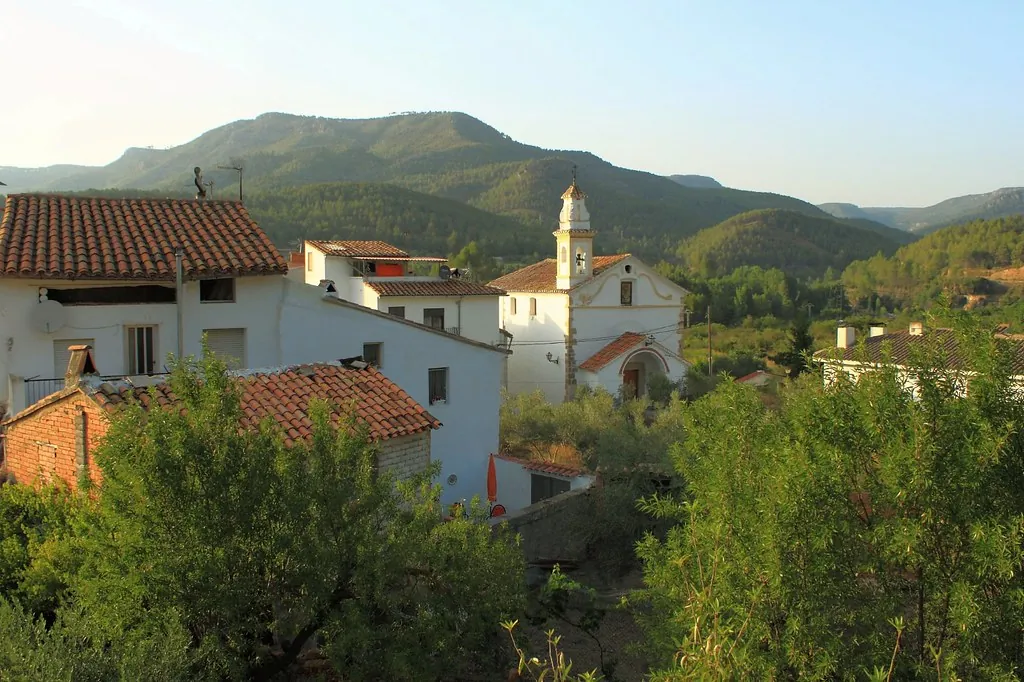
The dirt track crunches underfoot before the village comes into view. Between tall pines, Cortes de Arenoso appears in the Alto Mijares. At this hour the light falls at an angle across the rooftops and the air carries the scent of resin and damp earth. Silence dominates, broken now and then by a car passing along the road or the wind moving through the treetops.
Cortes de Arenoso is small, even by the standards of this inland comarca in the Comunidad Valenciana. A handful of streets, some of them steep, are lined with masonry houses and roofs of old tiles that have changed over time without completely losing their original shape.
The centre, at an unhurried pace
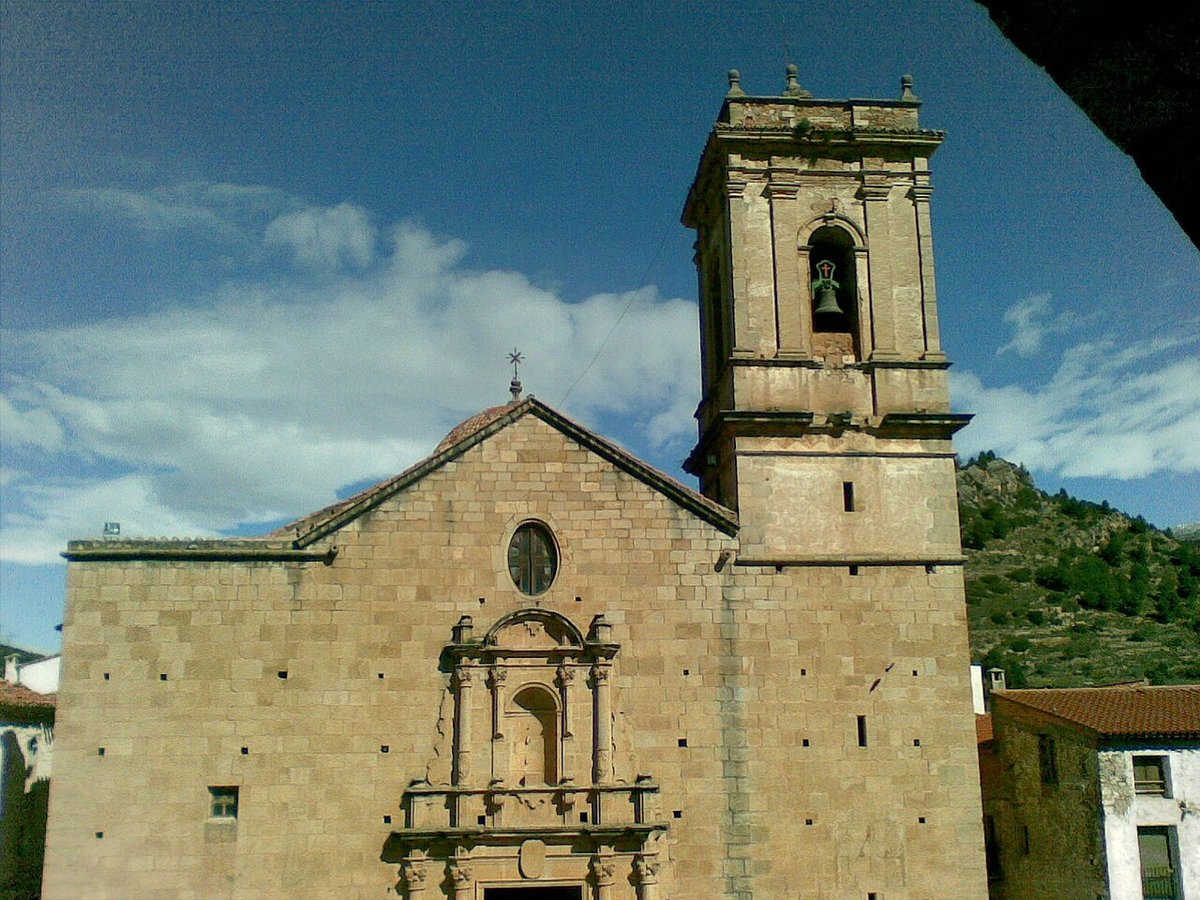
The parish church dedicated to San Miguel Arcángel marks the centre of village life. Its façade is restrained, built in pale stone with simple lines. Opposite, a small square opens up, edged with stone benches. By mid-afternoon there is a gentle rhythm here: neighbours talking, a car pulling up briefly, footsteps echoing on the paving.
The main street climbs steadily uphill. It takes only a few minutes to walk from one end to the other. There are no large buildings or museums. Instead, attention falls on old wooden doors, carefully restored façades and stretches of wall where stone shows through layers of whitewash.
This is a place where daily life is visible at street level. Movement is subtle rather than constant, and the scale encourages walking without any sense of hurry.
Pines and slopes on every side
From the edge of the built-up area, the setting becomes clear. Cortes de Arenoso is surrounded by hills. Aleppo pine, black pine and low scrub cover much of the slopes.
In spring, green tones mix with the yellow of flowering broom. During the height of summer, the smell of resin grows stronger under the heat of the sun. Autumn brings ochre and reddish shades to certain corners of the valley.
At several points close to the village, the land opens out and the wider landscape of the Alto Mijares comes into view: gentle ravines, a succession of hills folding into one another and, on clear days, the faint outline of distant sierras. The sense of space is immediate once the last houses are left behind.
The changing seasons alter the atmosphere without transforming the character of the place. The mountains remain close, forming a constant backdrop to everyday life.
Walking old paths
Many of the tracks that leave Cortes de Arenoso have been used for generations. They were once regular routes for shepherds or for reaching small cultivated plots scattered across the hills.
Some paths climb towards higher ground where the whole valley can be seen at a glance. Others follow the contour of the slopes, allowing for walks without steep ascents. Good footwear is advisable, as the terrain alternates between loose earth and stone.
Early in the morning or towards evening, birds of prey can often be seen gliding above the ravines. Vultures appear as well, taking advantage of rising air currents. In autumn, when the soil becomes damp, many local residents head into the woods to look for robellones, a type of wild mushroom much appreciated in this part of Spain.
These walks do not require complex planning. The appeal lies in following routes that have long connected fields, hills and village, and in the steady presence of forest and open sky.
Food shaped by the land
Cooking in this inland area of the Valencian region is straightforward and robust. Dishes are designed for cold winters and for long days spent working outdoors.
Migas ruleras remain a familiar recipe in many households. This traditional dish, based on fried breadcrumbs, is closely associated with rural cooking in parts of eastern Spain. Stews made with lamb or game also appear when the season allows. Mountain honey is easy to find in the area, as are aromatic herbs gathered from the surrounding hills.
At certain times of the year, the village organises communal meals or food-focused gatherings linked to traditional recipes. These usually coincide with local festivities or neighbourhood events, moments when residents and returning families come together around shared tables.
Food here reflects climate and landscape rather than culinary trends. Recipes are shaped by what is available in the fields and forests nearby.
Nights under a wide sky
After dark, the limited lighting around the village becomes immediately noticeable. On clear nights, far more stars are visible than along the coast or in large cities.
In summer, the air cools quickly once the sun has set. Sitting outside for a while, away from streetlights, is enough for the Milky Way to begin tracing its pale band above the mountains. The outlines of the surrounding hills remain as dark silhouettes, framing the sky.
The quiet deepens at night. Without heavy traffic or urban glow, sound carries differently, and the sense of distance from the busier coastline becomes more pronounced.
Reaching Cortes de Arenoso
The road to Cortes de Arenoso crosses much of the Alto Mijares. The final stretch includes curves and narrow sections. When rain falls or fog appears, driving calmly is advisable.
Spring and early autumn are generally the most comfortable times for walking in the surrounding hills. In the height of August, the village shifts tempo. Families who have homes here return for the summer, and the streets become livelier than usual.
Cortes de Arenoso does not rely on headline attractions. What it offers is simpler: a small village encircled by woodland, where life moves more slowly than on the coast and where the landscape begins just beyond the last house.