Full Article
about Espadilla
Small village on the Mijares river, ringed by high cliffs; known for its quiet and for river climbing and swimming.
Ocultar artículo Leer artículo completo
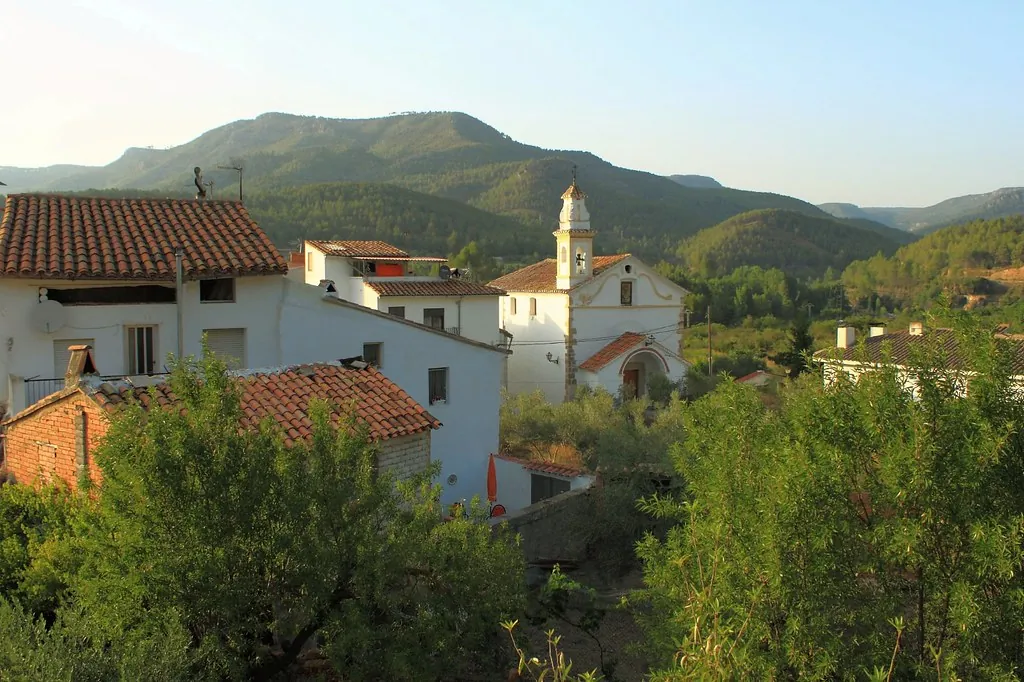
The church bell strikes eleven and nobody hurries. Not the two men sharing a cigarette outside the single bar, nor the woman who has paused her almond gathering to lean against a dry-stone wall. In Espadilla, time is measured by the sun sliding across the terraced slopes rather than by clocks, and the loudest sound is often your own breathing as the road climbs out of the Alto Mijares valley.
At 294 metres above sea level, the village feels higher. The air thins, the light sharpens, and Castellón's citrus coast – only 45 minutes away – seems like someone else's country. Here the land folds into itself, creating a natural amphitheatre of ancient almond terraces, olive groves and the occasional abandoned masía whose roof beams have long since collapsed inward. It is beautiful, yes, but in the matter-of-fact way of places that have never needed to advertise themselves.
The Village that Refuses to Pose
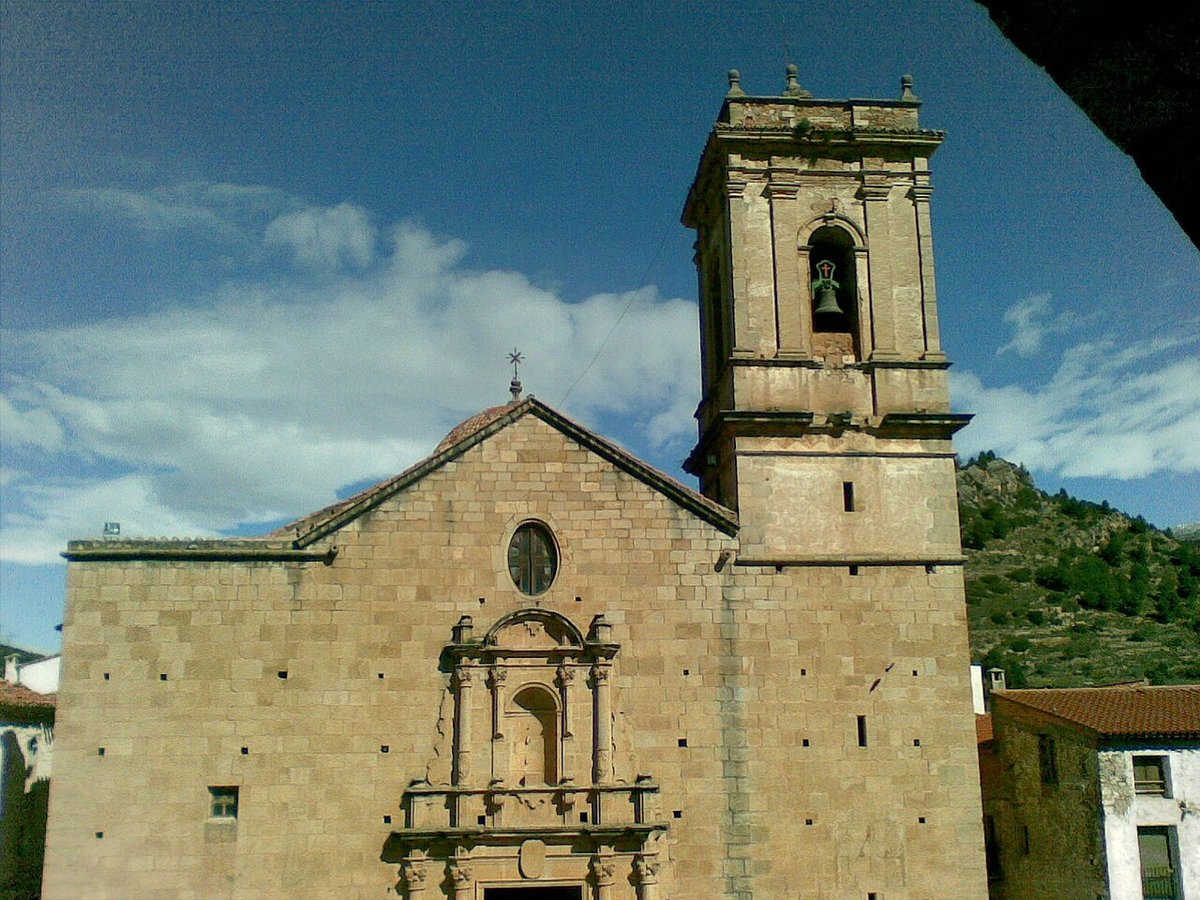
Espadilla's centre takes exactly twenty-three minutes to cross at a strolling pace, assuming you stop to read the 1837 date carved above one stone doorway and to wonder why a second house has bricked up its ground-floor windows. The church of San Miguel Arcángel squats at the top of this brief gradient, its walls the colour of old bone, its bell tower more functional than decorative. Inside, the benches bear the polish of three centuries of backsides; the plaster saints have the resigned expressions of people who understand they will be waiting a long time.
Around the church, a tight knot of stone houses maintains the irregular grid imposed by medieval livestock paths and the imperative to squeeze every buildable metre from the slope. Many are weekend homes now, their London or Valencia owners arriving with refrigerated cool-bags and immaculate walking shoes. Others remain stubbornly residential, with vegetable plots tucked behind and chickens that wander across the single paved road. The effect is neither museum nor theme park, just a settlement that has negotiated its own compromise with the 21st century.
Walking the Dry-Stone Archives
The real museum lies outside the village proper. Leave by the upper track – signposted merely as "camino" – and within five minutes the human settlement dissolves into agricultural archaeology. Terraces climb and fall like frozen waves, each held in place by hand-stacked limestone walls that predate any written record of the place. In March these walls glow white against soil turned over for almond blossom; by July they are bleached almost silver, radiating heat back at the gnarled trees.
A circular walk eastward brings you, after 90 minutes of steady ascent, to a natural balcony overlooking the valley of the Mijares river. The castle of Toga – itself a ruin the size of a modest farmhouse – appears as a brown interruption on a distant ridge. Between here and there lies a landscape that has fed people since the Bronze Age, though the current population of ninety souls is probably an all-time low. The path is clear but stony; trainers suffice in dry weather, yet the gradient reminds calf muscles that every litre of water, every sack of almonds, every roof tile arrived here on someone's back.
Return via the lower track and you pass Fuente la Reina, a spring that still provides drinking water for those who remember its location beneath the oleanders. The stone surround bears Victorian-era initials hacked with pocketknives, a reminder that graffiti is scarcely a modern invention. Fill a bottle: the water tastes of limestone and iron, cold enough to make teeth ache even in September.
What Arrives on the Back of a Pick-Up
Espadilla has no supermarket, no cash machine, no petrol station. What commerce exists happens on Thursdays when a white van parks beside the church and sells fruit, vegetables and gossip from the coastal plain. Prices are scrawled on cardboard; the trader knows every customer by name and keeps a mental ledger of who owes what until the olive cheque arrives in December.
For anything more elaborate – tyres, antibiotics, a decent coffee – you drive 18 kilometres to La Llosa, or 25 to l'Alcora along the CV-190, a road that coils like a dropped ribbon through pine and then almond and then olive as the altitude changes. In winter this drive can require chains for the final section; summer turns it into a sequence of sharp bends where meeting an oncoming lorry means reversing 200 metres to the nearest passing place. The views across the valley repay the concentration, but this is not a commute for the timid.
Eating What the Garden Produced Yesterday
The single bar, Ca Vicent, opens at seven for those who start fieldwork with the dew and closes when the last customer leaves, rarely later than ten. There is no written menu; instead, Pilar lifts the lids of two saucepans and explains what her sister harvested that morning. Rabbit with rosemary in winter, artichoke scramble in spring, perhaps a thick almond garlic soup when the temperature pushes past thirty-five. A plate costs between eight and twelve euros, wine included, served in a glass that remembers the dishwasher more faithfully than the polish. Payment is cash only; the card reader broke in 2019 and nobody has missed it.
If you are staying overnight – and you should, because the drive down after wine is unforgiving – the upstairs rooms are simple, clean and €45 including breakfast. The coffee is proper espresso, the bread arrives warm from l'Alcora at eight, and the marmalade is made from windfall oranges that would otherwise feed the pigs. Wi-Fi exists but wavers; phone reception depends on which corner of the balcony you stand in. Most guests give up and watch the swallows instead.
When the Valley Remembers It Has Neighbours
September's fiesta honours San Miguel with a procession that circles the village twice, once for each surviving farming family. The brass band consists of three teenagers from neighbouring Toga who learned their instruments at school, plus the vet's father-in-law on trumpet. Fireworks are modest – two rockets at noon, three after dark – but the paella that follows feeds 400 people using rice from the coastal flatlands, rabbit shot in the surrounding maquis, and beans that climbed the terraces all summer. Outsiders are welcome if they bring wine and don't mind being addressed as "inglés" regardless of actual nationality.
Winter closes in early. By mid-November the sun drops behind the western ridge at four-thirty; frost glitters on the almond prunings stacked for next year's heating. The road becomes unpredictable: not dangerous, merely indifferent to the coastal assumption that transport should be effortless. Those who arrive between December and February discover a village even quieter, yet oddly more itself. Conversation lengthens because darkness arrives sooner; the bar fire draws the same four men who have argued over the same domino hand since 1987. You will not be entertained. You might, however, be asked whether the thyme honey set properly this year, or whether English rain really falls every day. Answer honestly; Espadilla has heard every kind of lie except a useful one.
Leave before dawn on your final morning and the village will still be asleep, the church a darker mass against a sky gradually separating into stars and cloud. The engine sounds disproportionately loud; headlights pick out the reflective studs the council installed after someone missed the bend one icy night. As the road descends, each hairpin reveals a wider slice of the coastal plain until, quite suddenly, the Mediterranean appears – a dull silver line between black land and indigo sky. Behind you, Espadilla returns to its preferred condition: present, accounted for, and entirely unconcerned whether you understood what you saw.