Full Article
about Fanzara
Village turned into an open-air museum by MIAU (Unfinished Museum of Urban Art); walls covered in artistic graffiti amid rural surroundings.
Hide article Read full article
A Small Village with an Unusual Cultural Turn
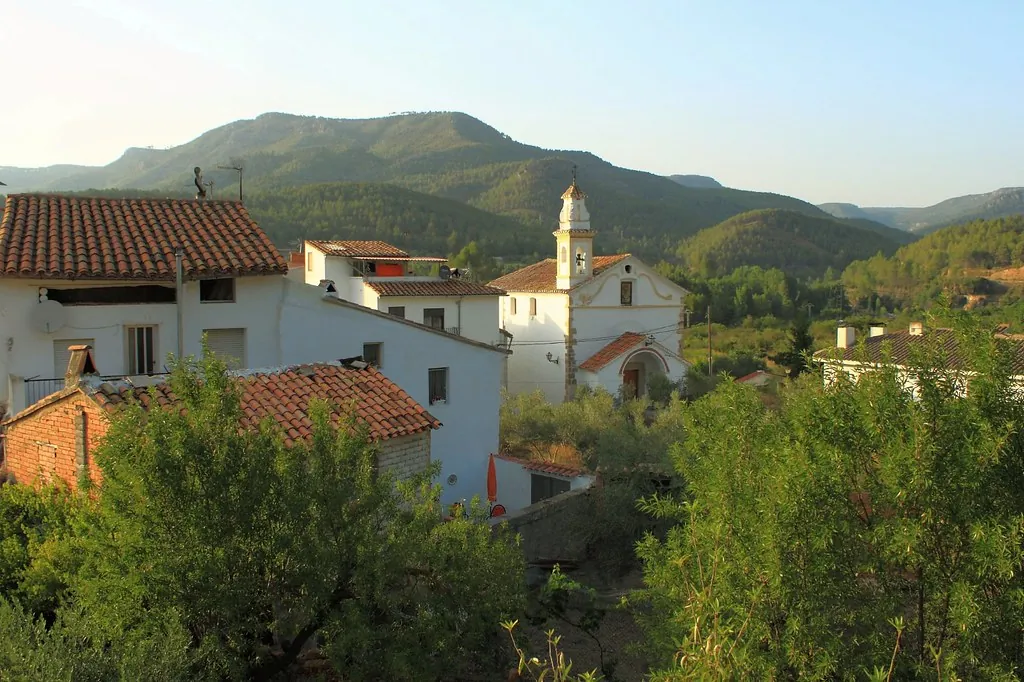
Tourism in Fanzara centres on the relationship between a very small village and an unexpected cultural initiative in the interior of Castellón province. Fanzara lies on the southern slope of the Sierra de Espadán, in the comarca of Alto Mijares, within the Comunidad Valenciana. With a population of around 295 people, it is compact enough to explore entirely on foot.
The urban layout adapts to a hillside that drops towards the river. Narrow streets, an irregular street plan and rows of adjoining houses reflect its agricultural origins. Beyond the last houses, terraces of orange and olive trees still shape the surroundings. Everything is close together. Within a few minutes, the streets give way to orchards and rural paths.
In recent years, Fanzara has incorporated urban art into its façades. Murals in a wide range of styles cover party walls, exterior walls and tucked-away corners across the village centre. Some are recent additions. Others have been in place for years and now form part of everyday life. They are not grouped in a single area. Instead, they appear unexpectedly at the turn of a corner or at the end of a short street, interwoven with homes, garages and former agricultural buildings.
Art in the Old Quarter
Walking through Fanzara means encountering these works almost by chance. Calle Mayor, the village’s main street, brings together several of the most visible murals. They depict social scenes, symbolic figures and abstract compositions. The styles vary noticeably, reflecting the participation of artists from different backgrounds over the years.
Nearby streets such as Calle del Forn and Calle de la Fuente reveal smaller works and details that are easy to miss if attention is fixed only on larger façades. Part of the appeal lies in slowing down and looking carefully. A painted doorway, a fragment of colour on a side wall or a small illustration at eye level can change the rhythm of a simple stroll.
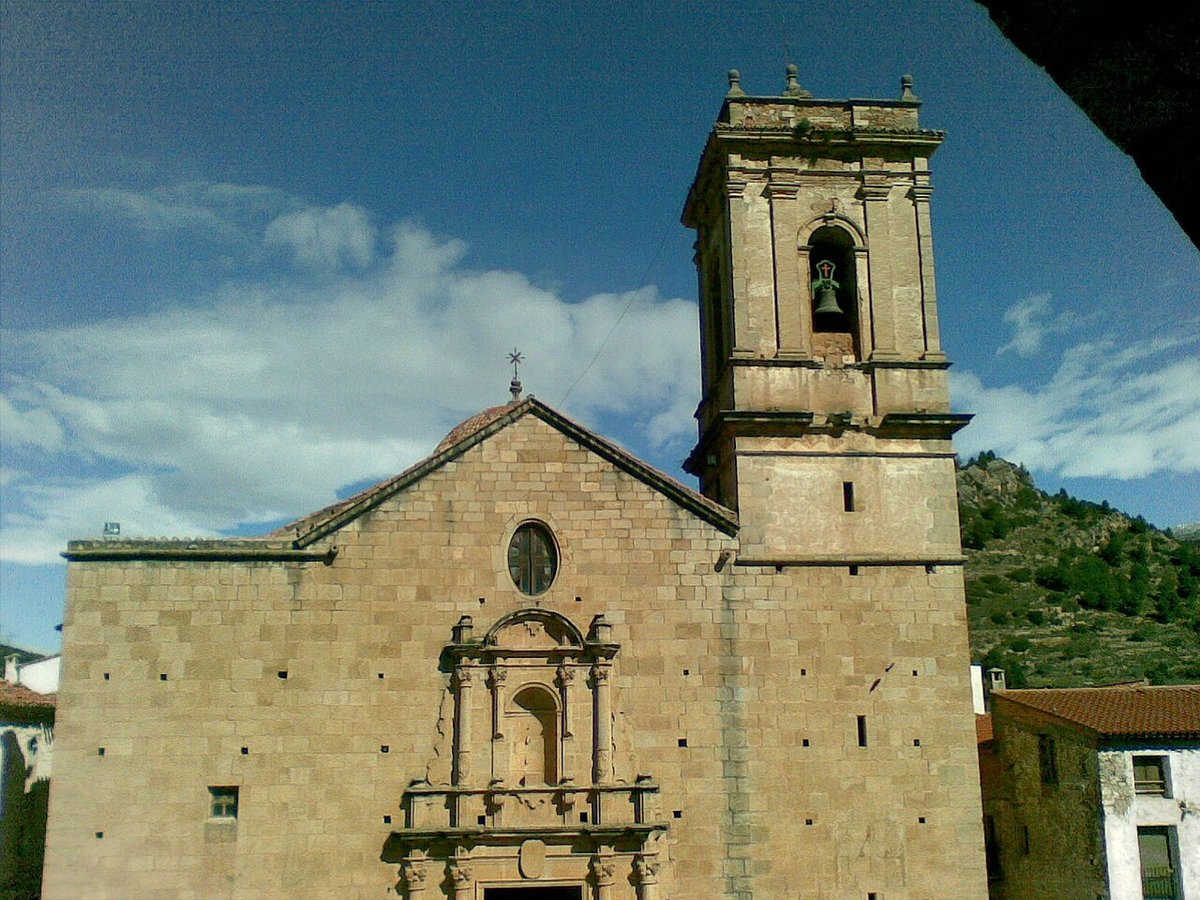
In the middle of this route stands the parish church of San Miguel Arcángel. Its origins date back to the 16th century, although the building has undergone later alterations. The structure is sober, with stone walls and a simple bell gable. The contrast with some of the brightly coloured murals nearby is clear. Inside, the decoration remains modest, with discreet altarpieces and an image of San Miguel linked to local religious tradition. Celebrations in honour of the saint still mark part of the village calendar, maintaining a connection between present-day life and long-standing customs.
The coexistence of religious heritage and contemporary urban art defines much of Fanzara’s character. Neither is isolated from the other. The church is not set apart from the murals, and the murals are not confined to a designated cultural zone. They share the same streets and façades.
The Rural Landscape Beyond the Houses
A short walk beyond the last row of houses leads into a landscape shaped by traditional agriculture. Dry stone walls run alongside paths. Small springs and old communal ovens appear scattered between plots. Many of the terraces remain cultivated, especially with orange and olive trees, though almond trees and a few cherry trees can also be seen.
The nearby valley of the Mijares river influences the form of the land. Rural tracks around the village pass through Mediterranean vegetation, including pine trees, low scrub and cultivated parcels. In higher spots, views open out across the valley and towards the surrounding ranges of the Sierra de Espadán.
There are signposted walking routes in the area. Anyone planning to complete a longer trail is advised to check information beforehand, as conditions and routes can vary. Even without undertaking a full hike, it is easy to combine a visit to the village with a short walk among terraces and woodland.
The shift from painted façades to orchards and pine groves happens quickly. Within a few minutes, the colours of the murals give way to the muted tones of stone walls, soil and vegetation.
A Visit in a Couple of Hours
The size of Fanzara makes it suitable for a brief stop. In one or two hours it is possible to walk along Calle Mayor, explore the surrounding streets and locate a large proportion of the murals. There is no need to follow a strict itinerary. Part of the experience lies in wandering slightly and allowing the artworks to appear naturally.
The square and the area around the church serve as a useful point of reference within the village. From there, it is straightforward to return towards the entrance or to continue outwards along the paths that lead to the terraces.
Despite the number of murals, the visit does not take long if walking steadily. Most of the works are located within the urban centre, rather than spread across the wider municipality. The compact layout means distances are short and orientation is simple.
When to Go and Practical Details
Spring and autumn are generally the most comfortable seasons for walking through the village and along nearby paths. In spring, the orange trees blossom and the scent of azahar, orange blossom, is noticeable around the edge of the village. Summer can be hot during the middle of the day, as is typical in inland areas of the Comunidad Valenciana. In winter, the atmosphere is quiet and the village returns to its usual rhythm.
Fanzara is small, and the concentration of murals can create the impression of a lengthy route. In practice, the old quarter can be covered quickly if walking without long stops. Visitors looking for a more extended stay often combine the village with short walks in the surrounding countryside.
From Castellón de la Plana, the distance is around 60 kilometres via the CV‑20 and secondary roads. From Valencia, it is roughly 80 kilometres, combining the A‑7 with local roads. The final stretch follows narrow roads typical of this comarca.
Cars are usually left at the entrance to the village or in nearby open areas. From that point, continuing on foot is the simplest option. The central streets are narrow and distances are short, reinforcing the sense that Fanzara is best discovered at walking pace.