Full Article
about Fuente la Reina
Tiny mountain village on the Teruel border; rugged pine-and-gorge landscape perfect for solitude and raw nature.
Hide article Read full article
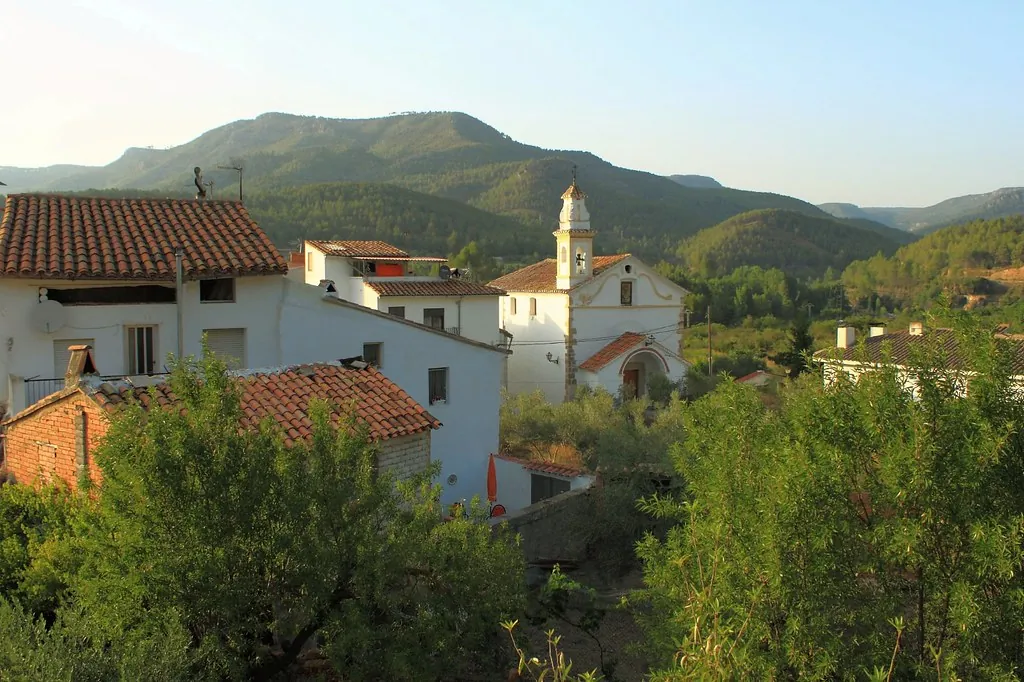
By mid-morning, when the sun has cleared the low ridges, the stillness of Fuente la Reina is broken only by birdsong and the snap of a dry twig underfoot. Light falls directly onto whitewashed walls and tiled roofs, and the limestone in the façades throws back a harsh, chalky glare. The village appears suddenly between stands of pine, tucked into one of the mountain folds of the Alto Mijares, a rural district in the interior of Castellón province, where silence carries more weight than traffic.
With just over fifty residents, life here runs at a different pace. There are no shops or bars along its streets, no signs competing for attention. Houses cluster around a small square, and when the afternoon wind rises it becomes the loudest sound in the village. Rather than a destination packed with sights, Fuente la Reina tends to be a quiet stop if you are travelling through the inland villages of Castellón.
Through the village streets
The houses follow the architectural logic of the Alto Mijares: stone taken from the surrounding land, lime-washed façades, and sloping roofs covered with traditional curved tiles. Some doorways still have darkened timber worn by years of use, with thick iron fittings that feel cold to the touch in winter.
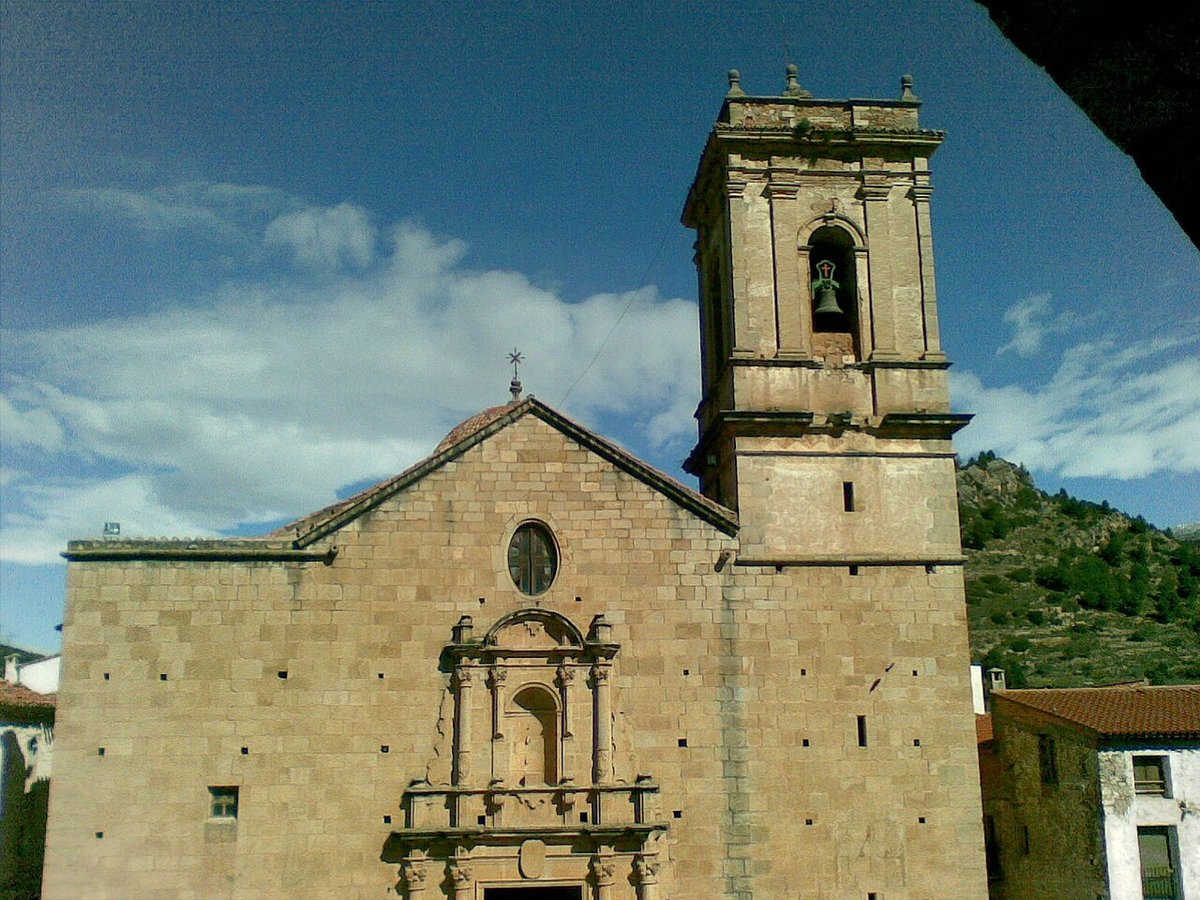
At the centre stands the parish church dedicated to the Inmaculada Concepción, the Immaculate Conception. It is a restrained building, without grand decorative flourishes. For most of the year it remains closed and calm, blending into the everyday quiet of the square. When celebrations or neighbourhood gatherings take place, the atmosphere shifts. Voices carry across the open space and the smell of food drifts out from nearby houses.
Walking here rewards an unhurried pace. A bench pressed against a sunlit wall, a vine climbing across a façade, the echo of footsteps in a narrow street, these are the details that define the place. There is little to interrupt the sense of continuity between past and present. The materials, the layout and the scale of the village all reflect a way of building shaped by terrain and climate rather than fashion.
Hills, pinewoods and open views
Step beyond the last houses and rural tracks begin almost immediately. Some skirt old agricultural terraces, now overgrown with scrub. Others lead into pinewoods where the ground is carpeted with dry needles and the air smells of resin when the heat intensifies.
The landscape is typical of the Alto Mijares: limestone hills, shallow ravines and stretches of Aleppo pine mixed with holm oak. Among the shrubs grow rosemary, gorse and thyme. In spring especially, the hills release a dry, sweet scent that clings to clothes long after a walk.
From certain nearby high points, without marked viewpoints or safety railings, the land rolls away in soft waves towards the interior of the region. As evening approaches and the sun lowers, the slopes turn shades of ochre and orange. The heat eases, and the outlines of the hills sharpen against the sky.
On clear days it is common to see a bird of prey gliding on the thermals overhead. If you stand still for a while beneath the pines, you may hear coal tits and blue tits moving through the branches. The soundscape is simple and unforced, shaped by wind and wildlife rather than engines.
Springs and walking routes
The name Fuente la Reina points to the presence of natural springs in the area. In the surroundings there are small fountains and water sources that traditionally supplied local residents and irrigated former crops. Some lie beside paths or in shallow hollows in the land. Others are more concealed, partially hidden by vegetation.
Paths are not always signposted. Many are old agricultural or forestry tracks that divide easily and without warning. If you plan to walk beyond the immediate outskirts of the village, it is sensible to carry a map or GPS. The terrain is not dramatic in scale, but the network of tracks can be confusing for those unfamiliar with it.
Water has long shaped both settlement and farming in this part of the interior. Even when terraces are no longer cultivated, their lines remain etched into the slopes. Springs and small water points would once have been essential in sustaining daily life here, and they continue to mark the landscape in quiet ways.
Before setting off
Fuente la Reina is extremely small, and visiting requires a little forethought. There are no shops or bars, so bringing water and food is advisable if you intend to spend several hours in the area.
In summer the heat can become intense from midday onwards, particularly along paths with little shade. For walking, it is generally more comfortable to set out early or wait until late afternoon, when temperatures begin to drop.
During weekends in August, or around certain celebrations traditionally linked to the Inmaculada in December, the village may feel livelier as residents and families with roots here return. At other times of the year, the prevailing impression is one of deep quiet. Time seems to move more slowly than in the valley below, and daily rhythms follow light and season rather than schedules.
Fuente la Reina does not compete for attention. Its appeal lies in its scale, its materials and the way it sits within the Alto Mijares landscape. For travellers exploring the inland corner of Castellón, it offers a pause: a place to walk, to notice small details, and to experience a rural setting where sound and space are measured differently.