Full Article
about Fuentes de Ayódar
A village set in the Sierra de Espadán natural park, known for the Pozo Negro and its ecologically rich landscapes.
Hide article Read full article
Reaching the Hills of Alto Mijares
From Castellón, Fuentes de Ayódar is roughly an hour by car. The road climbs steadily towards the Alto Mijares, a mountainous area in the interior of the province, with plenty of bends and a few narrow stretches along the way. There is nothing particularly complicated about the drive, but it is one to take at an unhurried pace.
On arrival, most people leave the car on the main streets and continue on foot. The village is compact. Within five minutes of parking, you are already in the centre. Distances are short and everything is close together, so walking is the natural way to get around.
A Small Mountain Village
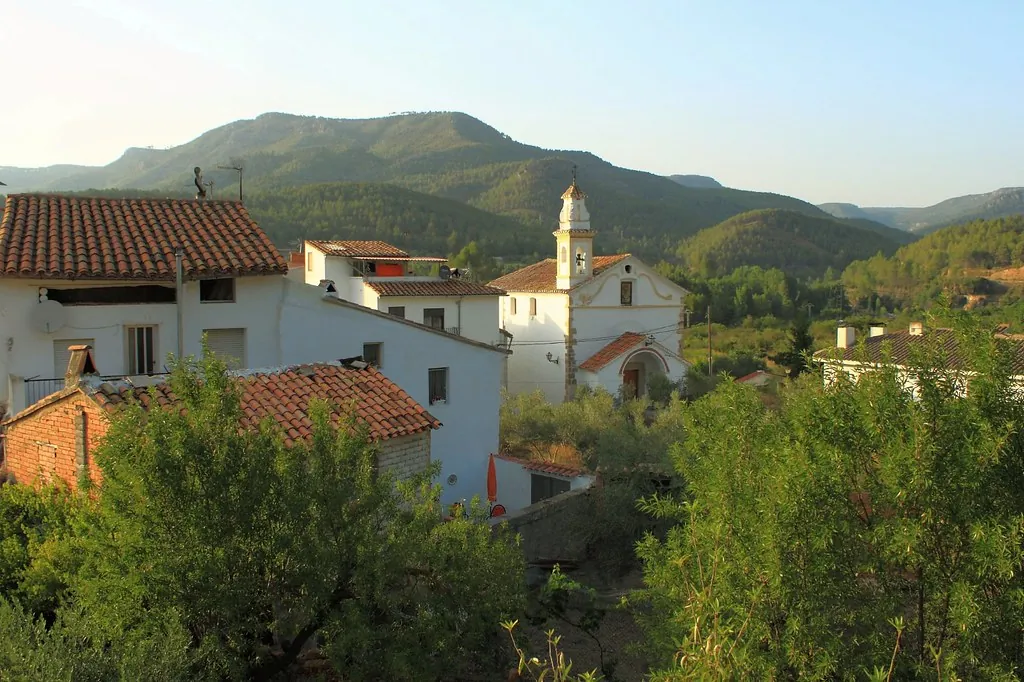
Fuentes de Ayódar has around a hundred residents. The village core is modest: narrow streets, some of them sloping, lined with simple stone houses or whitewashed façades. There are no grand buildings or monumental old quarters to explore. It is a typical mountain settlement, well kept and especially quiet during the week.
The main square is small and functional. A few benches and some shade make it a practical place to pause before heading up or down the surrounding streets. Life here moves at a slow rhythm, and that sense of calm is part of the experience.
This is not a place built around major sights. Its appeal lies more in its setting and atmosphere than in any individual landmark. A short wander through the streets gives a clear sense of the village. If the plan is only to stroll around the centre, it does not take long to see it all.
The Parish Church and the Fountain
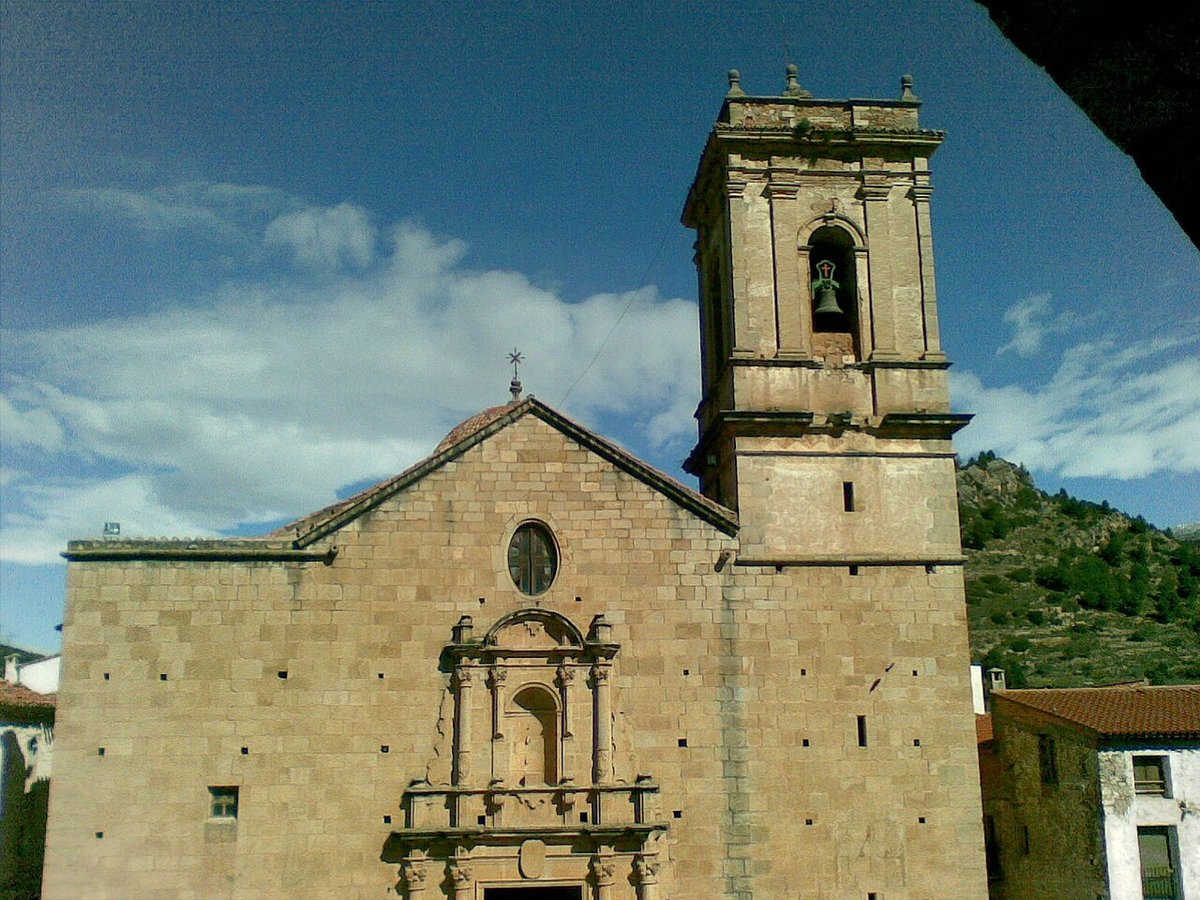
In the central part of the village stands the parish church, dedicated to the Natividad de Nuestra Señora. The building is simple in style, with relatively recent renovations carried out on an older base. It has a single nave and a bell tower with little ornamentation. The overall impression is restrained rather than elaborate, in keeping with the scale of the village itself.
Close by is the fountain that gives Fuentes de Ayódar its name. It is not a monument in any formal sense, yet it remains one of those traditional meeting points that once played a daily role in village life. Historically, this would have been where residents came to collect water or stop for a chat. Even today, it acts as a small reminder of how closely tied the community has been to its natural water sources.
Walking Routes and the Surrounding Landscape
For many visitors, the real reason to come to Fuentes de Ayódar is the landscape. Several paths leave directly from the village, heading towards ravines and hills in the Alto Mijares. Some routes are signposted and pass through old agricultural terraces supported by dry stone walls, many of which are still standing. These traces of past cultivation remain part of the scenery.
The terrain is characteristic of the interior of Castellón. Expect Aleppo pine, scattered holm oaks and a good amount of Mediterranean scrub. Along the paths, especially in spring, thyme, rosemary and other aromatic plants appear at ground level, releasing their scent in the warmth.
Among the nearby spots often mentioned are Pozo Negro and various ravines where the rock forms small pools when there has been enough rain. The landscape is uneven and stony, so decent footwear is advisable. Surfaces can be irregular underfoot, and the routes are more about steady walking than about smooth, landscaped trails.
The overall feel of the countryside is rugged. It may not be dramatic in scale, but it holds interest for anyone who enjoys walking through low mountain terrain and dry ravines shaped by water over time.
What to Expect
Fuentes de Ayódar is not a destination for museums or major monuments. The village itself can be seen quickly. A half-hour stroll is enough to cover the streets at a relaxed pace.
It makes more sense to think of it as a base for walking in the surrounding area or as a stop when linking together other villages in the Alto Mijares. The appeal lies in the open air, the quiet and the network of paths that begin at the edge of the houses and lead straight into the hills.
Those looking for a packed itinerary of attractions may find the visit brief. Those who arrive with walking shoes and a plan to spend time outdoors are likely to get more from the experience. The contrast between the compact village and the wider, harsher landscape around it defines the character of the place.
When to Visit
Summer brings considerable heat during the middle of the day. Anyone planning to walk at that time of year is better off setting out early in the morning.
Spring is often the most pleasant season. There is usually a little more greenery in the landscape and the temperatures are easier to manage. In autumn, it cools down quickly in the late afternoon. Winter is very quiet, and mist sometimes appears along the slopes, adding to the sense of stillness.
A simple piece of advice sums it up: come with the intention of spending time walking in the hills. Without that, the stop in Fuentes de Ayódar will probably be a short one. Parking at the top and heading down on foot works well, as the village is best experienced at walking pace.