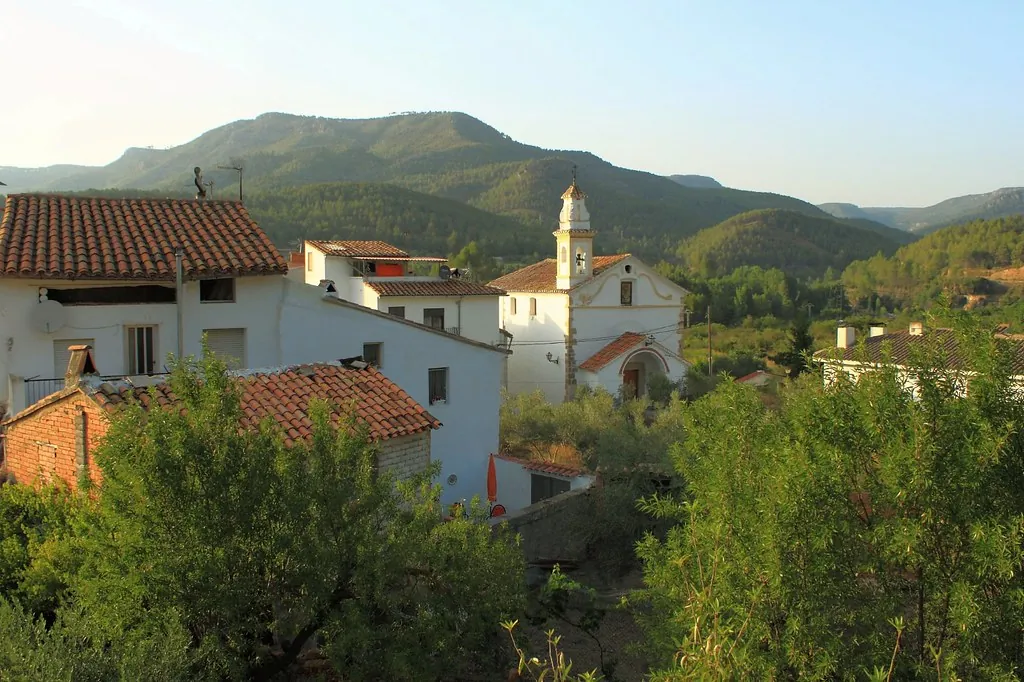
Vista aérea de Ludiente
Instituto Geográfico Nacional · CC-BY 4.0 scne.es
Comunidad Valenciana · Mediterranean Light

Ludiente

The church bell strikes noon, yet only a handful of swifts wheel overhead. In Ludiente, population 156, time doesn't stop—it whispers. This scrap o...

162 inhabitants · INE 2025
431m Altitude

Why Visit

Mountain Ludiente Tower River bathing

Best Time to Visit

summer

Fiestas de la Virgen del Pilar (October) agosto

Things to See & Do
in Ludiente

Heritage

  • Ludiente Tower
  • Church of the Nativity
  • Hermitage of El Pilar

Activities

  • River bathing
  • Hiking
  • Rural photography

Festivals
& & Traditions

Fecha agosto

Fiestas de la Virgen del Pilar (octubre), Fiestas de agosto

Las fiestas locales son el momento perfecto para vivir la autenticidad de Ludiente.

Full Article
about Ludiente

Mountain village with a compact old quarter of narrow, whitewashed streets; its defensive tower and the Río Villahermosa setting stand out.

Ocultar artículo Leer artículo completo

The church bell strikes noon, yet only a handful of swifts wheel overhead. In Ludiente, population 156, time doesn't stop—it whispers. This scrap of stone and terraced hillsides clings to the southern flank of the Alto Mijares, 75 minutes of switchbacks west of Castellón de la Plana. Motorists who survive the final 12 km of CV-195, a road that narrows to a single anxious lane, are rewarded with a village that still belongs to its residents, not to Instagram.

A Village That Keeps Its Doors Closed—and Its Stories Open

Ludiente's houses are shoulder-to-shoulder, built to defy the 30-degree slope rather than to woo passers-by. Masonry walls the colour of burnt cream support Arabic-tile roofs; balconies are forged iron, not curly-wrought tourist bait. The Calle Mayor, the only stretch wide enough for two pedestrians abreast, shows a handful of freshly painted façades, yet turn the corner and you'll find timber doors braced with 19th-century iron, paint long since scoured away by Levante winds. It is honest architecture: what needs repairing is repaired, what doesn't is left to age with dignity.

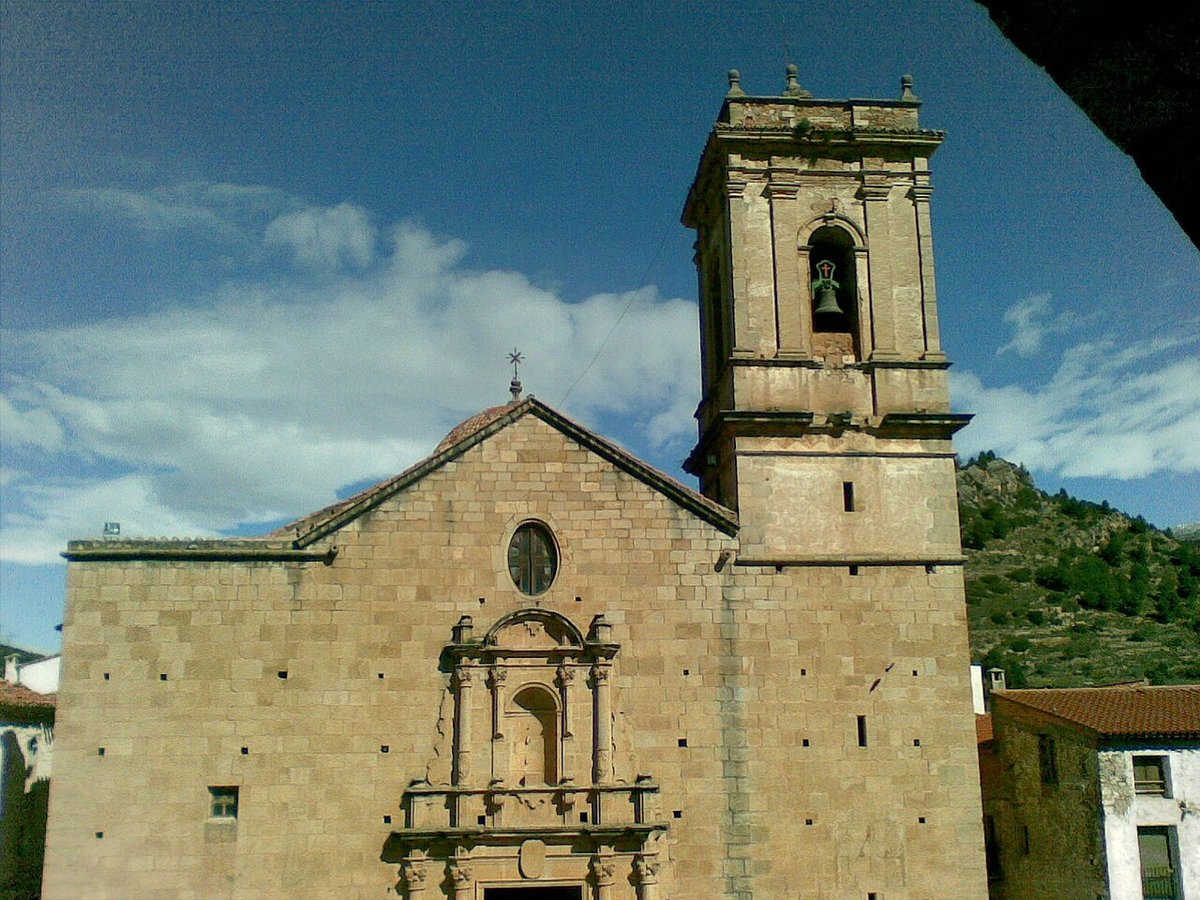
Orientation is simple once you spot the tower of San Pedro Apóstol. From the plaza in front, alleyways tumble downhill like dry-stone streams. Follow one and you emerge at a mirador where the Mijares valley unrolls below—almond terraces stitched together by dry-stone walls, the river a silver thread 300 m beneath. No ticket booth, no interpretation panel, just a waist-high rail and the smell of wild thyme warming in the sun.

Walking the Abandoned Payroll

Ludiente's real monuments are its terraces, some still planted, most surrendering to rosemary and savin juniper. A 45-minute loop, way-marked by a single yellow dash, drops from the cemetery to the river then climbs past the hamlet of El Mas, where only one chimney still smokes in winter. Spring brings the famous almond bloom—white petals sharpened by the darker green of Aleppo pine—but come autumn the palette turns to copper and the air smells of damp earth and second-cut alfalfa. Stout footwear is non-negotiable: after rain the clay paths glue themselves to soles; in July the stones are slippery with dry lichen. Carry more water than you think necessary; shade exists only where the path ducks into a gully of carob and oak.

Ambitious walkers can link up the PR-CV 102, a 14 km figure-of-eight that brushes the village before climbing to the never-finished railway tunnel of La Olla—an echoing 600 m bore hacked in the 1920s and abandoned when money ran out. Allow four hours, and don't rely on phone signal: even the village's lone 4G mast loses interest 2 km out of town.

What Passes for a Social Scene

Evenings centre on Bar Central, open Thursday to Sunday outside summer, daily in August. A caña costs €1.40, the wine list is bulk red or bulk white, and the tapas menu extends to crisps, olives, and on lucky days a wedge of tortilla. For anything more elaborate, drive 20 minutes to Ayódar where Casa Amalia serves trout from the Mijares and charges €14 for three courses.

Shopping is similarly minimalist. The cooperative sells its own extra-virgin oil in 2-litre plastic jugs (€9) and 250 g bags of blanched Marcona almonds (€4). Honey appears on doorsteps in October; leave coins in the honesty box. Fresh bread arrives Tuesday and Friday via a white van that toots its horn at 11:30—catch it or go without.

Festivity is rationed. San Antonio Abad (mid-January) fills the plaza with tethered dogs, tractors and one bemused priest wielding an aspergillum of holy water. San Pedro at the end of June drags sound systems from storage and keeps half of Castellón province awake until 4 a.m.; if you crave silence, book elsewhere that weekend. The August "cultural week" screens open-air films against the church wall and hosts a paella cooked in a pan the size of a satellite dish—outsiders welcome, but bring your own plate.

Getting There, Staying There, Coping

Public transport is a fond memory: the last bus left in 2011. From Valencia or Castellón hire a car, fill the tank—village petrol is 15 cents dearer—and allow 70 minutes once you exit the CV-35 motorway. The final 12 km coil through ravines where stone outcrops nudge the tarmac; meeting a delivery lorry requires reversing to the nearest passing bay. In winter, morning frost can turn these bends into polished steel; carry chains if snow is forecast.

Accommodation totals two options. Casa Rural La Fuente (two doubles, one single, from €70 per night) occupies a 19th-century oil mill; thick walls keep August heat at bay and there's a plunge pool big enough for three. Slightly outside, Camping Altomijares has ten timber cabins (€55) and space for tents, but the track is graded loose shale—fine in a Fiesta, nerve-wracking in a low-slung hatchback. Book early for Easter and the almond weeks; the rest of the year you can phone on Thursday and bag a room for Friday.

Mobile coverage is patchy; Vodafone works on the plaza, Orange demands you stand at the cemetery gate. Wi-Fi exists in the rural houses but bandwidth wilts when more than two devices connect. Treat it as detox rather than disaster.

Why Come—and Why Perhaps Not

Ludiente will never tick the "bucket-list" box. There are no souvenir shops, no Michelin stars, no sunset yacht cruises. What it offers instead is a yardstick: a place to recalibrate what you actually need—quiet, space, bread that appears twice a week, stars undimmed by streetlights. Yet that minimalism can tip into monotony. If rain sets in, entertainment is limited to watching the church bell rope sway or counting how many figs drop in the hour. Families with teenagers should budget for daily excursions; the village playground consists of two swings and a slide that ends in a thistle patch.

Come with a full boot—fuel, food, good boots, a downloaded map—and Ludiente repays with sharp valley air, paths where your only company is a circling short-toed eagle, and the rare sensation of hearing your own footfall echo back from terraced stone. Leave expecting more, and you'll drive out again long before the bread van next toots.

Key Facts

Region
Comunidad Valenciana
District
Alto Mijares
INE Code
12073
Coast
No
Mountain
Yes
Season
summer

Livability & Services

Key data for living or remote work

2024
Connectivity5G available
HealthcareHospital 28 km away
Housing~5€/m² rent · Affordable
CoastBeach nearby
Sources: INE, CNMC, Ministry of Health, AEMET

Official Data

Institutional records and open data (when available).

  • Castillo del Buey Negro o del Bou Negre
    bic Monumento ~2 km
  • Torre de Giraba
    bic Monumento ~2 km
  • Iglesia Fortificada
    bic Monumento ~0.3 km

Planning Your Visit?

Discover more villages in the Alto Mijares.

View full region →

More villages in Alto Mijares

Traveler Reviews