Full Article
about Montán
Mountain village with a well-known spring; steep streets and forested surroundings perfect for rural tourism.
Hide article Read full article
A village that wakes gently
Early in the morning, when the only sound is an occasional car on the distant road, Montán stirs slowly. Light slips along its narrow streets and settles on the stone walls. In front of the church of San Roque there is often a hush, broken by footsteps on the uneven ground or the creak of a balcony opening. In a village of just over four hundred inhabitants, small sounds and movements carry more weight.
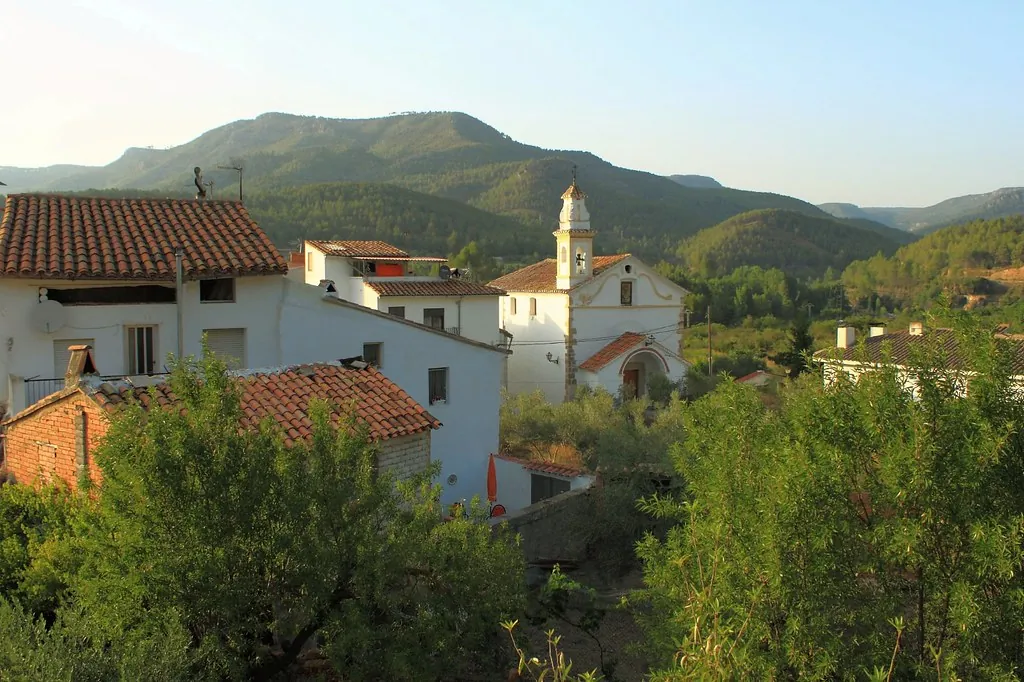
Montán lies inland in the Alto Mijares, at around 580 metres above sea level. It is surrounded by slopes covered with pine trees and low Mediterranean scrub. The village fits into this terrain without trying to smooth it out. Streets rise and fall with a gentle gradient. Stone houses have thick walls and wrought-iron balconies facing either the valley or the nearest hillside. Many façades still display stone doorways and wooden eaves darkened over time.
Walking through Montán means paying attention to details. A stone bench built against a wall that still holds the night’s chill. An old bread oven incorporated into a home. The streets slope down towards the main square, which for many years was the centre of daily life. Here there were animal pens, small storage spaces and areas where bread was baked or tools were kept. The layout still hints at that practical, working past.
The church and the old centre
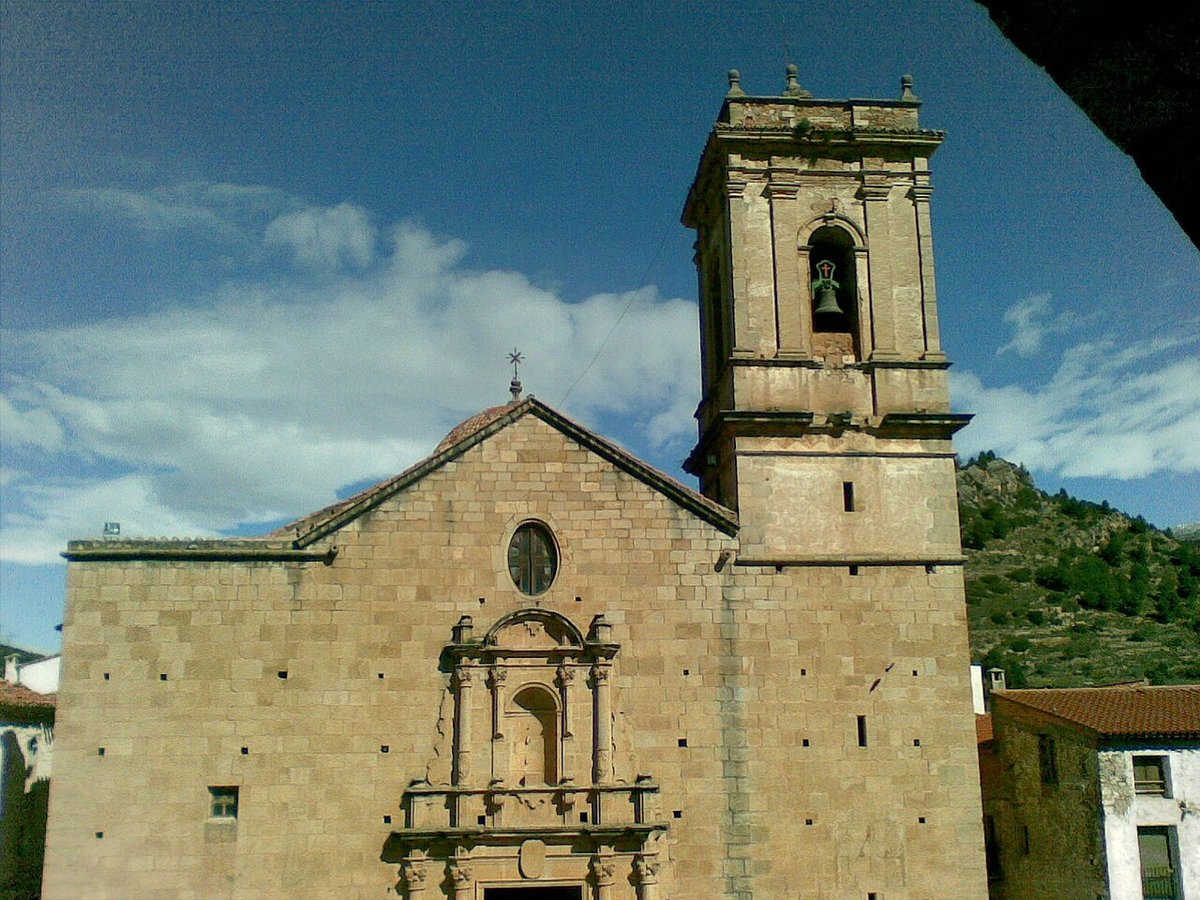
The parish church, dedicated to San Roque, stands at one of the central points of the historic core. The building was constructed centuries ago and has undergone several renovations. That is common in small villages where structures were repaired and adapted rather than replaced entirely. Inside, there are traces of old paintings and a simple altarpiece. It is not a grand monument, yet it helps explain how the village was organised around the square and the church.
Climbing towards the higher streets, small gaps appear between the houses. Through them, the valley of the Mijares comes into view. On clear days the landscape opens up considerably. Hills covered in pine stretch out, broken by darker patches of carrasca, a type of holm oak typical of this part of Spain. Beyond, mountains shift in colour as the afternoon progresses, moving from pale tones to deeper shades as the light changes.
The old centre is compact and easy to explore on foot. Its irregular paving and stepped corners reflect a settlement shaped over time rather than planned in advance. There is no rush to see specific sights. The interest lies in how the village holds together: stone, wood, iron and the steady rhythm of streets that follow the contours of the land.
Paths beyond the last houses
Montán makes most sense when the walk continues beyond the final row of houses. From the edges of the village, footpaths lead into the surrounding hills and connect with other localities in the Alto Mijares. Many of these routes follow older tracks once used by shepherds and farmers over decades.
They are generally straightforward paths through pine woodland and Mediterranean scrub. The ground is often covered in dry needles that crunch underfoot. In certain stretches, abandoned terraces appear, along with stone walls that once marked out cultivated plots. These traces point to a time when more land was actively worked and the slopes supported small-scale agriculture.
Signage is not always clear, so it is sensible to check the route in advance. The terrain is not extreme, but it is rural and can feel remote once the village is out of sight.
Summer brings intense heat at midday, even in inland areas like this. Anyone planning to walk will find it more comfortable to set out early or wait until late afternoon. As the air cools, the scent of pine resin becomes more noticeable, and the hills take on a softer light. In those hours, the paths feel quieter and more in tune with the landscape.
Flavours of the interior
The cooking associated with Montán reflects the traditions of inland Valencian counties. These are substantial dishes, designed for long working days and cold winters. Pork has always played a central role in the household larder. When available, small game from the nearby hills also featured in local meals. In season, wild mushrooms appear, along with recipes that combine meat with pulses or potatoes.
Traditionally, many households held the matanza del cerdo in autumn, the annual slaughter of the pig. In rural Spain this was both a practical necessity and a social event, providing meat and preserved products for the months ahead. In Montán it is no longer a domestic obligation, yet it remains part of living memory as a time of shared work and family gatherings.
The food here speaks of self-sufficiency and adaptation to the seasons. Ingredients depended on what could be raised, hunted or gathered locally. Even today, that sense of interior cooking lingers in the types of dishes associated with the village.
Festivities and return journeys
As in many small inland villages, the population of Montán expands noticeably during its festivals. The celebration dedicated to San Roque, held in mid-August, draws back people who spent their childhood here and now live elsewhere. For a few days, the rhythm shifts. The square fills with more voices, long tables are set up outdoors and music carries late into the evening.
Easter, known in Spain as Semana Santa, also brings processions through the narrow streets of the centre. These are simple, community-based events closely tied to local residents rather than large-scale spectacles. They follow familiar routes between houses and around the church, reinforcing connections between neighbours and generations.
During these periods the village feels fuller and louder. The contrast with quieter months highlights how closely Montán’s atmosphere is linked to the presence, or absence, of its extended community.
Choosing the right moment
Montán changes significantly with the seasons. In winter, thick fog can settle in the Mijares valley, and on weekdays the silence can be almost complete. Streets that feel lively in August may be nearly empty. The cold is sharper at this altitude, and daily life moves at a slower pace.
Summer brings more activity and open houses, particularly in August when the San Roque festivities take place. Visitors and returning residents give the village a temporary energy.
For those interested in walking and exploring the surroundings at an unhurried pace, early autumn or spring are often good choices. The hills are more vibrant, the air carries the scent of damp earth after rain, and the village still maintains a calm rhythm. Montán rewards this approach. Time spent lingering over small details, the texture of stone, the view through a narrow gap between houses, tends to reveal more than a hurried visit ever could.