Full Article
about Montanejos
Inland tourist hotspot known for its thermal waters in the Río Mijares; it has a spa and stunning natural swimming spots.
Hide article Read full article
A Village Defined by the Mijares
Tourism in Montanejos makes most sense when you start with the river. The Mijares cuts through this stretch of the Alto Mijares between limestone walls, forming a narrow valley where the village has settled with practical logic: close to the water, yet slightly elevated to avoid flooding. Today Montanejos has around 650 inhabitants and maintains a direct relationship with the river, which has shaped both daily life and the modern use of the surrounding land.
Although it is sometimes mentioned alongside the Sierra de Espadán, Montanejos actually belongs to the Alto Mijares, an inland comarca where the terrain dictates almost everything. Roads follow ravines rather than straight lines, and the landscape alternates between pine forest, bare rock and small market gardens in flatter areas. It is a setting that feels structured by geology and water rather than by urban planning.
Urban Form and Historical Layers
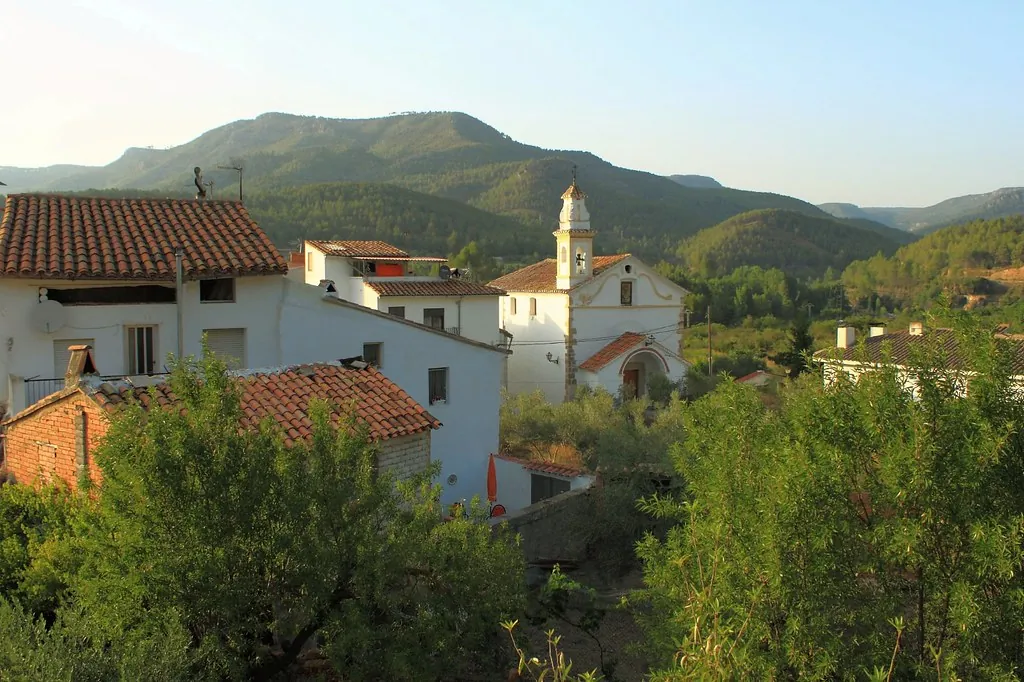
The village centre adapts to the slope of the valley. Streets rise from the area closest to the river towards slightly higher ground, where traditional stone houses and whitewashed façades mix with more recent buildings linked to the growth of tourism in recent decades.
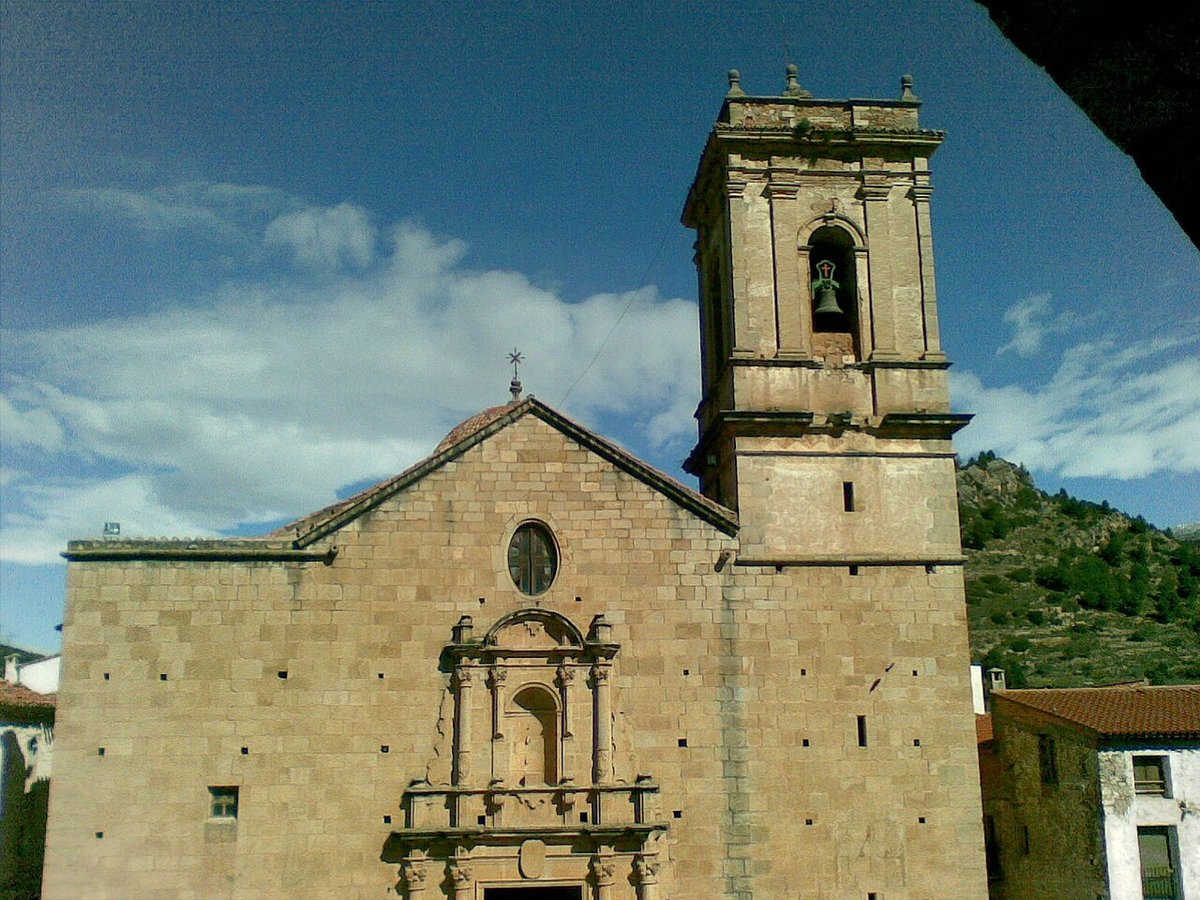
At one of the central points of the old quarter stands the parish church of Santiago Apóstol. Its origins date back to the medieval period, although the current building reflects later alterations. Inside, a Baroque altarpiece has been preserved. It is not particularly monumental, yet it offers insight into the artistic evolution of rural parishes in this part of the province.
Rather than focusing on a single landmark, Montanejos is best understood as a whole. It is a small settlement that opens towards the Mijares valley and has always lived with one eye on the water.
Fuentes de los Baños and the Tempered River
The best-known spot in the area is the Fuentes de los Baños. This is a stretch of the river fed by thermal springs that keep the water at a mild temperature throughout the year, usually said to be around 25°C. Even in cooler months, the sensation is noticeably different from that of a typical mountain river.
The area has been adapted for bathing, with signposted access points and sections where the river widens into small gravel beaches. In summer the number of visitors increases significantly, especially at weekends, something to bear in mind for those seeking a quieter atmosphere. Outside the high season, the character of the place changes. The water remains tempered, but the valley returns to a much slower rhythm.
Upstream lies the paraje del Chorro, where the Mijares narrows between rock walls and the current gathers strength. It is one of the most striking stretches in the immediate surroundings of Montanejos, shaped by erosion and the persistent force of the river.
Ravines, Trails and Limestone Walls
The relief around the village is marked by ravines and small limestone plateaus known locally as muelas. Over time, this terrain has turned Montanejos into a regular destination for walkers and for those interested in outdoor adventure sports.
One of the best-known routes is the Ruta de los Manantiales, a circular walk that links several springs around the valley. It is usually completed in a couple of hours and does not present major difficulties. The route offers a clear sense of how water shapes the entire landscape, from the vegetation to the layout of paths and viewpoints.
For more technical activities, the ravines of the Chorro and the Maimona are frequently mentioned by enthusiasts of canyoning, known in Spanish as barranquismo. These descents require experience and proper equipment. In season it is common to see groups equipped with helmets and ropes making their way through these gorges.
The nearby limestone walls are also used for climbing, with sectors spread across different parts of the municipal area. The rock, carved by time and water, has become part of the village’s current identity, linking traditional rural life with a steady flow of visitors drawn by the landscape.
Local Cooking and the Village Rhythm
The cuisine of inland Castellón tends to be substantial and closely tied to what the surroundings provide. In Montanejos, hearty stews, migas and rice dishes appear regularly, alongside river fish such as trout when the season allows. These are recipes shaped by a rural environment where ingredients are simple and filling.
During the warmer months, the village changes pace. The bathing areas concentrate much of the movement, and the centre becomes livelier towards the end of the morning and in the afternoon. Those who prefer to walk or swim in calmer conditions often choose to set out early in the day.
In winter the atmosphere is noticeably quieter. Attention shifts back to the landscape and to the tempered waters of the river, which continue to flow through the valley regardless of the season.
Festivities and Traditions by the Water
The patron saint festivities dedicated to Santiago Apóstol are traditionally held at the end of July. Over those days the village organises religious ceremonies and popular events that fill the streets of the centre.
In January, the celebration of San Antón keeps alive the custom of bonfires and the blessing of animals, a tradition widely observed in villages across inland Valencia. Throughout the summer there are also festive days linked to water and the recreational use of the river, which feels entirely natural in a place where the Mijares influences almost everything.
Setting and Access
Montanejos is located inland in the province of Castellón, within the comarca of the Alto Mijares. From Castellón de la Plana it is usually reached via the CV‑20, following the course of the river valley.
Its position between limestone walls and pine-covered slopes explains both its past and its present. The river dictated where the houses would stand, how fields would be organised and how people would move through the valley. Today it continues to define the experience of visitors, whether they come to bathe in the Fuentes de los Baños, walk the Ruta de los Manantiales or simply watch the Mijares flow steadily through the narrow corridor that has shaped Montanejos for centuries.