Full Article
about Puebla de Arenoso
Municipality beside the Arenoso reservoir with a striking landscape; perfect for nature tourism and quiet water activities.
Hide article Read full article
A Village That Rewards a Slower Pace
Some places are made for a quick snapshot. Others feel more like a long, unhurried conversation after lunch. Puebla de Arenoso belongs firmly in the second group. Arrive in a rush and you may think there is little to see. Slow down, and the village begins to make sense.
Tourism in Puebla de Arenoso is quiet and low key. There are no crowds and no headline attractions. The village goes about its business in the Alto Mijares region, with around 169 residents and a great deal of silence around it.
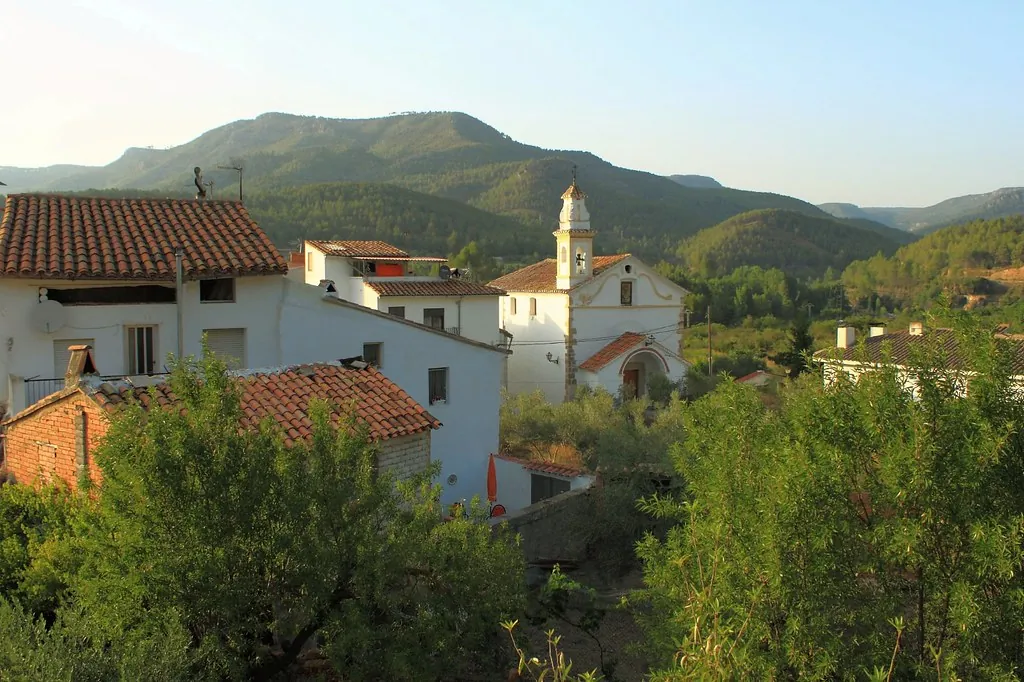
The old centre clings to the hillside. Narrow streets, short climbs and stone houses topped with clay tiles form a compact whole. A walk here feels like tracing a small rural maze. Turn one corner and another slope appears. A few steps later, a tiny square opens up.
The True Scale of Puebla de Arenoso
Puebla de Arenoso is not large. You can walk across it in about an hour without hurrying. Yet the streets encourage you to linger over small details: an old wooden door, a wrought iron balcony, a wall where stone and plaster meet.
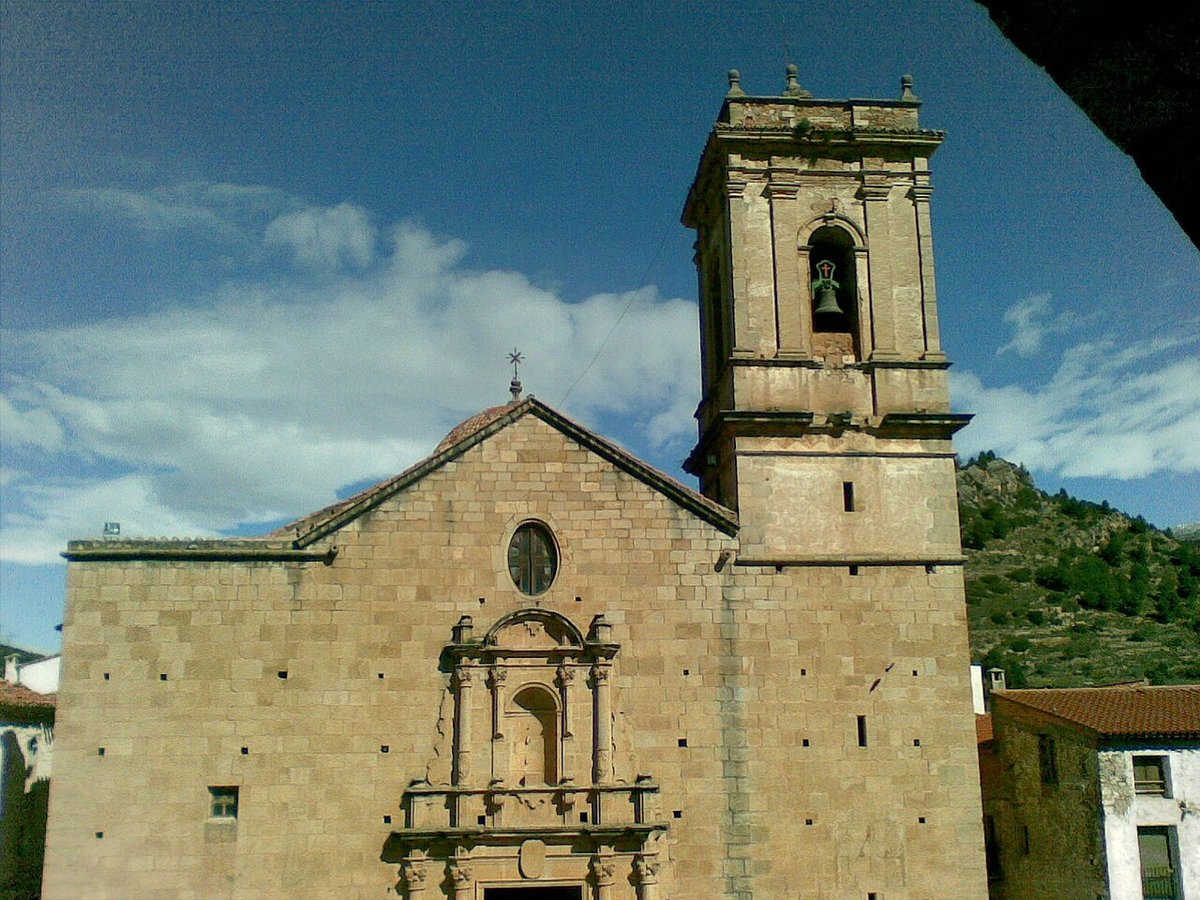
The parish church, dedicated to San Pedro, shapes much of the village skyline. Its bell tower is visible from several corners. It is not a monumental building, but it works as a useful point of reference when you are navigating the winding lanes.
The Plaza Mayor is not a grand square. It is closer to a small open space. During festivals or neighbourhood gatherings, this is where life tends to gather. A stone fountain and a small kiosk give it the feel of a meeting point.
Streets That Rise and Fall
Calle Mayor links much of the old quarter. From it branch even narrower alleys. Some street names sound almost domestic in tone. The Callejón de las Flores and Calle Torrente are two examples.
Wrought iron balconies and old doorways still survive in these parts. Not everything has been restored, and that helps you see how the village has changed over time.
There are no museums and no striking landmark buildings. Interest comes from the accumulation of modest elements: houses adapted to the slope, ageing walls, terraced plots that begin almost as soon as you leave the built-up area.
The Landscape of the Alto Mijares
Beyond Puebla de Arenoso the land turns rugged. Deep ravines cut through the terrain. Pine-covered slopes rise above pockets of cultivated terraces. Almond trees appear in spring, while olive trees continue to occupy many of the hillsides.
From higher viewpoints you can take in the wider picture. Forested areas alternate with clearings and old agricultural terraces. If you pause in silence, movement among the vegetation is not unusual. Goats or wild boar sometimes pass through these areas.
Several rural paths lead out from the village. Some connect with well-known spots in the region, such as the Estrechos de Chillapájaros. There are also natural viewpoints overlooking the Mijares valley.
Dark Nights and Open Skies
Light, or rather the lack of it, is one of the first things that stands out here. Outside the urban centre there is very little illumination.
Walk a few minutes away from the village and the sky changes noticeably. On clear nights, a large number of stars are visible. In many cities this has become rare.
Daytime offers its own spectacle. Birds of prey are easy to spot as they circle above the slopes. The surrounding environment remains largely natural.
Home-Style Cooking and Local Custom
Food in Puebla de Arenoso draws on what has long been available in the area. Embutidos such as longaniza and morcilla feature regularly. Longaniza is a type of cured sausage, while morcilla is a traditional blood sausage. Olive oil is a staple at many tables.
Seasonal produce from small vegetable plots also appears at certain times of year. Dried tomatoes, peppers and homemade preserves are common. During festivals or fairs, small stalls sometimes appear in the square.
This is not a modern gastronomic scene. It is home cooking in the traditional sense, based on familiar recipes and local ingredients.
Festivities and Village Life
The main celebrations usually take place in summer, especially in August. Many residents who live elsewhere return for those days, and the atmosphere shifts noticeably.
Processions move through the streets. Music fills the squares. Traditional dances such as the jota are performed. There are also shared meals where embutido and homemade wine circulate freely.
Another longstanding tradition involves romerías to the nearby hermitage dedicated to the Virgen del Pilar. A romería is a pilgrimage, often on foot, combining religious devotion with a social gathering. During these outings you can still hear popular songs and long conversations held outdoors.
Semana Santa, or Holy Week, is marked more simply. Here the emphasis falls on family rather than spectacle.
The Road to Puebla de Arenoso
The journey from Castellón de la Plana is around seventy kilometres. Most of the route follows secondary roads. As you approach the Alto Mijares, the number of bends increases.
It is best approached with patience. The drive itself becomes part of the plan, with mountain scenery, small villages and plenty of open landscape along the way.
When to Go
Spring and autumn are often pleasant times to visit. Almond trees bloom in nearby fields, and the surrounding hills change colour with the seasons.
Summer brings strong heat during the day. Even so, nights tend to cool down. Winter feels cold, and fog appears on some days.
Comfortable shoes and a willingness to wander without a fixed plan are more useful than a checklist of sights.
Puebla de Arenoso is the kind of place where very little seems to happen. That is precisely why it works.