Full Article
about Toga
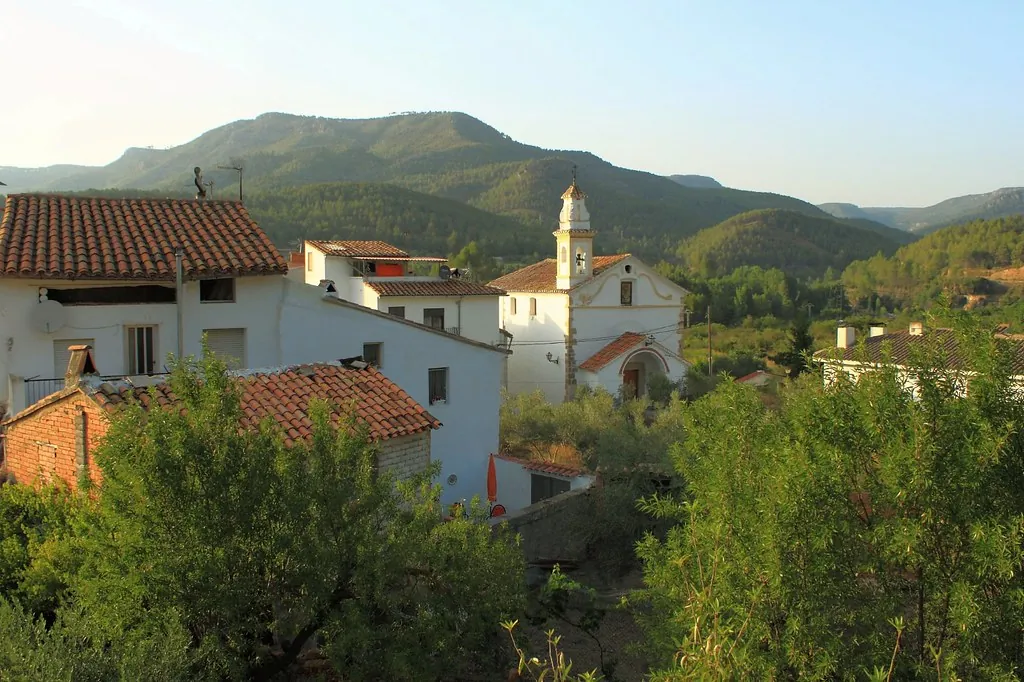
Town set in a bend of the Mijares river, ringed by orchards and mountains; noted for its stone gateway arches and its quiet.
Ocultar artículo Leer artículo completo
The road to Toga climbs past almond terraces that haven't yet decided whether to flower, through switchbacks where stone walls hold back nothing but gravity. At 291 metres above the Alto Mijares valley floor, this stone hamlet of 112 souls sits suspended between the Mediterranean's citrus-scented breezes and the austere limestone ridges that separate Castellón from Aragón. The journey from Castellón de la Plana takes fifty minutes if the tractor from Les Useres doesn't beat you to the narrowest bend.
Stone, Silence and the Smell of Pine
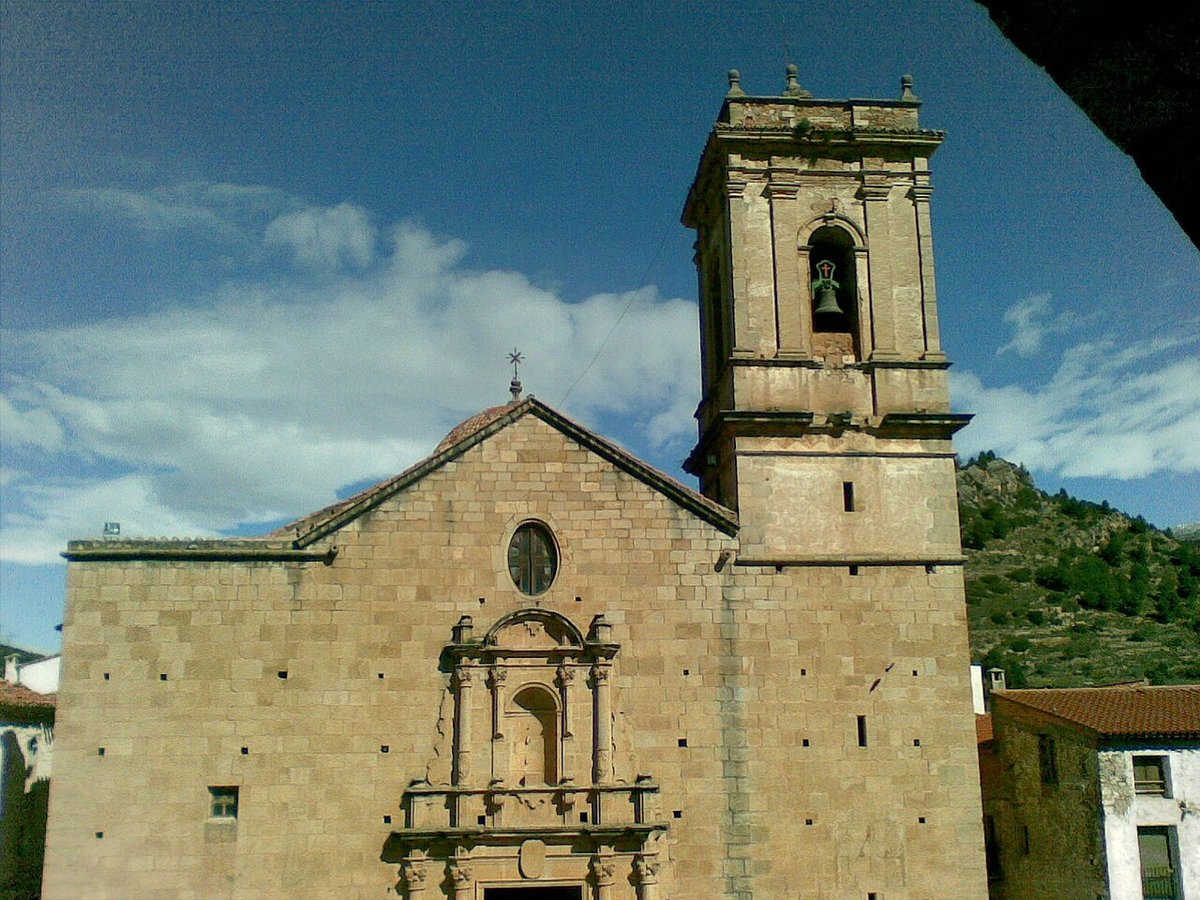
Toga's single thoroughfare—barely two cars wide—terminates at the church of San Miguel Arcángel, whose bell tower serves as both spiritual beacon and weather vane for the entire settlement. The building wears its centuries loosely: a Gothic portal here, Baroque retouching there, patched repeatedly with whatever stone came to hand when the earth moved or raiders passed through. Inside, the air thickens with beeswax and the particular dust that accumulates in places where no one has thought to install electric heating.
The houses follow the mountain's logic. Their back walls grow directly from bedrock; front doors open onto streets that tilt according to geological whim rather than municipal planning. Arabic tiles, thick as a forearm, overlap like fish scales. In summer these roofs radiate heat until midnight, forcing inhabitants outdoors where they sit on cane chairs discussing rainfall statistics and the price of olives. Winter drives them back inside to rooms where television flickers against walls that have seen Moorish scouts, Carlist soldiers, and now British walkers seeking somewhere that hasn't yet appeared on Instagram.
Walking Tracks That Demand Attention
Three distinct paths radiate from the village fountain, though only one appears on the tourist office's photocopied map. The most straightforward follows an old mule track towards the abandoned farmhouse of Mas de L'Abella, forty minutes uphill through Aleppo pine and rosemary so dense it scratches shins. The reward isn't views—those come earlier—but the sudden orchard where a single gnarled apple tree still fruits, its unpicked pippins fermenting into something that would interest the local cider enthusiasts if any remained.
Serious walkers continue another two hours to the ridge at 1,100 metres, where the Mediterranean appears as a silver thread between intervening peaks. The descent requires concentration: limestone plates tilt at ankle-breaking angles, and the red-white paint marks that appeared reassuring on the way up seem less convincing when clouds roll in from the interior. Mobile reception dies completely at 800 metres, a fact that the emergency services point out with weary regularity each weekend between October and May.
What Grows, What Dies, What Gets Eaten
October transforms the surrounding pinewoods into a battlefield of mushroom hunters. Cars with Madrid plates appear at dawn, their occupants spreading through the forest with the methodical patience of people who've driven three hours for the possibility of níscalos selling at €28 per kilo in the capital's markets. Local knowledge matters: the best boletus patches lie within 200 metres of the cemetery, where centuries of decomposing villagers have created soil conditions that commercial growers would kill to replicate.
The village's remaining agricultural plots—terraced strips too small for machinery—produce almonds that never quite earn their keep and olives that get pressed at the cooperative in Aín. Visitors expecting farm shops or tasting menus will be disappointed. The nearest restaurant operates from someone's front room in Tales, six kilometres back towards the coast, and opens only when Maria's daughter isn't working at the hospital in Vinaròs. Instead, food appears at fiestas or when someone has shot too many rabbits. The September celebrations for San Miguel feature gazpacho manchego that bears no relation to its Andalusian namesake—this is game stew thickened with flatbread, served from cauldrons that have been in continuous use since the 1950s.
When the Village Remembers It Exists
August brings the summer fiestas, three days when Toga's population quadruples. Emigrants return from Valencia, Barcelona, even Birmingham, transforming shuttered houses into temporary homes where cousins who haven't spoken since last year negotiate sleeping arrangements. The plaza fills with plastic tables for the paella contest, judged by whoever's grandmother still possesses most of her faculties. At 2am the brass band strikes up pasodobles until the elderly complain and the young complain louder about the elderly complaining.
The rest of the year proceeds at agricultural pace. Winter arrives suddenly, sometimes overnight in November, when temperatures drop to -5°C and the water pipes—laid too shallow in the 1970s—freeze solid. Spring brings the almond blossom that photographers seek but which lasts barely ten days before March winds scatter petals across the cemetery where half the village's former inhabitants share twelve family names. By May the hills have turned the colour of lion hide, and the first serious hikers start appearing with boots too clean and water bottles too small.
Getting Here, Staying Sane
The CV-20 from Castellón offers the least terrifying approach, though the final eight kilometres require concentration. Meeting a lorry full of limestone from the quarries above Aín means reversing to the nearest passing place, which might be 300 metres back down the mountain. Sat-nav systems fail completely in the final valley; download offline maps or follow the signs for "TOGA 7km" that someone keeps repainting despite the council's budget cuts.
Accommodation options remain resolutely non-commercial. The village maintains three houses for rural tourism, booked through the regional website by people who've learned to phone the keyholder two days ahead because mobile coverage inside the stone walls ranges from patchy to fictional. The nearest hotel stands in Montanejos, twenty-five minutes down the valley, where thermal springs attract weekenders from Valencia who never realise Toga exists three ridges away.
Bring walking boots with ankle support, water for longer than planned, and expectations calibrated for a place where the mayor also drives the school bus (when there are enough children to justify the route). The village won't change your life. It might, if you arrive on the right afternoon when woodsmoke drifts across the plaza and someone's grandfather is telling the story about the Civil War prisoners who escaped through these very mountains, remind you why people once chose to live in places that require effort to reach and stubbornness to remain.