Full Article
about Vallat
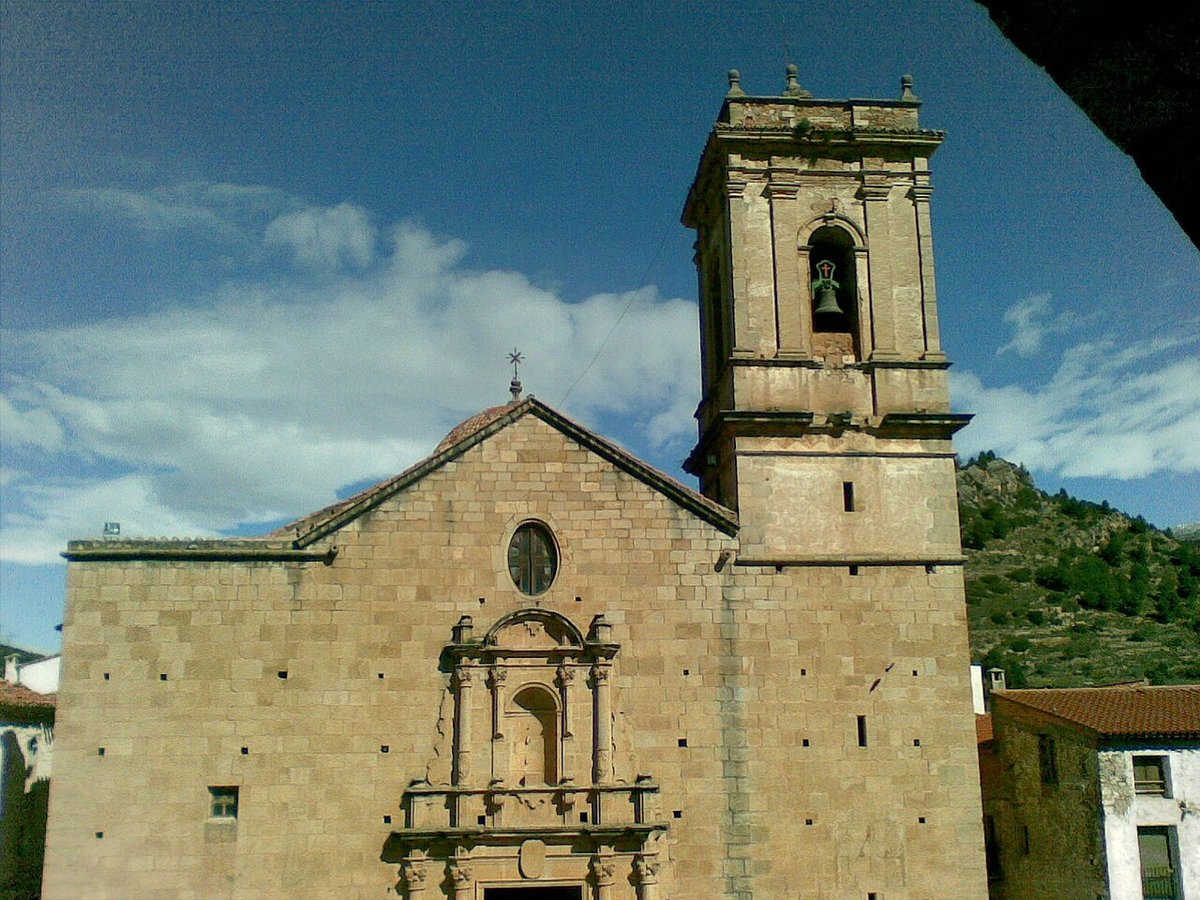
Tiny municipality on the Mijares river; noted for its quiet and its 18th-century parish church.
Hide article Read full article
Morning Light in Alto Mijares
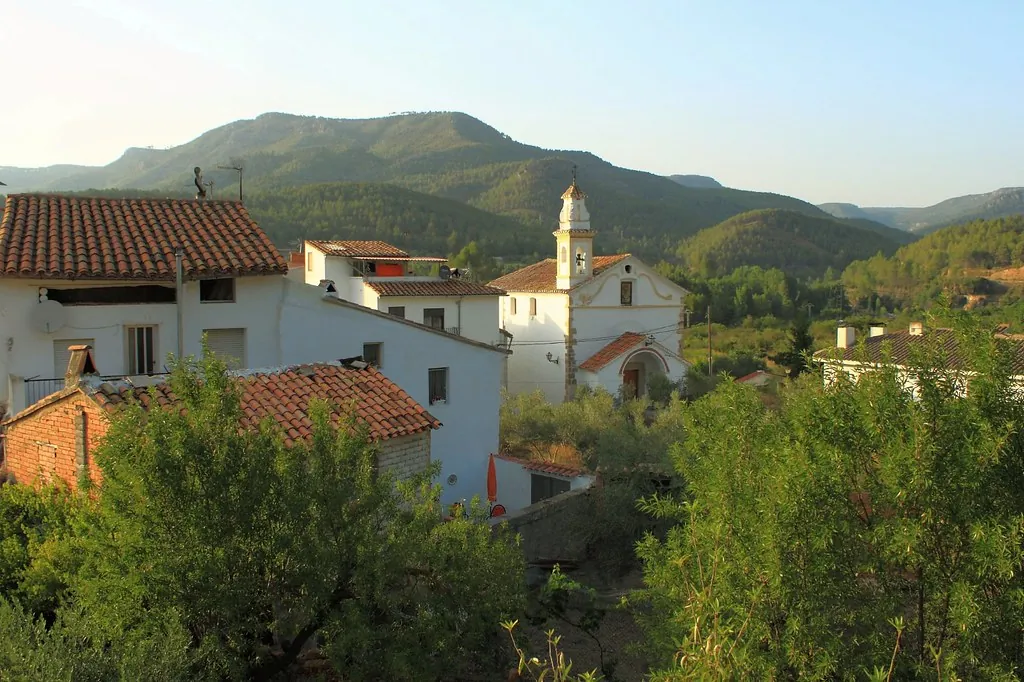
At daybreak in Vallat, the air often carries the scent of damp earth and pine. Light slides down the hillside and lingers on pale façades, while the narrow streets are still empty. The only sounds tend to be a car passing slowly through or the sharp snap of a shutter being raised. In this corner of Alto Mijares, around 66 people live year round, and that small number shapes everything. The village wakes gently and almost always in silence.
Vallat sits at about 276 metres above sea level on a small ledge overlooking the valley of the River Mijares. The settlement is compact and brief, with simple masonry houses topped by traditional curved tiles, clustered around just a handful of streets. On some walls, repairs made with different materials remain clearly visible. Patches from different decades tell a practical story of homes maintained with whatever was available at the time.
From several points in the village, the view opens towards the valley. The river lies further below, hidden among vegetation, and beyond it rise the ranges of Alto Mijares. Towards evening they turn a muted blue. As the sun drops, shadows trace the contours of the slopes and the landscape gains texture: terraced plots, scattered pines, the occasional old holm oak.
Around San Bartolomé
The parish church dedicated to San Bartolomé stands near the centre of Vallat. Built in pale stone, it has a simple bell tower visible from almost any corner of the village. It serves less as a grand monument and more as a point of reference, the place where the few streets meet and where daily life still gathers.
Around it are houses with small vegetable plots pressed against their walls or just across the path. Vines, fig trees and other fruit trees are common, offering shade in the summer months. At the edges of the built-up area, former agricultural terraces begin almost immediately. They are supported by dry-stone walls that continue to define the terrain, even if many plots are no longer cultivated as intensively as they once were.
In winter, almond trees blossom in nearby fields. For a short period, their pale flowers stand out against the dark green of the pines and alter the appearance of the surrounding slopes. It is a fleeting change, yet easy to notice from the paths that circle the village.
Paths Through Terraces and Ravines
Several rural tracks lead out from Vallat into the immediate landscape of Alto Mijares. These are not high mountain routes or long-distance treks. They follow older lines instead: passages between terraces, tracks descending towards the river, paths linking to other small settlements in the area.
Walking here brings small details into focus. Stone walls bowed under the weight of vegetation, disused animal pens, remains of small lime kilns or modest agricultural sheds appear along the way. Some farmhouses, or masías, are still used from time to time; others have stood closed for years.
The proximity of the River Mijares and nearby rocky outcrops means that, with patience, birds of prey can sometimes be seen gliding above the valley. Among the scrub, warblers and thrushes are often heard before they are spotted. It pays to walk slowly and pause now and then. What is most interesting often emerges once the sound of footsteps fades.
In summer, it is best to set out early in the day. The sun is strong at midday and certain stretches offer little shade.
A Modest Calendar
Vallat’s patron saint festivities usually take place in August. At that time, residents who live elsewhere return, and the village becomes a little busier than usual. Processions move through the streets, music continues into the evening and conversations stretch late into the night outdoors.
Semana Santa, or Holy Week, keeps a restrained tone. Small religious events pass through the streets of the village centre, reflecting the scale of the community. In winter, Christmas celebrations revolve around neighbours meeting and the preparation of homemade sweets based on recipes handed down from one household to another.
These are not large-scale events but brief moments when the rhythm of the village shifts for a few days.
Getting There and When to Go
From Castellón de la Plana, the usual approach to Vallat follows the CV‑20 inland, passing through Onda and gradually entering the valley of the Mijares. As the road advances between hills and ravines, it narrows and curves, encouraging an unhurried drive.
It is worth bearing in mind that Vallat is very small and services are limited. Not everything opens every day or at all hours, so bringing water or any essentials is advisable if planning to walk in the area.
On weekdays and outside August, silence is close to absolute. For some, that is precisely the point. A handful of houses, the distant sound of the river and the sense that time moves at a different pace here define Vallat more clearly than any landmark could.