Full Article
about Villahermosa del Río
A picturesque village on a mountainside above the river, known for its white architecture and the source of the Río Carbo.
Hide article Read full article
A Mountain Village Above the Valley
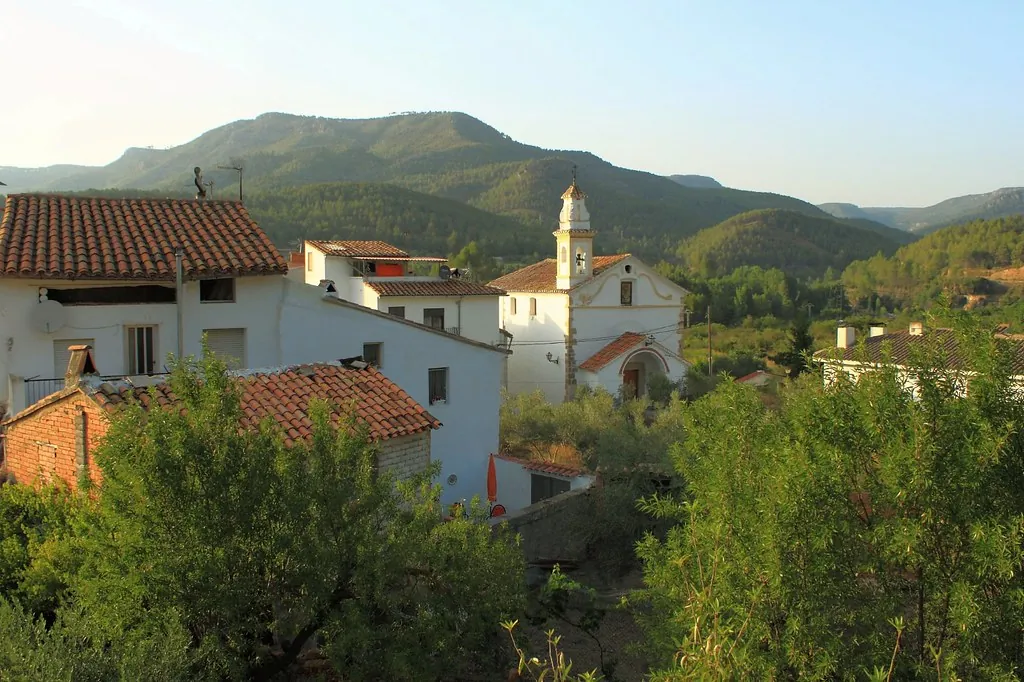
Villahermosa del Río lies at the far inland edge of the province of Castellón, in the comarca of Alto Mijares. The village stands at around 750 metres above sea level, set on a hillside that looks out over the valley of the river Villahermosa, one of the tributaries of the Mijares. Its layout follows that slope closely. Narrow streets rise and fall between stone houses, and the riverbed remains a constant reference point below.
Fewer than five hundred people live here. Villahermosa still has the appearance of a mountain settlement whose growth was slow and shaped by the terrain. Around the village, old terraced fields step down the slopes, many of them still cultivated. Pine woods and holm oak cover much of the surrounding hillsides.
The river Villahermosa crosses the municipality and brings a touch of moisture to a landscape that changes noticeably with the seasons. In spring, the valley turns greener and the low scrub carries the scent of rosemary and thyme. Winter can leave nearby peaks dusted white for a few days, reinforcing the sense of isolation that is still felt in this part of inland Castellón.
The local economy continues to rest on traditional activities: small-scale terrace farming, some livestock and forestry. Many houses now serve as second homes for families with roots in the village. As a result, the rhythm of daily life shifts between quieter weekdays and busier weekends or holiday periods.
Parish Church and Stone Houses
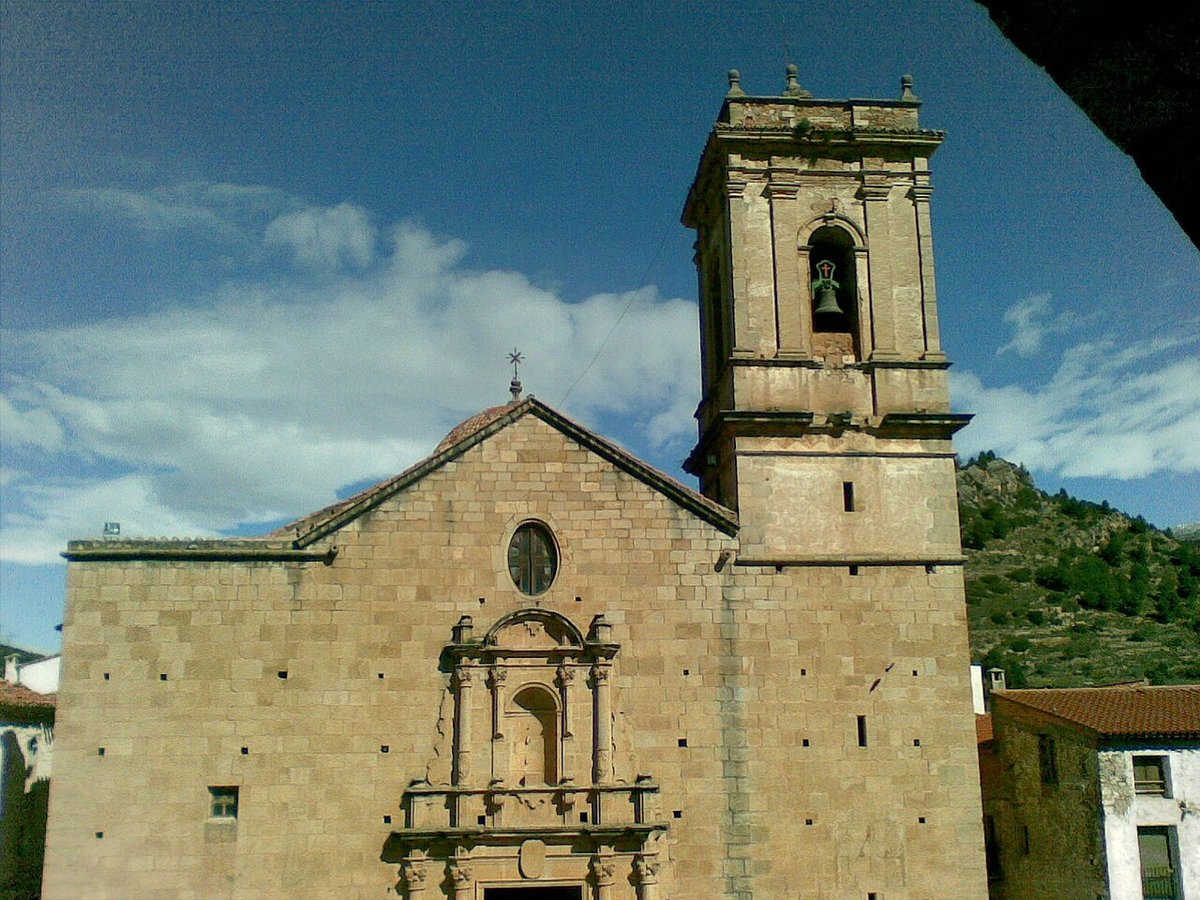
At the centre of the old town stands the parish church of the Purísima Concepción. The present building largely reflects reforms carried out in the modern period, probably in the 18th century, although there may have been an earlier church on the same site. Its bell tower is visible from different points in the valley and still acts as a landmark when approaching by road.
Elsewhere, Villahermosa preserves much of the traditional architecture typical of Alto Mijares. Houses are built from local stone, with tiled roofs and thick walls designed to keep out the winter cold. Some doorways retain carved stone lintels, and wrought-iron balconies project over the narrow streets. Interior courtyards and storage areas point to the agricultural or livestock work that once shaped everyday life in these buildings.
The urban fabric feels compact and closely tied to the slope. Streets are not laid out on a grid but adapt to the hillside, turning and climbing in response to the land. Walking through the centre means following that natural gradient, with views opening and closing between the houses.
River Corridors and Old Paths
The immediate surroundings explain much of the village’s appeal. The municipal area is crossed by ravines and small valleys where old terraces alternate with pine woodland and patches of holm oak.
The river Villahermosa forms one of the most recognisable natural corridors. Along its course, stretches of riverside vegetation appear, including poplars, willows and shrubs. These greener banks contrast with the drier slopes that frame the valley.
Several traditional paths set out from the village. For centuries they linked isolated farmsteads, cultivated plots and neighbouring settlements. Today some of these routes are used for walking. Along the way, traces of rural work remain visible: dry-stone walls marking former fields, livestock pens and small springs that emerge from the rock.
These elements speak quietly of how the land was used. Terraces now partly reclaimed by vegetation show how cultivation once extended higher up the slopes. Livestock tracks and modest stone constructions linked to herding still shape parts of the landscape.
Walking the Municipality
Hiking is one of the most common activities for those who come to Villahermosa del Río. Paths from the village centre allow walkers to descend towards the river or climb towards the surrounding sierras, with routes of varying length.
Spring brings more movement to the hills. Water tends to run more strongly through the ravines at that time of year, and the vegetation appears fresher. Autumn alters the riverside areas in particular. Poplars turn yellow while the pine woods maintain their dark green tone across the slopes.
Anyone who walks at an unhurried pace will notice how many signs of traditional land use remain. Abandoned terraces slowly fill with shrubs and young trees. Old livestock paths still cut across the hillsides. Small stone shelters associated with grazing appear here and there, blending into the terrain.
The overall impression is of a landscape shaped over generations rather than designed. Natural features and human intervention sit side by side, without sharp boundaries between them.
Traditions Through the Year
The local calendar combines religious celebrations with customs linked to rural life.
In January, the village celebrates San Antonio Abad. The blessing of animals forms part of the festivities, recalling the importance that livestock once had in the area. Throughout the year, patron saint festivals also take place. These events tend to draw back many residents who now live elsewhere and return to the village for a few days.
Holy Week unfolds with simple ceremonies and processions through the streets of the old quarter. The atmosphere is generally restrained and reflective, in keeping with the scale of the community.
Practical Notes
Villahermosa del Río is located inland in the province of Castellón, within the comarca of Alto Mijares. From Castellón de la Plana, the usual route heads towards l’Alcora and then continues along roads that wind into the sierra, linking with the routes towards Ludiente and from there to Villahermosa. The final stretch follows mountain roads with numerous bends.
The village itself can be explored easily on foot, although the slopes of the old centre are worth bearing in mind. Anyone planning to walk the surrounding paths should be aware that routes descend towards the river and climb towards higher ground, reflecting the varied terrain that defines this part of inland Comunidad Valenciana.