Full Article
about Villanueva de Viver
Small village on the Teruel border, ringed by pine woods; known for its quiet and mountain air.
Hide article Read full article
A slower pace in Alto Mijares
Some villages force you to slow down as soon as you arrive. Villanueva de Viver is one of them. Not because there is a long list of sights to tick off. In fact, you can walk its streets in a calm morning. What changes is the rhythm.
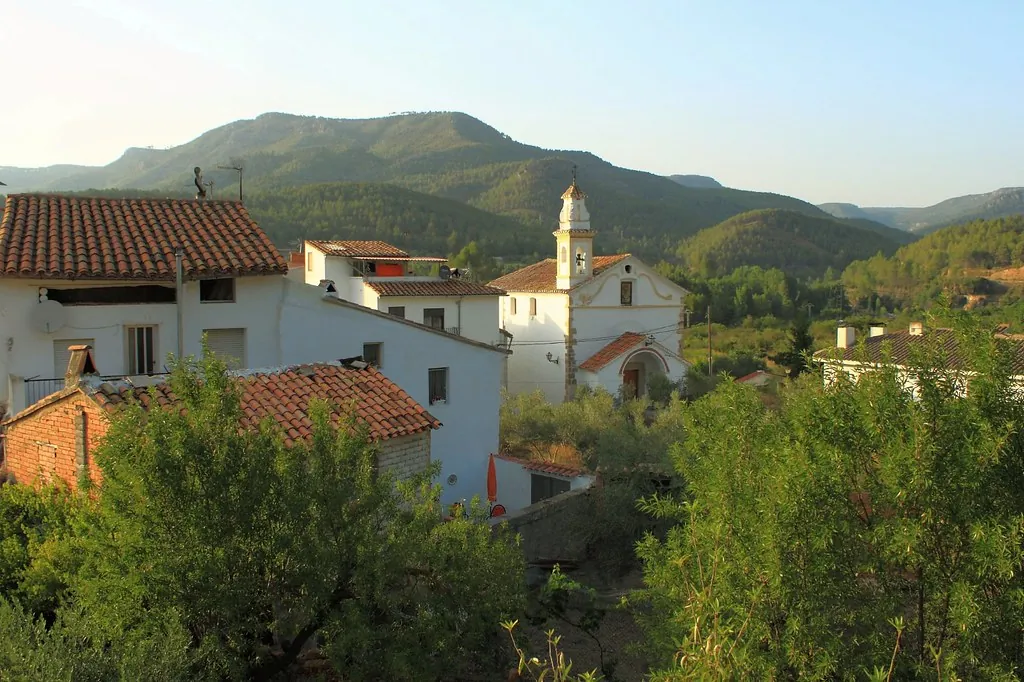
With barely a hundred residents and sitting at around 900 metres above sea level, this small settlement in the Alto Mijares comarca of Castellón moves quietly. Houses cling to the mountainside. Weekdays pass in near silence. Pine forest surrounds almost everything.
Its position among the inland sierras of Castellón means the air feels different from the lower-lying areas closer to the coast. Pine dominates here, both carrasco and rodeno, shaping a landscape where old terraces still appear on the slopes. Dry-stone walls trace former fields, reminders of a time when the land was worked far more intensively than it is today. Scattered masías, traditional rural farmhouses, dot the surroundings. Some remain in use, others simply endure.
A handful of streets and a parish church
The urban centre of Villanueva de Viver is small even by local standards. A handful of streets climb and dip with a steady gradient. Most houses rise to two storeys, their façades plain and practical.
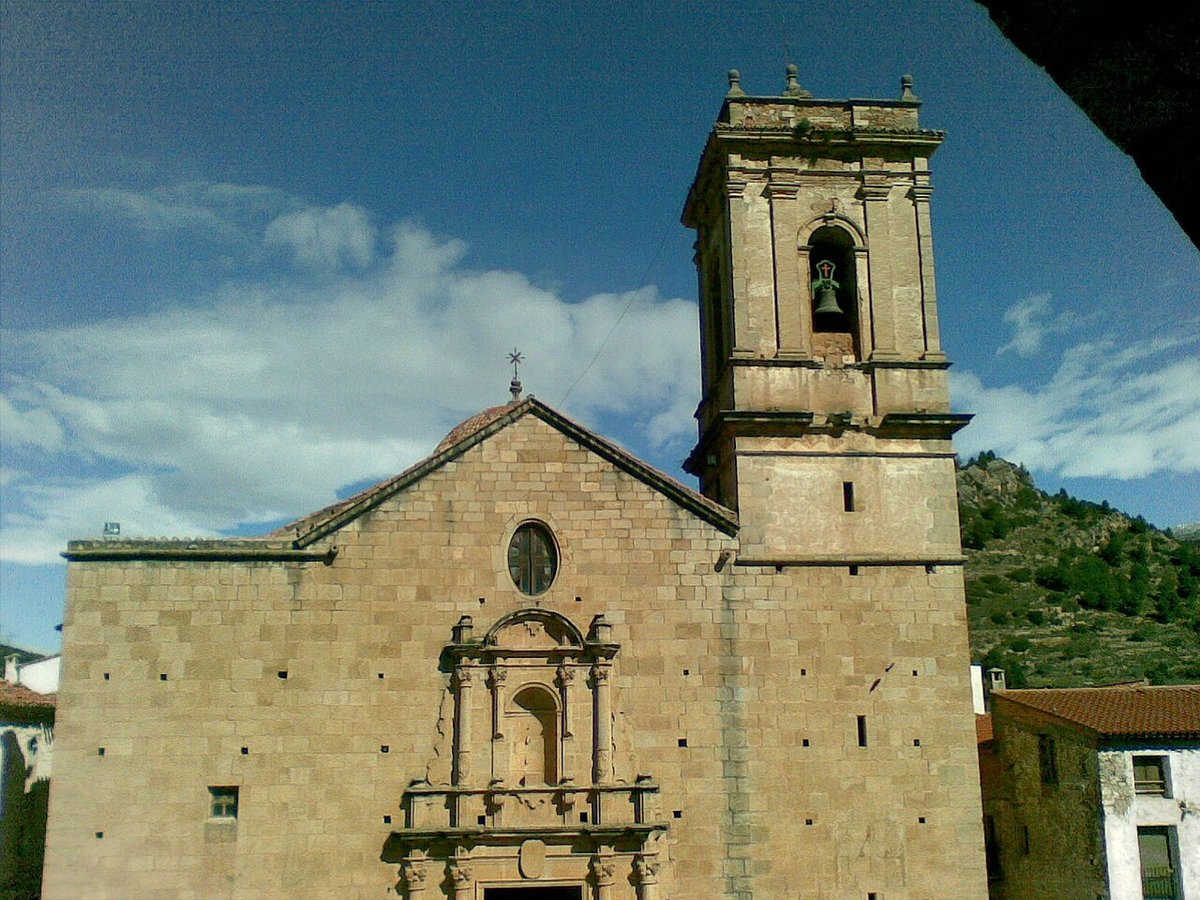
Calle Mayor forms the main axis, though that sounds grander than it is. It is simply a short stretch of tightly packed homes. At one end stands the parish church of San Francisco Javier, built in the eighteenth century. It does not attempt to impress. It is the sort of church that has always been there, marking the passing of days with the sound of its bells.
Nearby, there is usually some movement around the public fountain, fed by a natural spring. In villages like this, the fountain remains a meeting point, even if only for a brief chat. Around it you can still spot corrals, small vegetable plots and more dry-stone walls, all reflecting a local economy long tied to farming and livestock.
Nothing feels arranged for visitors. Life continues at its own pace, and that is part of the appeal.
Where the pine forest begins
One of the pleasures of Villanueva de Viver is how quickly you leave it behind. Step out of the last houses and within minutes you are among the pines.
There are no heavily signposted trails or information boards every few metres. What you find instead are forest tracks and paths that have been used for years by those working the land or travelling between masías. With a map or a GPS track, it is easy to link several of these routes and climb towards nearby collados, mountain passes where the landscape of Alto Mijares opens out.
The terrain is generally forgiving. Tracks are wide, slopes are moderate and when the pine canopy thickens there is plenty of shade. It is walking country rather than technical hiking ground.
In autumn, if the year has been wet, it is common to see people searching for níscalos and boletus in the surrounding woodland. These wild mushrooms are prized across Spain. As always with foraging, it is important to know exactly what you are picking and to respect private land.
Beyond the paths themselves, the setting speaks of a rural past that has not entirely disappeared. The old terraces and walls appear again and again as you move through the forest, subtle signs of former cultivation.
Straightforward cooking from the interior
The food typical of this inland part of Castellón is direct and substantial, shaped by what was available locally. Roast lamb appears regularly, as do stews cooked slowly over a steady heat. Dry rice dishes are also common, often prepared with seasonal vegetables or a little meat.
In private homes, traditional sweets made with almond or honey are still prepared when spring arrives. These are recipes passed down through generations, the kind made without fuss or elaborate presentation.
This is not a cuisine of elaborate plating. It is food designed to satisfy after a morning in the fields or a long walk in the sierra. The emphasis is on flavour and sustenance rather than display.
When August changes everything
For much of the year, Villanueva de Viver remains very quiet. Then August arrives and the rhythm shifts. Many former residents who now live elsewhere return for a few days or weeks. The streets regain movement. Doors open more often. Conversations stretch into the evening.
The local fiestas tend to revolve around religious celebrations, including those dedicated to Santa Ana and San Antonio. Processions move through the streets, and communal meals are organised by the neighbours themselves. These are not large-scale events designed for crowds. They are rooted in local ties and shared effort.
In winter, certain traditions linked to rural life are still observed. One example is the blessing of animals around small bonfires, a custom associated with San Antonio in many parts of Spain. It reflects the historic importance of livestock to communities like this one.
Outside these moments, daily life remains understated.
Choosing the right season
Spring and autumn are usually the most pleasant times to explore this corner of Alto Mijares. The countryside feels more alive, and walking is far more comfortable than in the height of summer.
In July and August, the heat builds around midday. Even so, evenings tend to cool down noticeably thanks to the altitude. Winter makes itself felt here. Mornings are cold. Fireplaces are lit. The streets grow even quieter.
Villanueva de Viver is not a destination built around major attractions or packed itineraries. It suits those content with a simple plan: a walk through pine forest, a slow circuit of the village streets, a pause at the fountain while the afternoon slips by.
Sometimes that is enough.