Full Article
about Zucaina
Mountain village known for its hazelnut groves and springs; unspoiled setting dotted with hermitages and trails.
Hide article Read full article
Reaching Zucaina is part of the experience. From Castellón, the usual route follows the CV‑20 towards l'Alcora, then links up with the CV‑190 in the direction of Ribesalbes. After that, the roads narrow. There are bends, plenty of hills and very few villages along the way. Allow a little over an hour by car.
In summer, the heat in the interior of Castellón can be intense, although Zucaina’s altitude often brings a bit of a breeze. Spring and autumn are generally more comfortable, especially if walking in the surrounding countryside is part of the plan.
Parking and First Impressions
Zucaina is small. There are a couple of areas near the centre where you can leave the car, and there is usually space available. There is no need to circle around for long.
The village centre can be covered quickly on foot. From wherever you park, you will reach the main streets within minutes. Some slopes are short but steep, so comfortable footwear is a sensible choice.
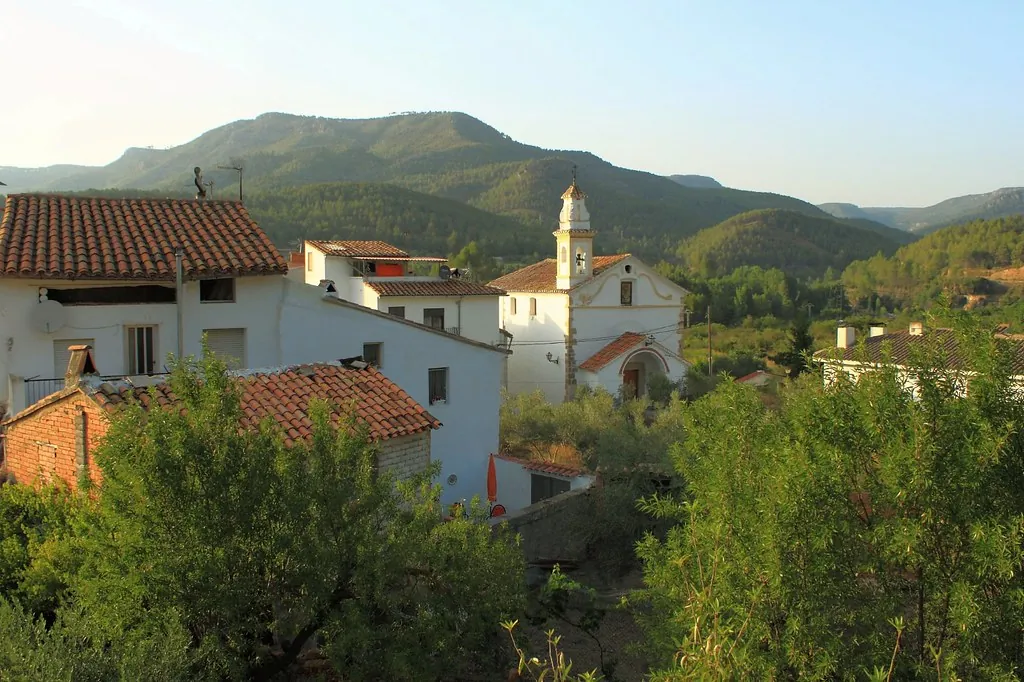
The layout follows the shape of the hillside. Streets are irregular, houses built in stone, façades simple and functional. There are no major monuments and little that feels arranged specifically for tourism. It is a working village in the interior, and it looks like one.
A Walk Through the Village
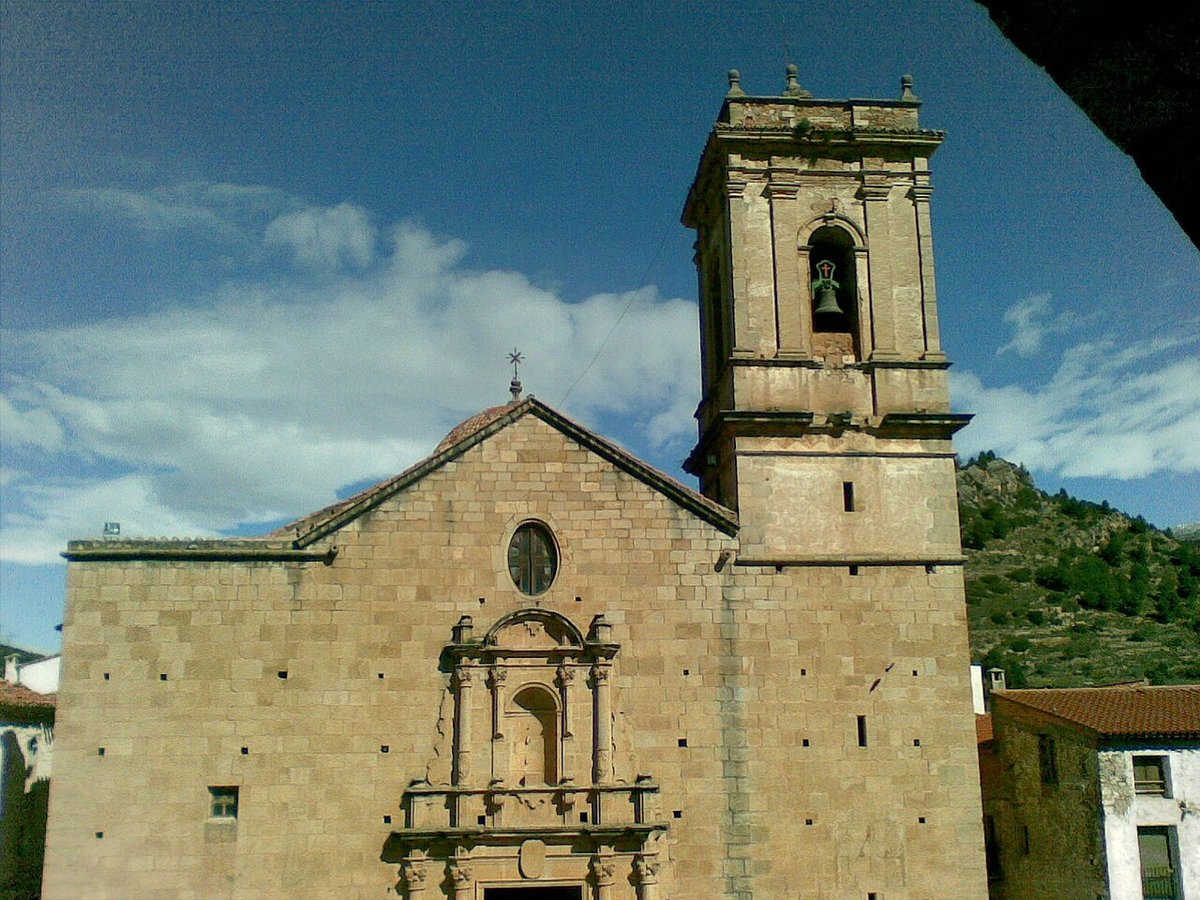
At the centre stands the church of San Pedro Apóstol, the most visible building in Zucaina. It serves its purpose and little more, a parish church typical of inland villages, without excess or ornament.
Walking through the streets, certain details repeat themselves. Wrought‑iron balconies, sloping tiled roofs and wide wooden doors that were once used to store tools or shelter animals. In some corrals it is still clear that agricultural activity has not completely disappeared.
On the outskirts, old terraced fields remain. For decades they supported small-scale crops. Many are now partly abandoned, gradually covered by scrub and young pine trees. The change is noticeable as soon as you step beyond the last houses.
La Fuente de la Villa is one of the spots people often reach when heading out for a short walk near the village. It acts as a natural meeting point between the built-up area and the surrounding countryside.
Zucaina is not a place packed with sights. The appeal lies in the atmosphere of a hillside settlement that has changed slowly, where daily life continues without much fuss.
Paths and Hills Around Alto Mijares
What truly defines Zucaina lies outside the urban centre. The area forms part of Alto Mijares, a comarca in the province of Castellón known for its mountainous terrain and quieter pace. Here the landscape is typically Mediterranean: pine woods, scrub, ravines and agricultural tracks connecting different partidas, or rural plots.
Several marked footpaths begin in the village. Some follow wide tracks where walking is straightforward. Others lead into stonier ground with more noticeable inclines. It is worth checking the route in advance, as signposting can be limited in places.
Across these hills you will come across isolated masías, traditional rural farmhouses scattered through the countryside. There are also abandoned fields and extensive pine forest. On clear days, some of the higher points offer wide views towards the Mijares valley.
Autumn brings another reason for visitors to come: mushrooms. Many people arrive during the season to search for them in the surrounding woods. If this is of interest, it is best to ask locally beforehand, as some areas may have specific rules or require permission.
The overall feeling is one of calm. There is no heavy traffic, no large visitor centres and no marked circuits designed for mass tourism. Instead, there are agricultural paths, stretches of forest and the sound of wind moving through the trees.
Food in an Inland Village
The cooking in Zucaina follows the pattern typical of inland villages in the Comunidad Valenciana. Dishes are hearty and straightforward, built to sustain rather than to impress.
Stews based on pulses are common. When the season allows, small game appears on the table. There are also local versions of gazpacho manchego, a traditional dish from central Spain that, in this area, is prepared with game meat and torta de pan, a type of flatbread broken into pieces and cooked directly in the stew.
Thyme and rosemary feature regularly in recipes. These herbs grow naturally in the surrounding hills and their flavours define much of the local cooking.
Meals reflect the environment: practical, linked to what the land provides and shaped by the rhythms of the year.
Festivals and Local Life
The main celebration in Zucaina is the feast of San Pedro, held around 29 June. This is when the village feels at its liveliest. Many former residents return for a few days, and the population temporarily grows.
During the summer, simple events are often organised in the square or along the streets. There may be music, communal dinners and gatherings that stretch late into the night. These are informal occasions, rooted in local participation rather than large-scale programming.
Semana Santa, or Holy Week, is more restrained. Processions take place, but they are short and modest. Christmas tends to be family-oriented, with most of the atmosphere kept behind closed doors rather than spilling into public spaces.
Throughout the year, daily life continues at an unhurried pace. Agricultural work still has a presence, even if reduced compared with previous decades. Conversations happen in the street, doors remain open during warmer months and the surrounding hills are always close at hand.
A Place to Pause, Then Walk
Zucaina is not a destination for ticking off landmarks. It is a small village where you stroll for a while and then head out towards the hills.
A practical approach is simple: park near the upper part of the village, wander through the centre and allow time for one of the paths that lead into the surrounding countryside. In summer, if setting off mid-morning, bring water. Shade is limited and the heat in the interior of Castellón can build quickly.
For those looking for busy attractions or a long list of sights, Zucaina may feel too quiet. For anyone interested in hillside villages, agricultural landscapes in transition and the slower rhythm of Alto Mijares, it offers exactly what it promises: roads that wind upwards, a compact settlement shaped by its slope and open country just beyond the last house.