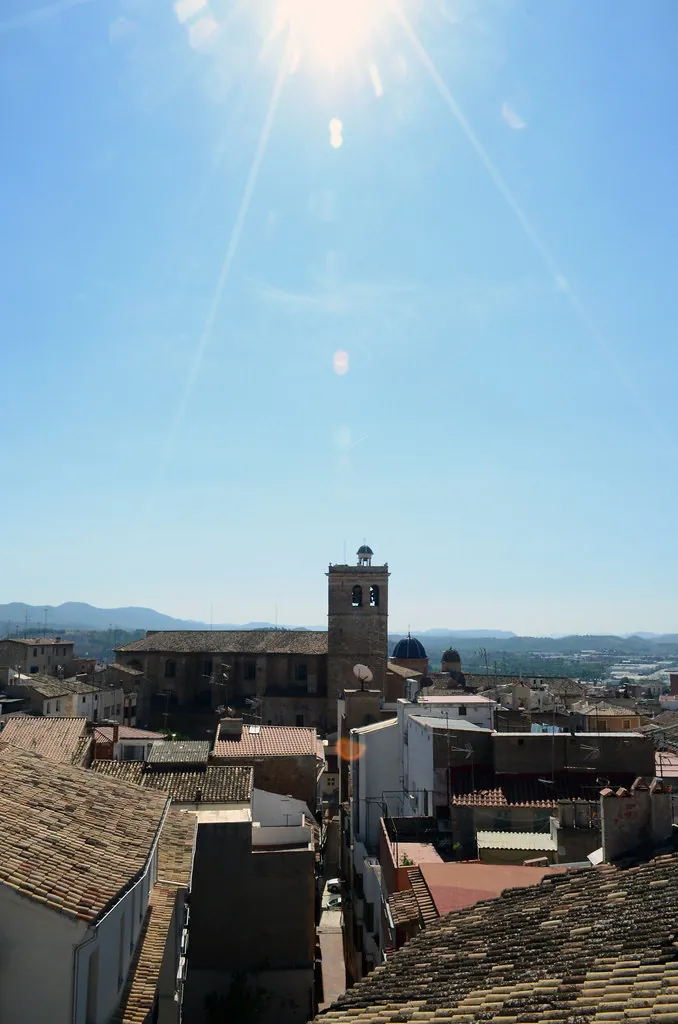
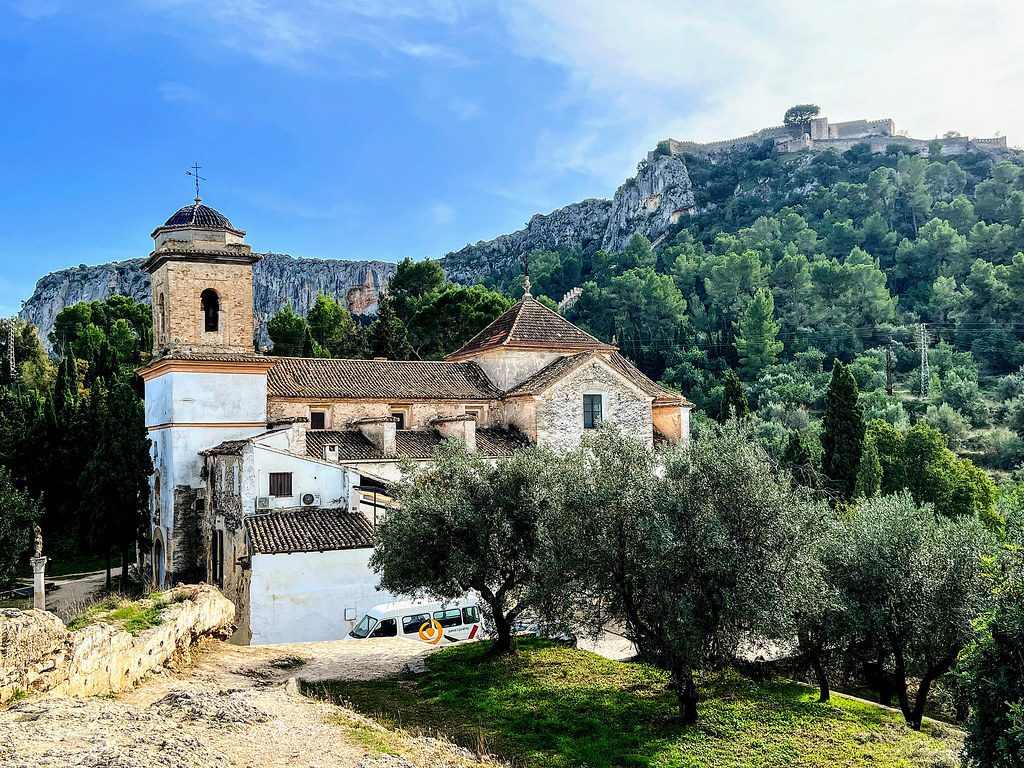
Vista aérea de Gaibiel
Instituto Geográfico Nacional · CC-BY 4.0 scne.es
Comunidad Valenciana · Mediterranean Light

Gaibiel

The stone houses of Gaibiel turn honey-gold at sunrise, but you'll likely have the view to yourself. Fewer than two hundred people call this mounta...

200 inhabitants · INE 2025
517m Altitude

Why Visit

Mountain Gaibiel Castle Visit the castle

Best Time to Visit

summer

San Agustín Festival (August) agosto

Things to See & Do
in Gaibiel

Heritage

  • Gaibiel Castle
  • Church of San Pedro
  • Washhouse

Activities

  • Visit the castle
  • Hiking trails
  • Cycling tourism

Festivals
& & Traditions

Fecha agosto

Fiestas de San Agustín (agosto)

Las fiestas locales son el momento perfecto para vivir la autenticidad de Gaibiel.

Full Article
about Gaibiel

Mountain village with a restored castle overlooking the valley; surrounded by forests and springs, its old quarter has a Moorish layout.

Ocultar artículo Leer artículo completo

The stone houses of Gaibiel turn honey-gold at sunrise, but you'll likely have the view to yourself. Fewer than two hundred people call this mountainside hamlet home, and most mornings the only sound is the clink of a farmer's gate and the wind moving through Aleppo pines.

Gaibiel sits at 517 m in the Sierra de Espadán, an hour's drive inland from the Valencia-Castellón coast. The road leaves the orange groves behind at Segorbe, corkscrews up the CV-25 and suddenly the horizon empties: just ridges folding into each other, the odd shepherd's track disappearing over the crest. Mobile signal dies a few kilometres short of the village; by the time the church tower appears, Google Maps has given up entirely. Download offline tiles before you set off, or trust the road signs that still list distances in "quinze" and "vint" kilometres, a nod to the old Valencian mile.

Stone, slate and silence

There is no parade of souvenir shops, no ticket booth, no interpretive centre. Four streets meet at the tiny plaça where a single bar, El Porvenir, opens when the owner feels like it. Houses are built from local sandstone the colour of wet sand; roofs are dark slate rather than the familiar terracotta. The effect is more northern Spain than Levante, a reminder that the Espadán range once held bandits and charcoal burners who looked north to Aragón rather than east to the sea.

The 17th-century parish church is locked unless mass is due, but the raised churchyard doubles as the best viewpoint. From the iron railing you can trace the old terrace walls that once grew almonds and olives for export through Sagunto's port. Most are abandoned now, dry-stone collapsing under rosemary and thyme. The air smells of pine resin and wild marjoram; kestrels hang overhead, and on a clear day the Mediterranean glints 40 km away like polished steel.

Walk five minutes up the dirt track sign-posted Castillo and you reach what locals call "la torre" – a stump of Moorish wall and a rough scramble to the ridge. The 360° panorama takes in the entire Alto Palancia: a corrugated landscape of forest and abandoned fincas, zero motorways, zero high-rise. It is one of the few places in the province where the view contains no concrete, a sobering reminder of how much coastline has disappeared since the 1960s.

Trails that start at the doorstep

Footpaths are Gaibiel's real attraction, but they are not manicured. The PR-CV 147 begins beside the church, drops into an oak ravine and climbs to the neighbouring hamlet of Caudiel in 6 km. Red-and-white waymarks are faded, and after heavy rain the path turns into a streambed; decent boots are advised. Serious walkers can link up with the GR-36 long-distance route which traverses the whole Espadán range, staying low enough to be hikable year-round but topping 1,000 m at El Remedio.

Spring brings the best conditions: daytime 18-22 °C, nights cool enough to need a jumper, wild peonies flowering under the pines. October is equally pleasant, with the added bonus of fungi-hunting: rovellons (saffron milk-caps) appear after the first autumn rain and locals sell surplus at the bar door for €6 a kilo. Summer is workable if you start early; the altitude knocks the edge off the coast's 35 °C furnace, but shade is scarce and sunburn arrives fast. In winter the village sees occasional frost and even snow every second February; the approach road is gritted, but the upper hiking tracks become greasy clay.

What to eat and where

El Porvenir doubles as the only restaurant. Lamb chops arrive by the half-kilo, cooked over vine cuttings that give a sweet, smoky edge. A half-ración is plenty for two Brits who aren't used to 21:30 supper; ask for it "para compartir" and they'll split it in the kitchen. The local co-operative red is light, more Beaujolais than Rioja, and costs €6 to take away. Dessert options are homemade flan or arroz con leche spiced with cinnamon – nursery food, reassuringly familiar.

If the bar is closed (Tuesday is the unreliable day), drive 10 km to La Mecedora de la Abuela in Caudiel for roast chicken glazed with mountain honey, or pack sandwiches and picnic on the castle ridge. Breakfast is another cultural adjustment: coffee comes with a slab of toasted baguette, grated tomato and a drizzle of olive oil. Marmalade simply doesn't exist; bring your own if you can't face savoury before midday.

When the village parties

Gaibiel's calendar revolves around saints, not tourism. The main fiestas are 15 August, when the population triples as emigrant families return, and 12 December for the Virgin of Guadalupe. Expect late-night verbena dancing in the plaça, free paella cooked in a metre-wide pan, and a correfoc where teenagers in devil costumes sprint through sparks. Accommodation within the village is impossible during those weekends; book in Segorbe or stay on the coast and day-trip.

The rest of the year the village retires into itself. Sunday lunchtime sees grandparents gossiping on the single bench; by 14:30 even the dogs have gone indoors. British visitors sometimes mistake the quiet for hostility – it isn't. A polite "Bon dia" gets a nod, and asking for directions in fractured Spanish will prompt a detailed, if unintelligible, reply complete with waving stick.

Getting there and away

Valencia airport is 75 minutes by hire car: A-23 towards Zaragoza, exit at Segorbe, then CV-25 and the CS-192. Castellón airport is marginally closer but has fewer flights. There is no petrol station beyond Segorbe; fill up. A commuter bus links Caudiel with Castellón at 07:00 and 19:00 Monday-Friday, but it does not climb the final 10 km to Gaibiel, so a car is essential unless you fancy hitch-hiking with a rucksack.

Parking is free on the upper plaça; ignore the sat-nav that tries to thread you down alleves built for mules. If you need cash, the ATM in Vall de Almonacid works roughly three days a week; bring euros. A light fleece lives in the glove box even in July – night temperatures can dip to 12 °C when the coast is still 25 °C.

The bottom line

Gaibiel offers nothing spectacular, and that is precisely its charm. You will not find souvenir fridge magnets, flamenco shows or air-conditioned coaches. What you get is an unfiltered slice of interior Valencia where the clock runs slower, the coffee is drinkable and the views cost nothing. Stay for a couple of nights, walk until your boots are dusty, then descend to the coast for paella by the sea. The contrast makes both experiences better – and reminds you how much of Spain still lives beyond the postcards.

Key Facts

Region
Comunidad Valenciana
District
Alto Palancia
INE Code
12065
Coast
No
Mountain
Yes
Season
summer

Livability & Services

Key data for living or remote work

2024
Connectivity5G available
TransportTrain nearby
HealthcareHospital 9 km away
EducationElementary school
Housing~5€/m² rent · Affordable
CoastBeach nearby
Sources: INE, CNMC, Ministry of Health, AEMET

Official Data

Institutional records and open data (when available).

  • Antigua Casa de la Villa
    bic Monumento de interés local ~0.7 km
  • Castillo de Gaibiel
    bic Monumento ~0.8 km
  • Torre de Dalt
    bic Monumento ~0.2 km

Planning Your Visit?

Discover more villages in the Alto Palancia.

View full region →

More villages in Alto Palancia

Traveler Reviews