Full Article
about Matet
Small mountain village surrounded by olive and almond trees; noted for its Moorish tower and complete quiet in a natural setting.
Hide article Read full article
A Detour That Makes Sense
Arriving in Matet feels like turning off onto a side road “just for a moment” and then realising the detour was worth it. Tourism here works in much the same way. There is no flashy sign, no grand attraction pulling you in. The village simply appears at the end of a road that narrows gradually between pines and holm oaks in the heart of the Alto Palancia, in the interior of the Comunidad Valenciana.
Only a handful of residents live here year round, and it shows. On many weekdays you can walk from one end of the village to the other without passing anyone. At just over 500 metres above sea level, Matet enjoys a little movement in the air even on hot days, the breeze slipping through its stone streets. The quiet, meanwhile, is constant.
This is the sort of place where it does not take long to picture what daily life looked like decades ago. Many façades are still built of stone, wooden doors are heavier than they seem, and there is no sense that everything has been retouched for the sake of a photograph. The historic centre is compact. In twenty unhurried minutes you can cover it all, though chances are you will linger, drawn to small details.
Stone, Wood and the Centre of Village Life
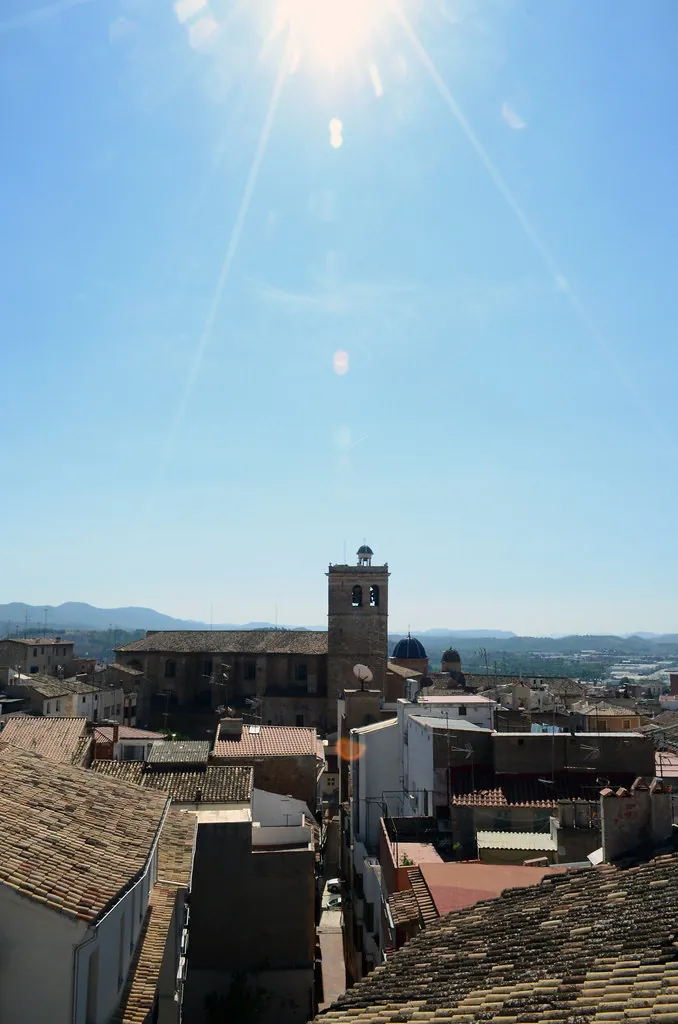
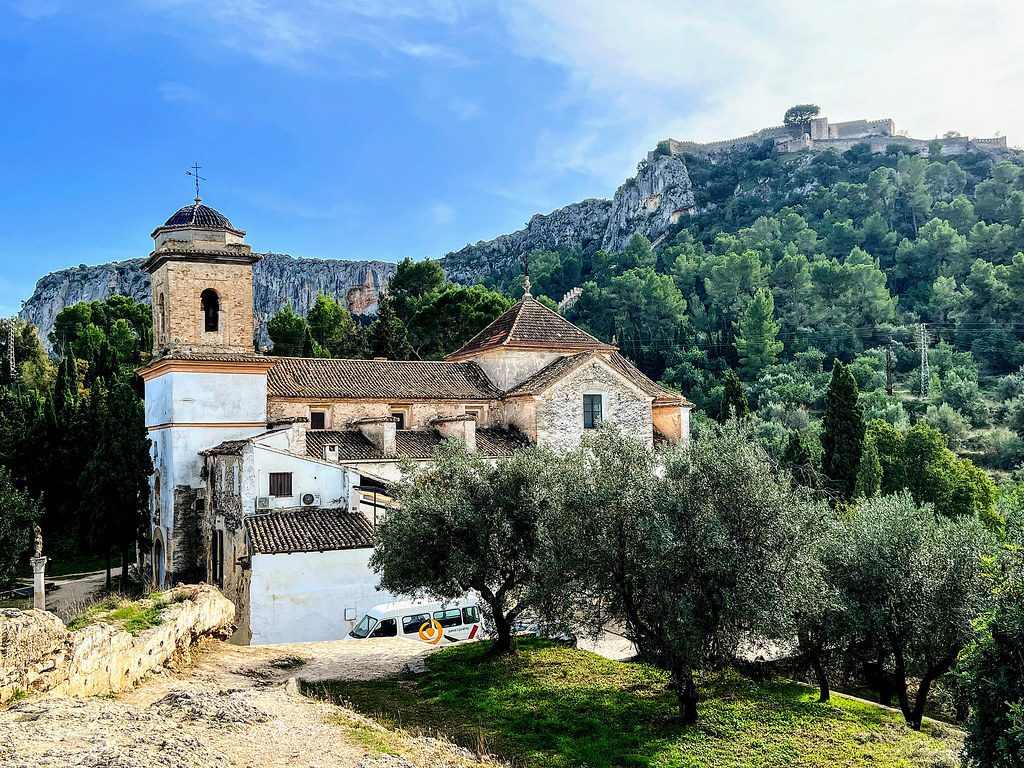
Matet does not compete on monumental scale. Its main landmark is the parish church of San Pedro Apóstol, which has marked the centre of village life for centuries. The current building combines older elements with later alterations, something fairly common in this part of Spain. The bell tower rises just enough to guide you if you wander into one of the narrower streets.
Close by is the square where the town hall stands. It is a simple open space, edged by large houses that once belonged to families who owned surrounding land. Take a closer look and you will spot wrought-iron balconies, substantial wooden doors and the occasional carved stone block set into a corner.
Heading down towards the lower part of the village along streets that form its backbone, such as Calle Mayor, the scenery begins to shift. Agricultural terraces appear, along with the remains of old rural constructions. Some lie abandoned, others half reclaimed by vegetation. It is a landscape repeated across much of the Alto Palancia: stepped fields, dry-stone walls and woodland slowly advancing.
The village fountain remains a small meeting point. There is nothing spectacular about it, yet it helps to explain Matet’s scale. Everything is within a few steps, and daily life has always unfolded within that short radius.
Paths Through Pine Forests
For those who enjoy a straightforward walk without committing to a long-distance route, the tracks leading out of Matet are well suited. They connect with pine woods, former terraces and a handful of scattered masías, traditional rural houses typical of eastern Spain.
It is worth carrying a map or a walking app, as not every junction is clearly signposted. In return you find peace and space: forest tracks, the scent of resin when the sun is strong, and the dry crack of twigs underfoot.
From nearby cols the views open out across the mountains of the Alto Palancia. On clear days several ridgelines are visible in the distance. The landscape here is more about forest and ravines than about purpose-built viewpoints, but the sense of breadth is still there.
The area is also good for birdlife. Birds of prey can often be seen circling above the pines, and woodpeckers are sometimes heard tapping at trunks. Set out very early and you may even glimpse a roe deer crossing a woodland path.
Traditions That Still Feel Local
Matet’s festive calendar is modest and firmly rooted in village life. In summer, usually around August, the patron saint festivities dedicated to San Pedro Apóstol take place. Many families who own houses here but live elsewhere for most of the year return at this time, and for a few days the atmosphere changes noticeably.
In winter the feast of San Antonio Abad is still observed. There are typically bonfires, a blessing of animals when they are brought along, and homemade sweets shared among neighbours. Rather than an event designed to attract visitors, it is a moment of reunion.
Semana Santa, or Holy Week in the lead-up to Easter, is marked in a restrained way. Processions are short, there are few religious images, and the tone is sober, in keeping with the village’s size.
When to Go
Spring and autumn are generally the most pleasant seasons for walking in the surrounding countryside. In spring the hills are greener, and the paths are welcome after the rains. Autumn brings changing colours to the forest and a noticeable interest in mushroom foraging, something deeply ingrained in these inland sierras.
Summer heat intensifies from midday onwards, although evenings in the village are more bearable. Winter can be cold and windy, yet it also brings clear days when the mountains look especially sharp.
A Small Stop in the Alto Palancia
Matet is very small. That is part of its appeal, but it also means there are not endless distractions to fill long hours. It works best as a quiet stop on a wider route through the Alto Palancia.
The key is to take it slowly. Walk through the old streets, pause by the church of San Pedro Apóstol, look closely at doors and balconies, and then head out along one of the tracks into the pines. Matet does not demand a checklist. It offers space, silence and a glimpse of rural life that has changed less than in many other corners of the Comunidad Valenciana.