Full Article
about Pavías
Mountain municipality in the heart of Espadán, ringed by forests; a quiet, natural spot with open Civil War trenches to visit.
Hide article Read full article
A village that moves at its own pace
Some places feel less like destinations and more like stepping into a familiar room where everything is roughly where you remember it. Pavías has something of that atmosphere. Tourism here is not about ticking off sights. It feels more like slipping into a village where daily life continues without much concern for the outside world.
Pavías lies in the Alto Palancia comarca, around 65 kilometres from Castellón de la Plana, in the interior of the Comunidad Valenciana. Just over seventy people live here. It is a small population, and you notice it straight away. Park the car, walk a few steps, and the silence is sudden, like switching off the television mid-programme.
There are no large monuments or headline attractions. Pavías works as a whole rather than as a collection of standout landmarks. The appeal comes from the overall rhythm of the place and the sense that little has shifted in years.
Streets to wander without hurry
The village centre is compact. In half an hour you can cross it several times, but the point is not to rush. Pavías is best seen slowly, taking time to look at the details that might otherwise slip past.
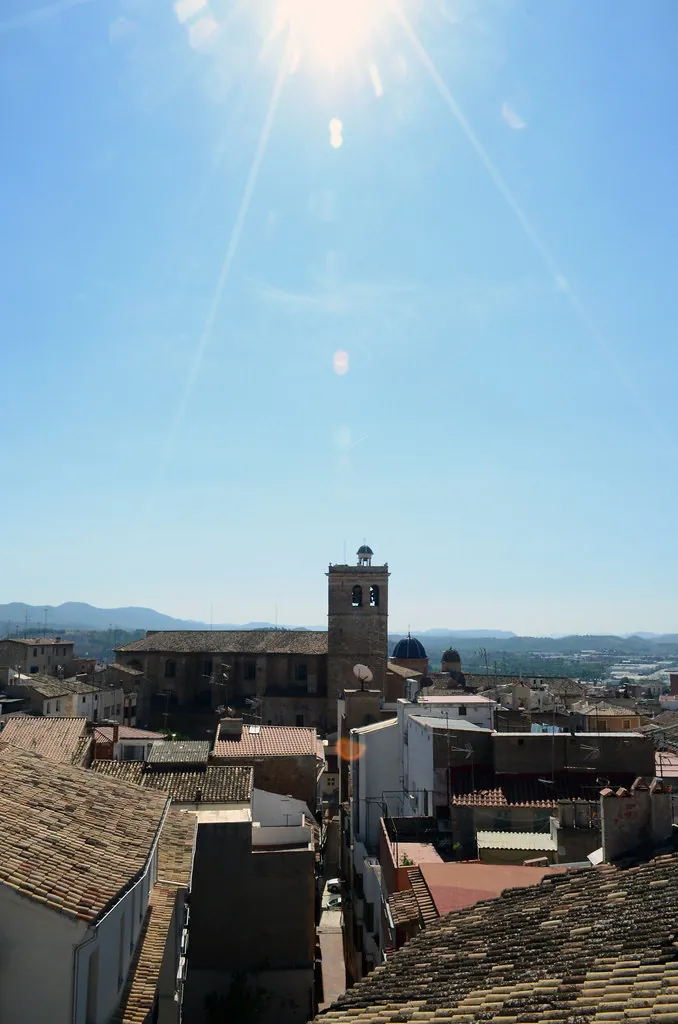
The streets are narrow and cobbled. They rise and dip without much apparent logic, more like paths formed by habit than by formal planning. Two people can pass comfortably. A car already feels slightly oversized.
The parish church, dedicated to Santa Catalina, appears between the rooftops without much fuss. It is a sober construction, with a plain façade and a discreet tower. Rather than dominating the skyline, it fits into the wider puzzle of the village.
Elsewhere there are stone doorways, enclosed courtyards and a few wrought-iron grilles that still retain older decorative touches. They are modest features. You only really notice them if you pause. Walk too quickly and they disappear into the background.
Terraces, pines and gentle ravines
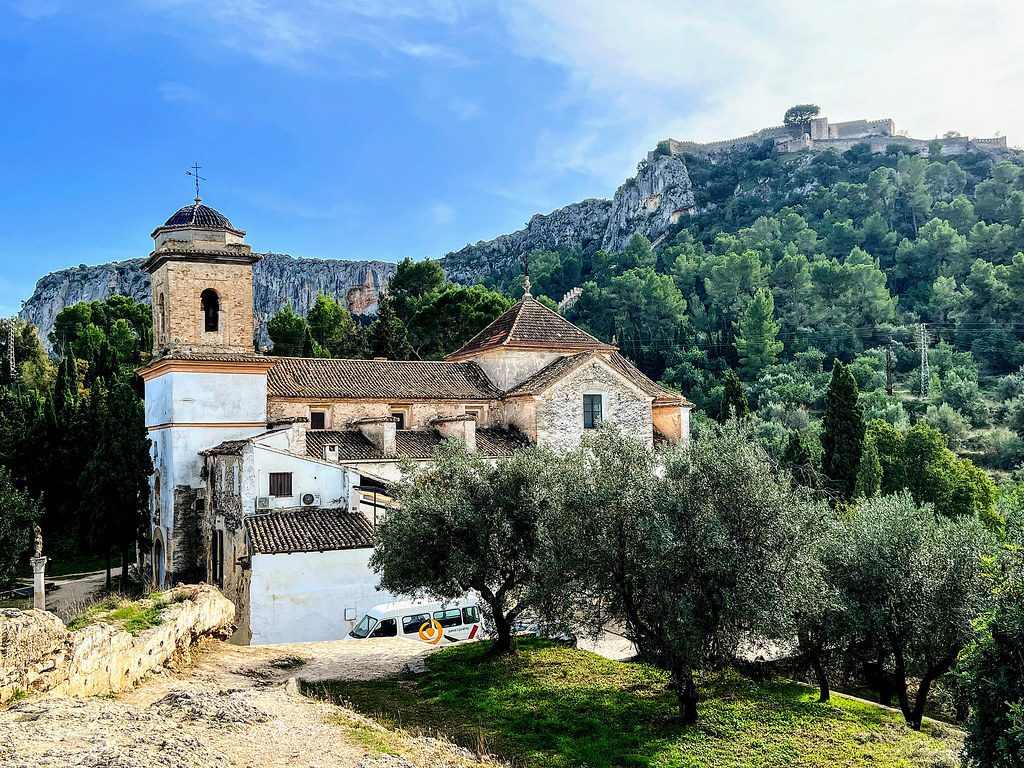
The landscape around Pavías reflects the inland character of this part of the Valencian Community. Pines, carrascas and encinas cover slopes that fold softly into one another. There is nothing dramatic about it. The terrain spreads out like a rumpled blanket around the village.
Step onto almost any path and you soon come across old agricultural terraces. Many are no longer cultivated, yet they still shape the hillsides. For generations almonds and olives were planted on these slopes. Some trees remain in use, others have been reclaimed by scrub and woodland.
Walking here is straightforward if you enjoy uncomplicated routes. These are calm, manageable outings. You can hold a conversation without feeling out of breath every few minutes. The appeal lies in the steady pace rather than in steep climbs or technical trails.
In spring and autumn, birds of prey sometimes circle above the hills. Locals mention azores and gavilanes, species of hawk seen gliding on the thermals. When they cross the sky, they turn slowly, like a kite held firm by a steady wind.
Cooking that stays close to home
Food in Pavías remains closely tied to what has long been prepared in local kitchens. On cold days, hearty stews appear, often made with small game or regional cured meats. These are dishes that call for bread on the side, the kind that invite you to mop up the last of the sauce.
Migas made from stale bread are still prepared, as are gachas finished with a touch of honey. They tend to surface during family gatherings or celebrations rather than on any formal menu. This is home cooking that belongs to everyday life.
After periods of rain, mushrooms begin to appear in the nearby hills. Many residents head out to look for them, moving carefully and with a good understanding of the terrain. It is a seasonal habit that connects the village to its surroundings as directly as any marked footpath.
Small celebrations that bring everyone together
In August the main fiesta usually takes place. It is not a large-scale event. The atmosphere is closer to a neighbourhood celebration where most people know each other.
There are simple processions, music in the evening and plenty of family gatherings. Long tables are set out, dishes are shared and conversations stretch late into the night. The emphasis is on meeting rather than spectacle.
Something similar happens at Christmas. Homemade almond sweets are prepared and traditional songs are sung around the fire. These are modest customs, yet they reinforce the sense that Pavías revolves around its residents and their shared routines.
Reaching Pavías and taking a break
From Castellón de la Plana, the usual approach is via the A-23 towards Teruel, turning off later onto secondary roads that pass through Segorbe. The final stretch includes bends and a climb that gradually winds into the mountains, like ascending a small pass without quite noticing.
Pavías is not a place for a packed itinerary. It works better as a pause. Arrive, walk through the streets, spend some time on the surrounding paths, then return to the car with the feeling of having stepped briefly into a village that continues on its own terms.
Sometimes that is enough. A short walk, a quiet circuit through cobbled lanes, a view over terraces and pines, and the sense of having slowed down without needing to plan anything at all.