Full Article
about Segorbe
Capital of Alto Palancia with a rich ecclesiastical and civil heritage; famous for its Entrada de Toros y Caballos, declared of international interest.
Ocultar artículo Leer artículo completo
The bells of the Catedral de la Asunción strike half past eleven as a dozen riders in short black jackets trot their horses up Carrer Sopeña. Nobody turns a head; it is only a rehearsal for September’s bull-running week, yet the clip-clop on the cobbles sounds as natural here as the river that once fed the Roman aqueduct. At 358 m above the coastal plain, Segorbe has spent nine centuries listening to hooves, harness and market gossip drifting through the wind-gap that links the Mediterranean to the Meseta. The result is a small cathedral city that feels neither seaside nor Castilian, but something tighter, hillier and distinctly its own.
A Duke-Sized Town in a Squeeze of Mountains
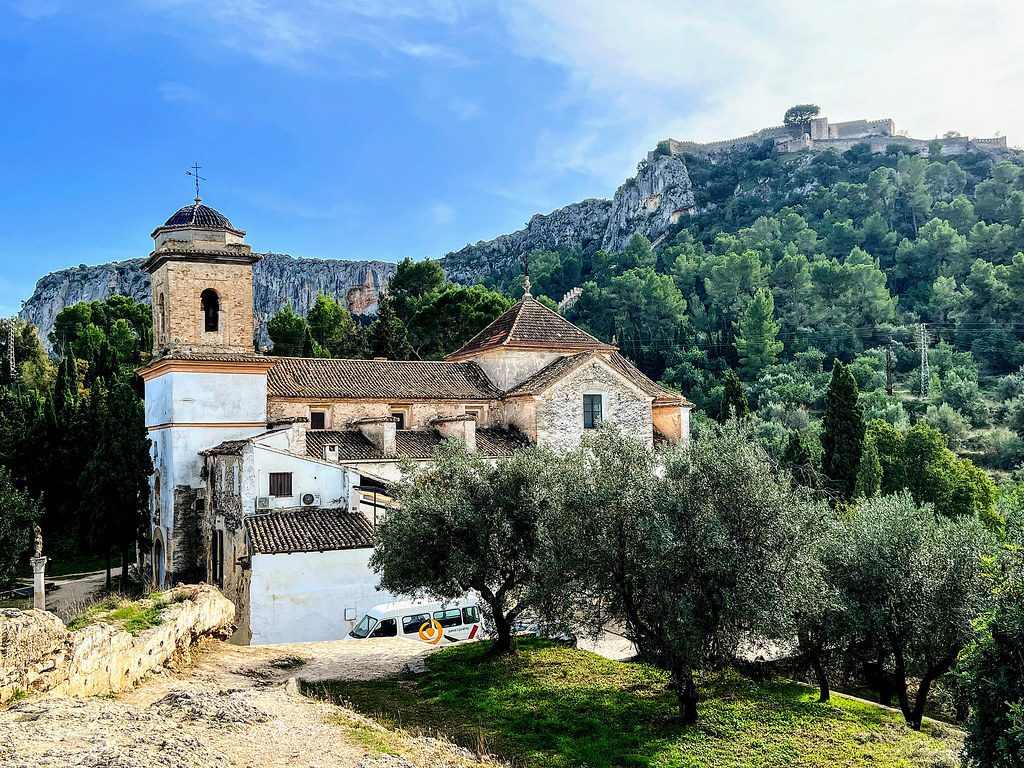
Approach from the AP-7 and the land rears abruptly; olive terraces stack against limestone ridges until the motorway gives up and ducks into a tunnel. Segorbe appears on a wedge of high ground between the Palancia and its tributary, the Seco, protected by walls that once closed like a fist every nightfall. What remains of the fortifications is fragmentary—look for the Puerto de Sopeña, a 14th-century gate still wide enough for two laden mules, then follow the alley that hugs the inside of the wall until it dissolves into somebody’s back garden. The masonry is rough, the joins obvious; repairs were done with whatever came to hand after each siege, which explains the band of Roman tile, medieval rubble and 19th-century brick all in the same stretch.
Inside the loop of streets the stone lightens to honey-colour. Houses are tall and narrow, their ground floors once rented to sharecroppers who walked out at dawn to work the huertas on the flood-plain below. The ducal palace—now the ajuntamiento—occupies a whole block of Carrer de la Reina: plateresque windows, coats of arms chipped by Napoleonic bayonets, a balcony added in 1900 for a visit that never happened. You can wander into the patio on weekdays; the guard nods if you look vaguely respectable. Two marble lions guard a staircase designed for sweeping entrances, though today the only drama is the squeak of the cleaner’s mop.
Up the Nave and Down the Alley
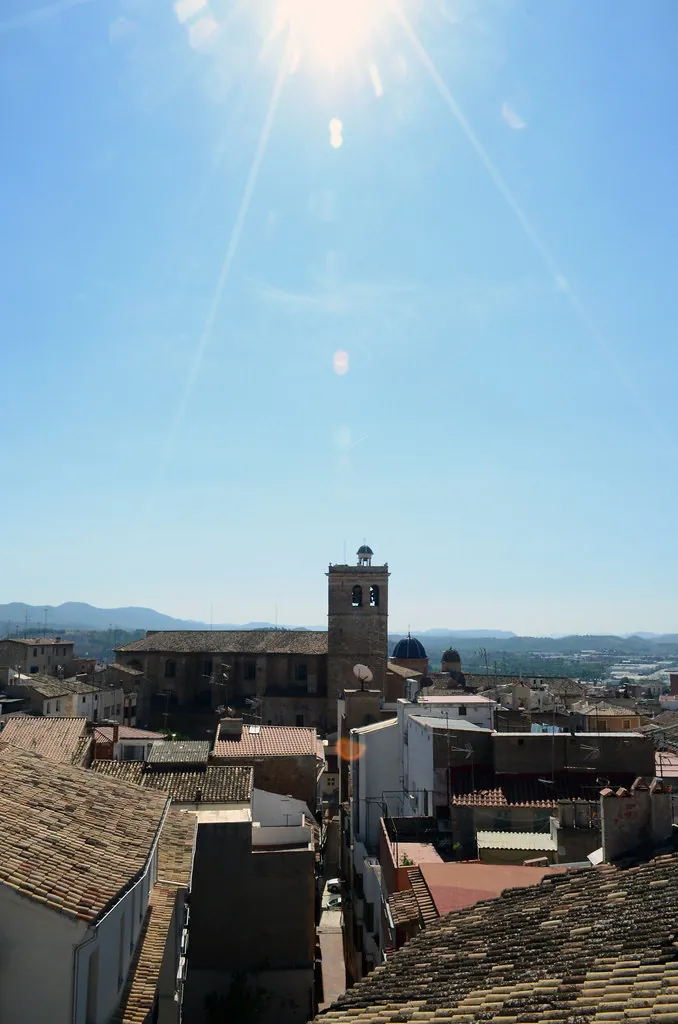
The cathedral looks squat from the outside, enlarged in fits and starts between 1246 and 1791. Push the south door and the interior jumps upwards: Gothic ribs, Baroque frosting, a 16th-century Flemish tapestry that smells faintly of incense and floor wax. The museum ticket (€5, cash only) includes the cloister, where one column is carved with a boar hunt so lively you expect the hounds to breathe. Climb the tower for a lesson in geography: westwards the land buckles into the Sierra de Espadán, its crest fuzzed with pine; eastwards the orange groves roll towards Sagunto and the sea, 25 km away but invisible from here thanks to the heat haze.
Back at street level, the town’s Roman footprint is easier to feel than see. A line of low arches crosses a side street behind the tourist office—too modest for postcards, yet enough to remind you that engineers in togas once surveyed this valley and found it worth plumbing. Pick up the free leaflet that superimposes the ancient grid on the modern map; suddenly every pastry shop occupies a former insula and the bakery on Carrer Major turns out to stand on the forum. History here is not roped off, just lived in.
When Lunch is a Countdown and Dinner is a Stew
Segorbe still shuts with the sun. By 14:00 the metal shutters clatter down, and if you haven’t secured lunch you will be left staring at a display of dried cod while your stomach growls. Book a table at Casa Alba (Carrer de l’Horta 7) for the full mountain-kitchen treatment: roast lamb scented with rosemary from the neighbouring hills, potatoes sliced paper-thin and baked until they shatter. The menu del día is €16 mid-week, wine included, but they’ll sell you a half-bottle if you ask without blushing. Afterwards, trace the alley to the Plaça de la Font dels 50 Canyells, a long stone trough fed by 50 individual spouts each carved with the name of a Spanish province. Children race boats made of walnut shells; old men top up plastic jugs for household ironing. The water is potable—cold enough to make your teeth sing.
Evenings belong to the olla segorbina, a stew of chickpea, morcilla and saffron sturdy enough to reconcile you with the drop in temperature once the sun slips behind the ridge. Most bars will produce a plate if you order a drink after 20:00, but Gastroadictos on Carrer Palau dresses it up as a mini-ración with a froth of alioli and a glass of local Bobal. The wine list is annotated in English, a rarity this far inland, though the barman admits the translations were done by a cousin “who spent a year in Brighton.”
Hoofbeats, Hikes and the Hush of the Off-Season
Come mid-September the population quadruples. The Entrada de Toros y Caballos, declared of International Tourist Interest long before the phrase meant Instagram selfies, sends two dozen fighting bulls skidding through the same streets where you ate ice cream in May. Riders guide the animals at a hand-gallop while balconies sag under the weight of nephews and cousins. Accommodation within the walls books out by March; expect to pay €180 for a room that costs €55 in April. If you merely want to watch, arrive by 10 a.m., claim a spot on the barrier with a folding stool, and leave before the last bull—traffic back to the coast is murder.
Outside fiesta week Segorbe reverts to murmurs. Spring brings almond blossom on the south-facing slopes and a scent of thyme so strong it seeps into parked cars. The Sendero del Agua, a 6-km loop way-marked from the old railway station, follows an irrigation channel past mills abandoned in the 1950s. You’ll meet dog-walkers, the odd mountain-biker, nobody else. Add another hour for the mirador circuit: three stone platforms that poke above the gorge like theatre boxes. From the highest, La Muela, the Mediterranean appears as a silver slit between two ridges—close enough to tempt you for an afternoon swim, far enough to explain why the dukes never bothered with a port.
Winter is crisp, often bright, occasionally snowy. Night frost can glaze the cobbles so that early risers shuffle like penguins, but the upside is luminous air and cathedral stones the colour of freshly baked biscuit. Hotels drop their rates by 30 %; the bar at Hotel Martín el Humano (Plaça de l’Ermita 4) lights a log fire and serves thick hot chocolate with the local anise rolls. Bring a jumper; central heating in listed buildings is politely described as “variable.”
Getting There, Getting Fed, Getting Out
The Castellón–Teruel train still stops at Segorbe twice daily: narrow-gauge, diesel, charmingly erratic. From Valencia Nord it’s 65 minutes (€6.45) through tunnels and olive groves, a far prettier approach than the motorway slog. By car, leave the A-23 at junction 43 and follow the CV-35 for 9 km; parking on Avenida del Alto Palancia is free and two minutes’ walk from the walls. Everything worth seeing clusters inside a rectangle you can cross in eight minutes—handy if you need to retrieve a jacket from the car.
Should you crave the coast, Sagunto’s long brown beach is 25 minutes down the hill, though you’ll swap Segorbe’s silence for boom-boxes and paella the size of satellite dishes. Better, perhaps, to stay the night, rise early and listen instead to the first sparrows under the aqueduct arches while the bakery on Carrer de Santa Ana pulls trays of almond coca from the oven. Buy a piece while it’s still hot; it costs €1.20 and tastes of Valencia’s mountains before the sun has climbed high enough to remind you the sea exists at all.