Full Article
about Teresa
Mountain village in a narrow valley beside the Palancia river; known for its springs and cool green landscapes.
Hide article Read full article
The morning sun hits the main square of Teresa at an angle, turning the stone of the church steps a pale gold. The only sound is the scrape of a chair being pulled across a doorway threshold, followed by the low murmur of a radio. At 636 metres up in the Alto Palancia, the air is clear and carries the distant scent of woodsmoke from a breakfast fire.
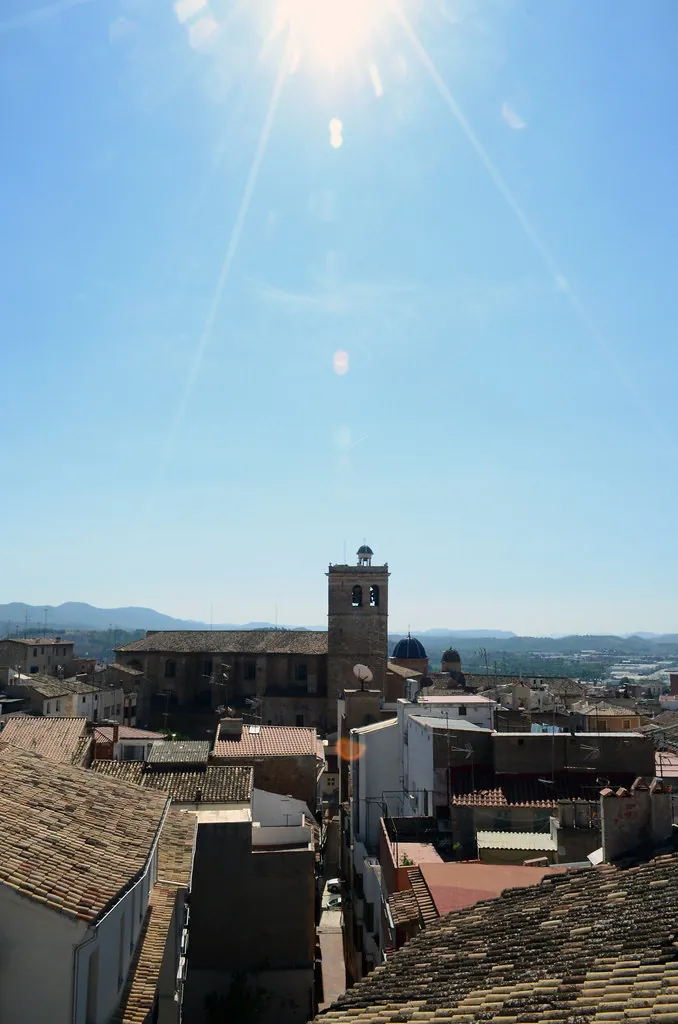
Houses of rough-hewn stone and faded terracotta tiles huddle together, their rooflines stepping down the slope toward the valley. You understand this place by walking its lanes, which are narrow enough to touch both walls in some stretches. Look for the dark green of an untended fig tree spilling over a courtyard wall, or the tidy rectangle of a huerta just outside the village limits, where the soil smells damp even in summer.
Wear shoes that grip. The cobbles are smooth in places, and some alleys climb more steeply than they first appear.
The quiet presence of San Roque
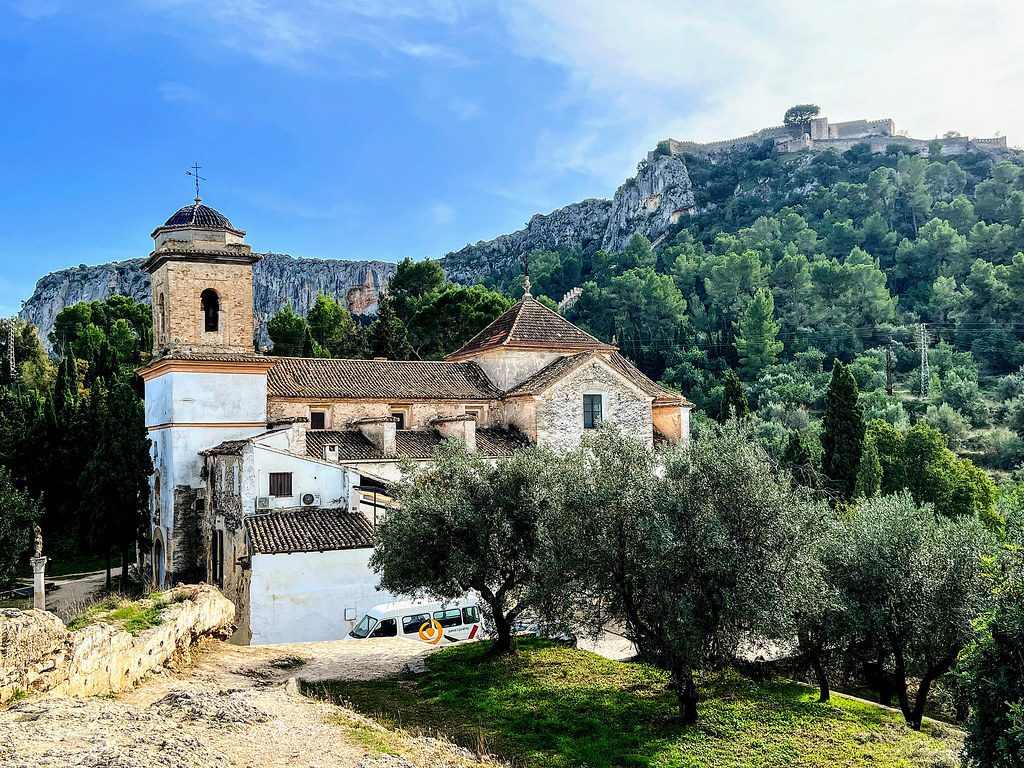
The parish church of San Roque doesn’t announce itself from a distance. You find it by following the sound of its bells, which on the hour echo sharply off the close stone walls of Calle de la Iglesia. It’s a solid, unadorned building that feels less like a monument and more like another part of the village fabric.
Inside, the light is cool and dim. You’ll see simple wooden pews, a few painted statues in niches, and an altarpiece that shows its age in the cracks of the varnish. It’s a working church, plain and unpretentious, where you might find an elderly local stopping in for a quiet moment on a Tuesday afternoon.
The oldest streets huddle around it. On good days, you’ll see doors left open to let in the light, revealing tiled entryways and the sound of a television from a back room.
Where the pines meet old stone walls
Leave the last house behind, and the landscape opens into Aleppo pine forest threaded with the ghosts of agriculture. The terraces are everywhere—long ribbons of dry-stone wall holding back the hillside, most now reclaimed by rosemary and gorse. In spring, the air is thick with the smell of thyme and hot pine needles.
A web of old cart tracks and shepherd paths runs through these woods. They aren’t always well-marked; having a map or GPS on your phone is wise if you plan to wander far. The reward is a deep, resin-scented quiet, broken only by the scuttle of a lizard or the call of a coal tit.
Go early if you want to see movement. At dawn, rabbits venture to the edges of the clearings, and birds of prey ride the thermals above the ridges.
Walking the old work routes
Several dirt tracks lead straight from the edge of town into the fields. These were built for mules and carts, not for leisure, so they follow the logic of the land—hugging contours, skirting property lines. You won’t find signposts or benches here. You will find crumbling stone walls furred with moss and, in April, a fringe of wildflowers along the path.
In high summer, these walks are for early risers. By ten o’clock, the sun is direct and heavy, and the shade under the pines becomes a tangible relief.
A calendar marked by harvest and return
The cooking here has a seasonal pulse. What simmers in the pot depends on what’s in the huerta: stews with green beans and potatoes in summer, artichokes or wild mushrooms in their turn. Thyme and savory picked from the hillside are used not as a delicate garnish, but by the handful, for depth.
Local honey has a darker colour and a robust, almost herbal taste, collected from hives tucked into clearings in the pine forest.
The year’s rhythm shifts in August. For the fiestas of San Roque, families return. Plastic chairs appear in the square, music plays from a temporary stage until late, and the night air fills with voices catching up. It’s brief. By September, the pace settles back into one dictated by olives and almonds.
For most of the year, Easter included, observances are small and local—a procession that winds through three streets before dispersing.
Getting there
Teresa sits in inland Castellón. You approach on winding regional roads that climb through scrubland and past isolated farmsteads. There’s no visitor car park; you leave your car where residents do, along the edges of the lanes.
Arriving feels less like reaching a destination and more like slipping into a stream that was already flowing. Nothing is staged. The appeal is in the texture of worn stone underfoot, the sudden view of layered valleys from a bend in a track, and the particular quiet of a place that still tells time by light and weather