Full Article
about Vall de Almonacid
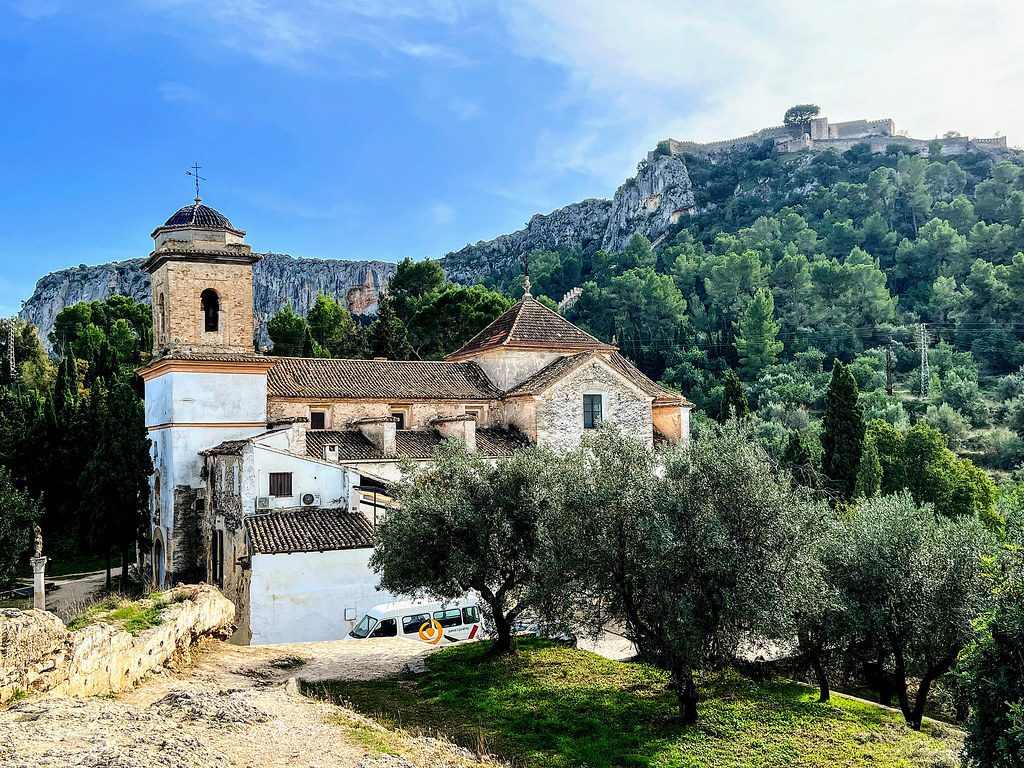
Mountain village dominated by the ruins of Almonecir castle; surrounded by olive and cherry trees in Espadán natural park.
Hide article Read full article
Some places seem designed for a postcard. Vall de Almonacid is not one of them. This small village in the Alto Palancia area of the Comunidad Valenciana makes more sense if you think of it as stepping into someone’s home unannounced: nothing staged, nothing polished, everything much as it has always been. That is precisely why it works.
Vall de Almonacid is small, the kind of place where in ten minutes you understand how it fits together. There are no headline attractions and no single monument that draws all attention. What you find instead is quiet, open countryside and the sense of being somewhere that carries on at its own rhythm, largely indifferent to tourism.
The Heart of the Village
The old centre is a tangle of narrow streets that climb and dip without much order. Stone houses line the way, some whitewashed, with wrought-iron balconies and wooden doors that have clearly been doing their job for decades.
At the centre stands the parish church, dedicated to the Purificación de Nuestra Señora. It appears to have been built several centuries ago. Inside, the atmosphere is simple and restrained. It does not impress through scale, but through that particular feeling of a village church that has witnessed generations pass through its doors.
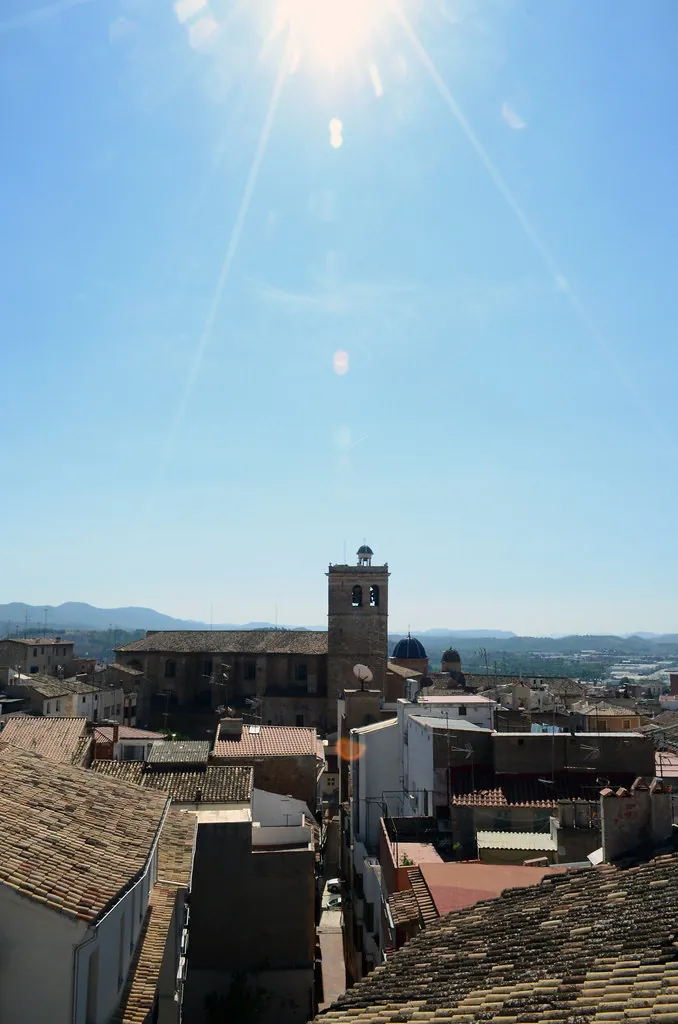
Climb a little higher into the upper streets and the view opens out over the valley. There is no formal viewpoint and no sign announcing it. The village simply rises enough for the rooftops to fall away and the landscape to appear all at once.
Almond Trees and Terraced Fields
Step beyond the last houses and the terraced fields begin. Almond trees and carob trees dominate, with small patches of market garden scattered here and there. The land has been shaped this way for a long time, supported by dry-stone walls that hold the soil in place along the slopes.
In March there is usually a noticeable increase in people walking the surrounding paths. This is when the almond trees blossom and the fields turn white. It is not an organised event or a curated spectacle. These are working agricultural plots and rural tracks where people continue with their daily tasks while others pass through on foot.
There are also a few fountains and small natural springs around the area, traditionally used to supply water to the village. Some still flow. Others remain more as a reminder than as a practical stopping point.
Quiet Tracks on Foot or by Bike
Around Vall de Almonacid there are numerous rural tracks. They are not technical mountain routes or signposted trails every few metres. Most are dirt paths that link fields, ravines and low hills.
For walking, they suit those who prefer uncomplicated terrain. The ground rises gently, dips again, crosses through pine woodland and returns to cultivated land. It is the kind of walk where the loudest sound is often the wind moving through the pines.
Cycling follows a similar pattern. There are stretches that keep things interesting, with small climbs and descents, and very little traffic. At times it feels as though cars pass through only when they have to, rather than out of habit.
Festivities and Everyday Life
For much of the year, life in Vall de Almonacid is quiet. The population is small, and the pace of daily life reflects that.
In winter, festivities dedicated to the patron saint are usually held, with religious events and some music in the main square. Nothing grand or elaborate. They are occasions that bring together neighbours and family members who return to the village for those days.
Summer brings a subtle change. Many people who have a house here or family ties in the village come back for a time. The streets grow busier in the late afternoon, and long evening meals appear outdoors, either in the street or in interior courtyards. It is the part of the day when the heat drops and conversations stretch on without much attention to the clock.
Arriving and Getting Around
Vall de Almonacid is reached via regional roads that cross the Alto Palancia between low hills and cultivated fields. The journey itself sets the tone: gentle bends, small villages and wide stretches of open landscape.
On arrival, it makes sense to leave the car near the centre and continue on foot. The streets are not wide, and they are often best appreciated at a slower pace.
In villages like this, something tends to happen once you step out of the car and start walking. Details begin to stand out: an old doorway, a fountain tucked into a corner, a cat asleep in the middle of the street in the sun. It is often at that moment that the place starts to make sense.
Vall de Almonacid does not offer a checklist of sights. It offers space, silence and continuity. For those willing to slow down and let the surroundings speak in their own time, that is more than enough.